Skip to content
#human-computer interaction Book Open access

FlowCheck: Helping End-Users Specify and Verify Intent in Vibe-Coded Web Apps

Aug 2026 · Proceedings of the 2nd ACM SIGPLAN International Workshop on Language Models and Programming Languages · 2 citations · 39 references
Computer Science

TL;DR

FlowCheck, a constraint language to specify user-visible information flows directly through the application interface, where constraints can also be displayed and inspected without reading code, and are structured enough for reliable LLM generation.

Abstract

Vibe-coded applications often contain silent behavioral failures in which the interface appears functional even though user-visible information does not flow to the expected state or output. We introduce FlowCheck, a constraint language to specify these user-visible information flows directly through the application interface, where constraints can also be displayed and inspected without reading code, and are structured enough for reliable LLM generation. FlowCheck translates the constraints into deterministic CodeQL analyses, and we evaluate it across four applications generated via Claude Code, and compare with three coding models as bug-finding baselines. We find that FlowCheck correctly translates and flags all 30 of our injected constraint violations with no false positives. In contrast, frontier models (Claude Opus 4.7, DeepSeek V3, and Gemini Pro) showed significantly lower accuracy when prompted to find bugs in the same code, with none achieving full accuracy. This approach lets vibe coders state intent in terms of the interface they understand, and checks it deterministically against the code they do not.

Read PDF

Similar papers

Open access Aug 2026

How well do LLMs understand code?

SemBench is introduced, a novel benchmark consisting of 1000 diverse C programs sourced from the CodeParrot GitHub-code dataset, with 15,404 semantic questions spanning six basic but fundamental properties: dead code-statement, data dependency, function reachability, dominator, dead code-loop, and liveness.

Jade Xu, Ren-Liang Sun, Zijian Ding et al. · 0 citations
#artificial intelligence Preprint Sep 2026

Self-Spec Verifiable Code Generation

Large language models (LLMs) may generate unreliable code on corner cases missed by testing, while formal verification can provide machine-checkable guarantees. Recently, researchers have proposed several benchmarks to evaluate the capabilities of LLMs in generating formally verifiable code, where LLMs need to formulat...

Jia-Ru Qian, Yihong Dong, Yong-Ming Li et al. · 0 citations
Oct 2026

“Wait, My Tool Can’t Do That?” A Fine-Grained Capability Study of Modern Static Taint Analyzers

Static taint analyzers are widely used in software security, yet aggregate vulnerability-detection metrics provide limited insight into the specific language constructs and analysis capabilities that cause tools to succeed or fail. This paper presents xAST, a fine-grained benchmark containing 844 paired capability case...

Yan-Jie Zhao, Shen-Ao Wang, Jian Zhao et al. · 0 citations

Related blog posts

MIT News · Artificial Intelligence Oct 28, 2026

Making machines that can listen

Professor Paris Smaragdis develops computers with superhuman hearing for applications like speech recognition, music understanding, and environmental monitoring.

MIT News · Artificial Intelligence Oct 23, 2026

Reinforcing the value of human understanding at MIT

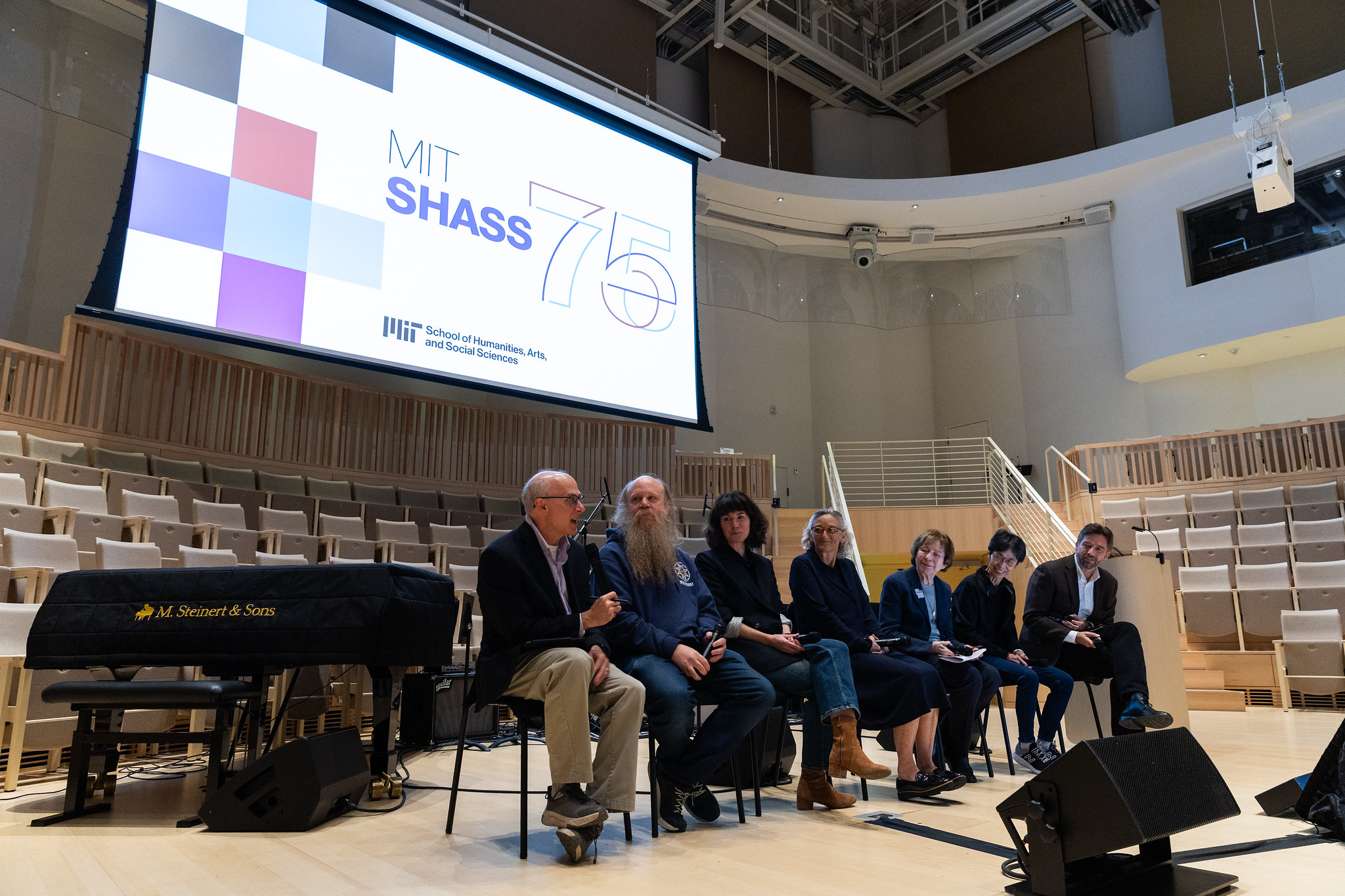
During the School of Humanities, Arts, and Social Sciences’ 75th Anniversary Symposium, President Sally Kornbluth said “MIT has never needed your particular insight and guidance more than we do now.”

MIT News · Artificial Intelligence Oct 23, 2026

Q&A: How AI came to model the “messy” human mind

Assistant Professor Benjamin Lindquist studies how engineers deliberately injected randomness into early AI, giving rise to deep-learning models that sometimes hallucinate.

We use cookies to run the site and, with your consent, for analytics and to show ads. See our Cookie Policy.