InsightToast is introduced, a mixed-initiative application that monitors verbal discourse in real time, identifies topics and informational needs as they emerge, and proactively retrieves relevant information through a multi-agent large language model (LLM)-based pipeline integrating retrieval-augmented generation (RAG) to produce source-grounded insights.
Abstract
Missing institutional context during meetings can impede effective participation. Retrieving relevant information, often scattered across heterogeneous internal and external sources, requires costly task-switching that disrupts both individual focus and collective conversational flow, particularly detrimental during cognitively demanding tasks such as decision-making. We introduce InsightToast, a mixed-initiative application that monitors verbal discourse in real time, identifies topics and informational needs as they emerge, and proactively retrieves relevant information through a multi-agent large language model (LLM)-based pipeline integrating retrieval-augmented generation (RAG) to produce source-grounded insights as succinct text and glanceable interactive charts, delivered through a peripheral interface as ephemeral toasts in the conversation's side channel. To demonstrate the potential for yielding serendipitous insights, we showcase a usage scenario involving a knowledge base of legislative documents as the meeting's context. We then report on a comparative study (N=16), in which participants arrived at informed policy decisions while maintaining natural conversation flow.

This work formalizes LLM interface augmentation as the mediation strategy framework GLANCE, that defines an interpretive task context, an evidence derivation procedure operating on prompt–response artifacts, and visual encodings that externalize the resulting evidence.
This work presents a targeted and traceable approach to investigating multi-agent LLM dialogue, applied to the VAST Challenge 2026 MC1 dataset, and finds that the KG structure enables users to identify actors worth investigating faster and summarizing only the region surrounding an actor of interest better supports per...
Travel literature is a unique form of hypertext that extends beyond its medium into real-world physical exploration. While conventional computational methods can easily extract surface-level ontological entities (e.g., locations, dates), the deeper epistemic and judgmental subtext that guides the discovery and evaluati...
Virginia Orlando, Alessandro Adamou, Alessio Antonini· Proceedings of the 37th ACM...· 0 citations
Investigation of how different information visualization structures shape sustainability planning by comparing three interfaces refine the design of AI-enhanced decision support tools for personal sustainability and other multi-criteria personal informatics domains.
Qi-Ming Sun, S. Hsiao, Shih-Yi Chien· Proceedings of the 37th ACM...· 0 citations
Enterprise communication platforms carry text, image, and audio content across organizational contexts that public-facing moderation systems were never designed to serve. Existing moderation acts after content reaches recipients, depends on fixed harm taxonomies that cannot be updated without retraining, and rarely cov...
Soham S. Jadhav, Omkar N. Gadakh, Atharv Gaikwad et al.· Cureus Journal of Computer S...· 0 citations
The results show that CoRG remains challenging for current agents, even the best agent reaches only 67.0% success rate, leaving one third of references unresolved, and position CoRG as a concrete benchmark for studying how agents search, inspect, and verify information in realistic multi-tool environments.
Karen Fuchs, Uri Katz, Yoav Goldberg· 0 citations
Related blog posts
MIT News · Artificial Intelligence· news.mit.eduOct 28, 2026
Professor Paris Smaragdis develops computers with superhuman hearing for applications like speech recognition, music understanding, and environmental monitoring.
MIT News · Artificial Intelligence· news.mit.eduOct 23, 2026
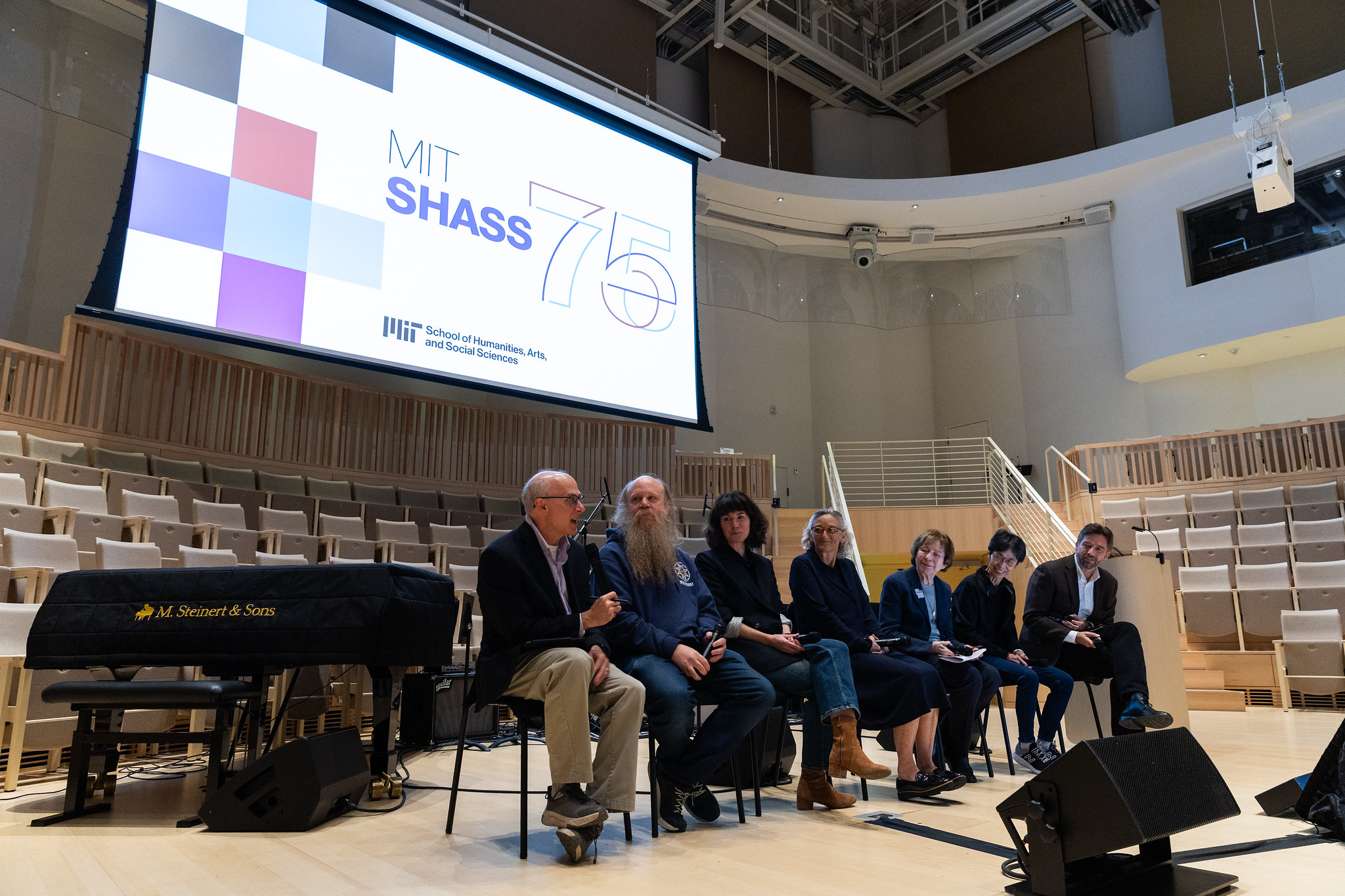
During the School of Humanities, Arts, and Social Sciences’ 75th Anniversary Symposium, President Sally Kornbluth said “MIT has never needed your particular insight and guidance more than we do now.”
MIT News · Artificial Intelligence· news.mit.eduOct 23, 2026
Assistant Professor Benjamin Lindquist studies how engineers deliberately injected randomness into early AI, giving rise to deep-learning models that sometimes hallucinate.
MIT News · Artificial Intelligence· news.mit.eduOct 22, 2026
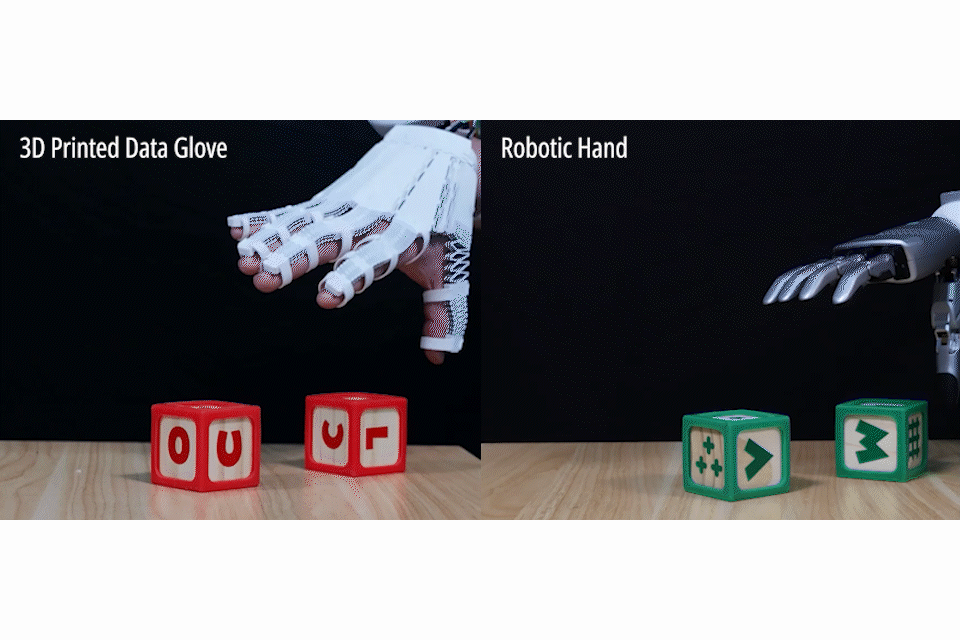
“X-Hinges” helps design and 3D print items like lamps and gloves with an interactive twist: automatically embedded sensors that perceive and adaptively respond to human contact.
We use cookies to run the site and, with your consent, for analytics and to show ads.
See our Cookie Policy.