FocusAdapt is presented, a context-aware DR system that predicts object-level distraction by integrating visual saliency, semantic relevance, and gaze behavior, enabling adaptive focus assistance during procedural tasks.
Abstract
Diminished Reality (DR) can reduce visual clutter by removing irrelevant objects. However, removing all task-irrelevant objects may eliminate useful contextual information and reduce situational awareness. We present FocusAdapt, a context-aware DR system that predicts object-level distraction by integrating visual saliency, semantic relevance, and gaze behavior. Based on findings from a formative study, FocusAdapt selectively diminishes highly distracting objects while preserving useful context, enabling adaptive focus assistance during procedural tasks.
The attentional blink is a well-known phenomenon illustrating the limitations of human attention: When two visual targets are presented in rapid succession, identification of the second target is often impaired. While the attentional blink is known to attenuate when targets share perceptual features or category members...
Change blindness is the inability to perceive visual changes when the transient signals associated with the change are interrupted or absent. Previous research has found that both low-level perceptual features and higher-level semantic information can guide visual attention. However, in immersive environments, their re...
Muhammada Ramish, Matti Pouke, Steven M. Lavalle et al.· Proceedings of the 2026 ACM...· 0 citations
Eye‑tracking in consumer head-mounted displays (HMDs) already provides reliable data for visual attention tracking. We now strive to extend this capability to conversational attention, which also involves auditory processing, cognitive load, mind‑wandering, and fatigue. To this end, we propose a taxonomy that maps gaze...
A. Widera, Torsten W. Kuhlen, A. Bönsch· Proceedings of the 2026 ACM...· 0 citations
While listening to Embodied Conversational Agents (ECAs) in Virtual Reality (VR), background events can reduce both task performance and comfort. We ran an exploratory study with n = 5 participants who listened to ECA dialogues in a virtual open‑plan office while performing a dual‑task paradigm (keyword‑detection and r...
Konstantin W. Kühlem, Aaron S. Welker, A. Widera et al.· Proceedings of the 2026 ACM...· 0 citations
Natural environments are filled with salient yet task-irrelevant information that constantly competes for attentional resources. Effectively suppressing such distracting information is critical for the attentional control system to minimize interference with ongoing cognitive processes and maintain goal-directed behavi...
Yong-Yue Wang, Jie Deng, Zi-Hui Lu et al.· Journal of Experimental Psyc...· 0 citations
Visual working memory (VWM) is a capacity-limited system that enables visual information to be maintained, prioritized, and used after perceptual input has disappeared. Although attention is often assumed to protect VWM from distraction, recent work suggests that distraction is not uniformly harmful and that its impact...
Jin-Hua Fu, Dexiang Zhang, Hehong Wu et al.· Frontiers in cognition· 0 citations
Related blog posts
MIT News · Artificial Intelligence· news.mit.eduOct 28, 2026
Professor Paris Smaragdis develops computers with superhuman hearing for applications like speech recognition, music understanding, and environmental monitoring.
MIT News · Artificial Intelligence· news.mit.eduOct 23, 2026
During the School of Humanities, Arts, and Social Sciences’ 75th Anniversary Symposium, President Sally Kornbluth said “MIT has never needed your particular insight and guidance more than we do now.”
MIT News · Artificial Intelligence· news.mit.eduOct 23, 2026
Assistant Professor Benjamin Lindquist studies how engineers deliberately injected randomness into early AI, giving rise to deep-learning models that sometimes hallucinate.
MIT News · Artificial Intelligence· news.mit.eduOct 22, 2026
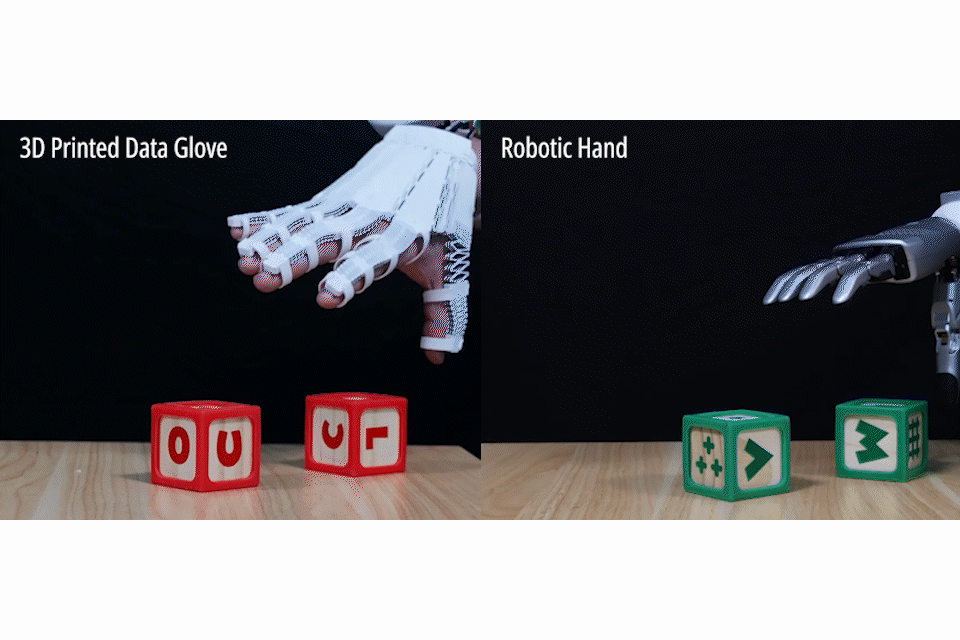
“X-Hinges” helps design and 3D print items like lamps and gloves with an interactive twist: automatically embedded sensors that perceive and adaptively respond to human contact.
We use cookies to run the site and, with your consent, for analytics and to show ads.
See our Cookie Policy.