Skip to content

Error-Type-Aware Loss Reweighting for Robust Named Entity Recognition with Noisy LLM Labels

Aug 2026 · 0 citations · 40 references
Computer Science

Abstract

Large language models are increasingly used to annotate datasets for training smaller, task-specialized models such as named entity recognition. While this method yields effective models, it assumes that the synthetic dataset is correctly annotated. In this work, we find that (i) current fine-tuning processes simply ignore LLM-introduced annotation noise, resulting in degraded performance and (ii) existing noise-robust losses are not transferable to sequence labeling because annotation noise in named entity recognition is heterogeneous: for example, missing mentions and type errors affect the training signal in different ways. Treating all noisy tokens equally in noise-robust losses and applying a single reweighing criterion for all may therefore remove useful supervision or reinforce incorrect labels. To address this limitation, we propose error-type-aware loss reweighting for NER, which introduces separate reweighing rules for different types of potentially erroneous tokens. Our approach is simple and efficient, does not require additional training resources, and improves F1 by 0.8 - 2.0 percentage points on dataset-level average for noise levels between 15% and 40%, with a maximum improvement of 4.6 percentage points with 24.1% noise on Wikigold.


View source

Similar papers

#computer vision Review Sep 2017

Agile Software Development Methods: Review and Analysis

This publication proposes a definition and a classification of agile software development approaches and analyses ten software development methods that can be characterized as being "agile" against the defined criterion.

P. Abrahamsson, O. Salo, Jussi Ronkainen et al. · 727 citations · ⚡54
#computer vision Open access Jul 2017

What happens when software developers are (un)happy

Consequences of happiness and unhappiness that are beneficial and detrimental for developers' mental well-being, the software development process, and the produced artifacts are found.

D. Graziotin, Fabian Fagerholm, Xiaofeng Wang et al. · 236 citations · ⚡13
#computer vision Open access Oct 2004

Mobile-D: an agile approach for mobile application development

The Mobile-D approach is briefly outlined here and the experiences gained from four case studies are discussed, which helped develop an agile development approach for mobile application development.

P. Abrahamsson, Antti Hanhineva, H. Hulkko et al. · 225 citations · ⚡18
#computer vision Open access Mar 2014

Happy software developers solve problems better: psychological measurements in empirical software engineering

A study with 42 participants investigates the relationship between the affective states, creativity, and analytical problem-solving skills of software developers and offers support for the claim that happy developers are indeed better problem solvers in terms of their analytical abilities.

D. Graziotin, Xiaofeng Wang, P. Abrahamsson · 216 citations · ⚡13
#artificial intelligence Open access May 2023

Evaluating the Performance of Large Language Models on GAOKAO Benchmark

GAOKAO-Bench is introduced, an intuitive benchmark that employs questions from the Chinese GAOKAO examination as test samples, including both subjective and objective questions that contribute a robust evaluation benchmark for future large language models and offers valuable insights into the advantages and limitations of such models.

Xiaotian Zhang, Chun-yan Li, Yi Zong et al. · 216 citations · ⚡17
#computer vision Open access Jun 2016

Software Development in Startup Companies: The Greenfield Startup Model

The results are packaged in the Greenfield Startup Model (GSM), which explains the priority of startups to release the product as quickly as possible, and the need to shorten time-to-market, by speeding up the development through low-precision engineering activities.

Carmine Giardino, Nicolò Paternoster, M. Unterkalmsteiner et al. · 178 citations · ⚡14

Related blog posts

Google DeepMind Blog Aug 12, 2026

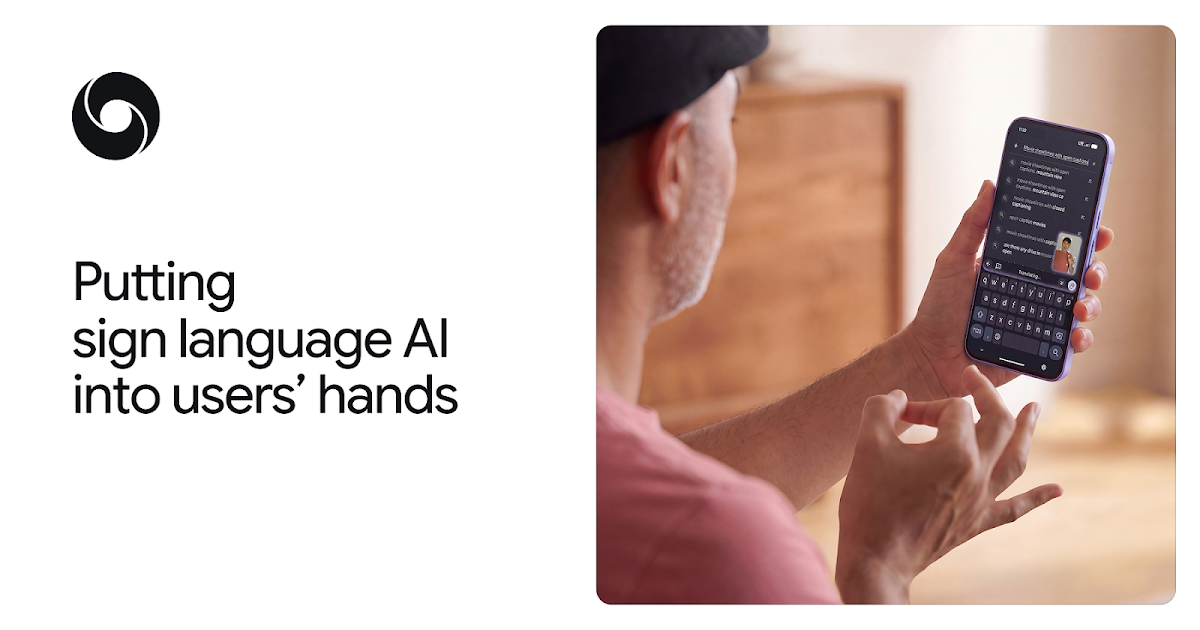
Putting sign language AI into users’ hands

Introducing sign-language-to-text (SL2T), our breakthrough model powering new sign language features for Deaf and hard of hearing users.

We use cookies to run the site and, with your consent, for analytics and to show ads. See our Cookie Policy.