Oct 2026· Journal of educational computing research· 0 citations· 28 references
Teaching and Learning Programming
Abstract
Open-ended computational thinking (CT) inquiry challenges one teacher to support learners progressing at different rates. This clustered quasi-experiment evaluated TALPer, a generative-AI tutor providing student-initiated, artifact-contingent Socratic prompts during a six-lesson 6E unit. Ten intact Grade 3 classes in Taiwan (N = 229) completed the same curriculum, tasks, teacher, platform, and instructional time. Conditions differed in a bundled scaffolding configuration involving source, delivery modality, initiation, privacy, and artifact requirements. A two-level model controlling for pretest CT estimated an adjusted posttest difference favoring TALPer (
B
= 4.05,
SE
= 1.58, Wald 95% CI [0.94, 7.15],
p
= .011; sensitivity
p
= .034; Hedges’
g
= 0.52). Class-clustered analyses found no Holm-adjusted difference on any Intrinsic Motivation Inventory subscale; Perceived Choice had the largest positive estimate (
B
= 0.27, cluster-adjusted
SE
= 0.12, 95% CI [−0.02, 0.55],
p
= .061, pHolm = .306; Hedges’
g
= 0.38). The Condition × Pretest interaction was nonsignificant (
B
= −0.109,
SE
= 0.125, 95% CI [-0.354, 0.137],
p
= .385). Descriptive coding of 101 matched responses showed different distributions of expected and planned AI-use orientations; no inferential transition test was conducted. Findings provide preliminary evidence concerning the bundled intervention but do not isolate component contributions.
The method, ECCOLA, is presented, which aims at making the high-level AI ethics principles more practical, making it possible for developers to more easily implement them in practice.
Ville Vakkuri, Kai-Kristian Kemell, P. Abrahamsson· EUROMICRO Conference on Soft...· 64 citations· ⚡6
The goal is to not only refine the accuracy of the LLM-based tool but also to underscore its potential in streamlining the software development lifecycle through proactive code improvement and education.
Z. Rasheed, Malik Abdul Sami, Muhammad Waseem et al.· arXiv.org· 62 citations· ⚡3
A comprehensive overview of how enhanced sampling methods are reshaping the field, with a particular focus on the data-driven construction of collective variables, is provided.
Kai Zhu, Enrico Trizio, Jintu Zhang et al.· Chemical Reviews· 58 citations
The use of large language models to automatically improve the user story quality in Austrian Post Group IT agile teams is explored, with a reference model for an Autonomous LLM-based Agent System developed and implemented at the company.
Zheying Zhang, M. Rayhan, Tomas Herda et al.· International Conference on...· 48 citations· ⚡4
This paper introduces a novel multi-AI-agent system designed to fully automate SLRs, and demonstrates how it substantially reduces the time and effort traditionally required for SLRs while maintaining comprehensiveness and precision.
Abdul Malik Sami, Z. Rasheed, Kai-Kristian Kemell et al.· arXiv.org· 44 citations· ⚡2
The proposed LLM-based multi-agent system automates qualitative data analysis process, creating opportunities for researchers and practitioners, and future improvements focus on enhancing multilingual performance and integrating continuous expert feedback.
Z. Rasheed, Muhammad Waseem, Aakash Ahmad et al.· arXiv.org· 41 citations
Related blog posts
Microsoft Research Blog· microsoft.comNov 16, 2026
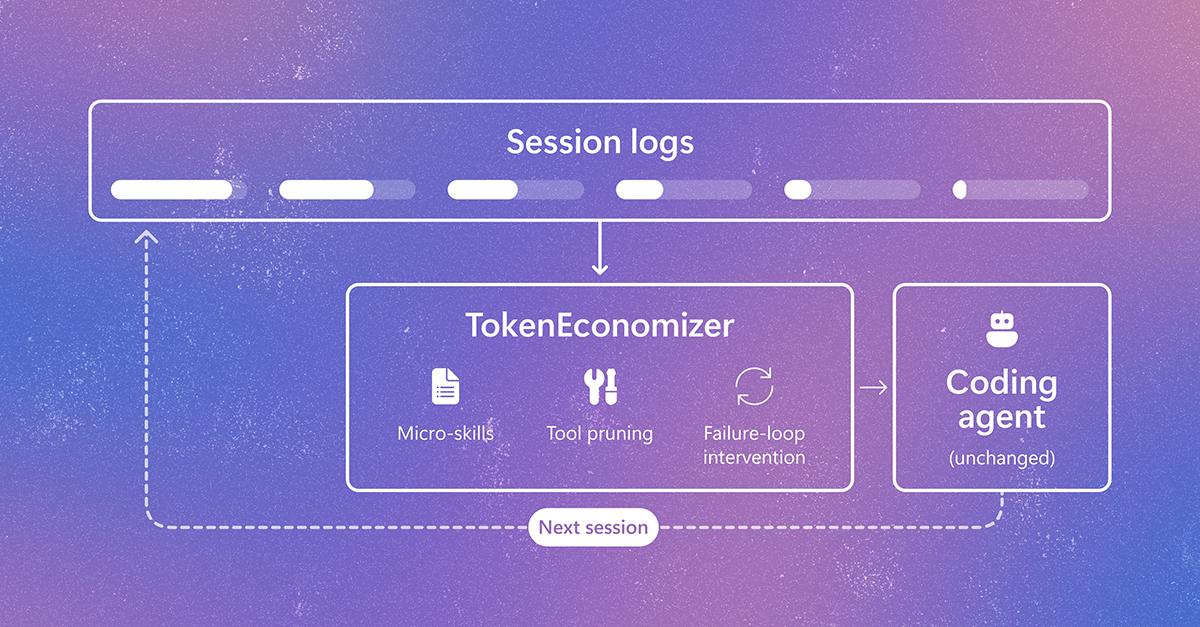
AI coding agents are increasingly help developers fix bugs and build features largely on their own, but every interaction with their models consumes tokens. In each session, an agent sends instructions, tool descriptions, and session history to its model. Most efforts to reduce this cost focus on individual tasks. Yet developers return to the same […] The post TokenEconomizer: Learning from Experience to Make AI Coding Agents More Efficient appeared first on Microsoft Research.
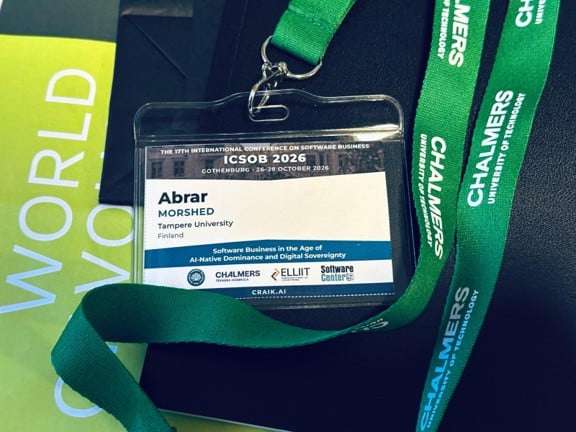
At ICSOB 2026 in Gothenburg, we presented TenderIntell, our work on multi-agent support for tendering. This post looks back at the conference, the idea behind a panel of three AI reviewers who score each proposal independently, and why evaluating agents reliably is the question we keep coming back to. The post TenderIntell at ICSOB 2026: Three Days in Gothenburg appeared first on GPT-Lab.
MIT News · Artificial Intelligence· news.mit.eduNov 13, 2026
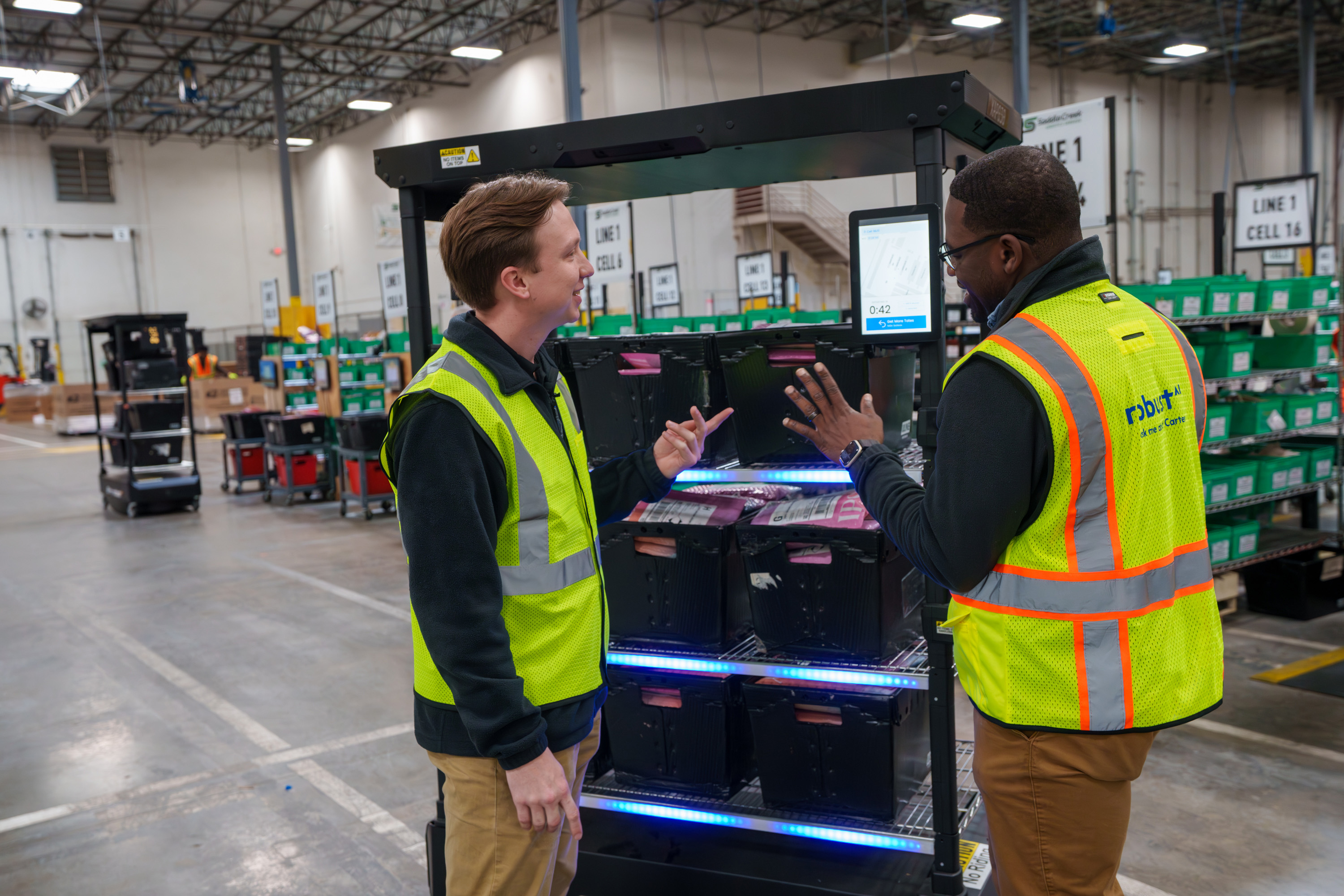
Founded by Anthony Jules ’92, SM ’92 and Professor Emeritus Rodney Brooks, Robust AI’s robots are designed to collaborate with humans in factories and warehouses.
We use cookies to run the site and, with your consent, for analytics and to show ads.
See our Cookie Policy.