Skip to content

Accelerating the Training of Tree-Based Machine Learning Algorithms for Edge Systems

Sep 2026 · Research Explorer (The University of Manchester)

Abstract

Tree-based algorithms, such as XGBOOST – an open source implementation of Gradient Boosted Decision Trees (GBDT) – are ubiquitous for many Machine Learning (ML) tasks, especially when dealing with tabular/structured data and requir- ing explainability. As dataset size continues to grow, training ensembles of trees (random forest, XGBOOST, CatBoost, Light- GBM) has been parallelized on multi-core systems, accelerated on GPUs, and distributed on computer clusters. However, FPGA acceleration targeting the training of tree-based ML remains underexplored. Analyzing the tree structure of trained GBDT models, we observe a significant overlap of the features used as nodes at the top levels of the ensemble. Guided by this insight, we modify the training algorithm of GBDT to harness the computational redundancy associated with the top nodes, as well as to create a novel accelerator architecture, FaGBM. For training, FaGBM reduces end-to-end GBDT training latency by up to 2× speedup over NVIDIA Jetson Thor with XGBOOST, LightGBM, and Cat- Boost. Moreover, for GBDT, FaGBM employs a novel adaptive approximate division to compute the split gain, which reduces LUT usage by up to 40K. For Decision Trees training, this paper investigates bit-wise approximate logarithms, resulting in an 87% reduction in DSP usage in FPGAs compared to a fixed- point implementation. The experiments further demonstrate that FaGBM preserves model accuracy while achieving significant energy efficiency over optimized multi-core and GPU baselines.

View source

Similar papers

#computer vision Review Sep 2017

Agile Software Development Methods: Review and Analysis

This publication proposes a definition and a classification of agile software development approaches and analyses ten software development methods that can be characterized as being "agile" against the defined criterion.

P. Abrahamsson, O. Salo, Jussi Ronkainen et al. · 727 citations · ⚡54
#computer vision Jun 2008

The impact of agile practices on communication in software development

The study shows that agile practices improve both informal and formal communication, but indicates that, in larger development situations involving multiple external stakeholders, a mismatch of adequate communication mechanisms can sometimes even hinder the communication.

M. Pikkarainen, Jukka Haikara, O. Salo et al. · 401 citations · ⚡48
#machine learning Review Open access Oct 2014

Software development in startup companies: A systematic mapping study

The results indicate that software engineering work practices are chosen opportunistically, adapted and configured to provide value under the constrains imposed by the startup context.

Nicolò Paternoster, Carmine Giardino, M. Unterkalmsteiner et al. · 394 citations · ⚡54

Related blog posts

GPT-Lab Sep 17, 2026

Beyond Prompt Engineering: The Role of Tacit Knowledge in Software Engineering

AI is making software generation faster, but speed does not remove the need for expertise. As more work is delegated to AI, tacit knowledge may become one of the most important human advantages in software engineering. The post Beyond Prompt Engineering: The Role of Tacit Knowledge in Software Engineering appeared first on GPT-Lab.

Microsoft Research Blog Aug 31, 2026

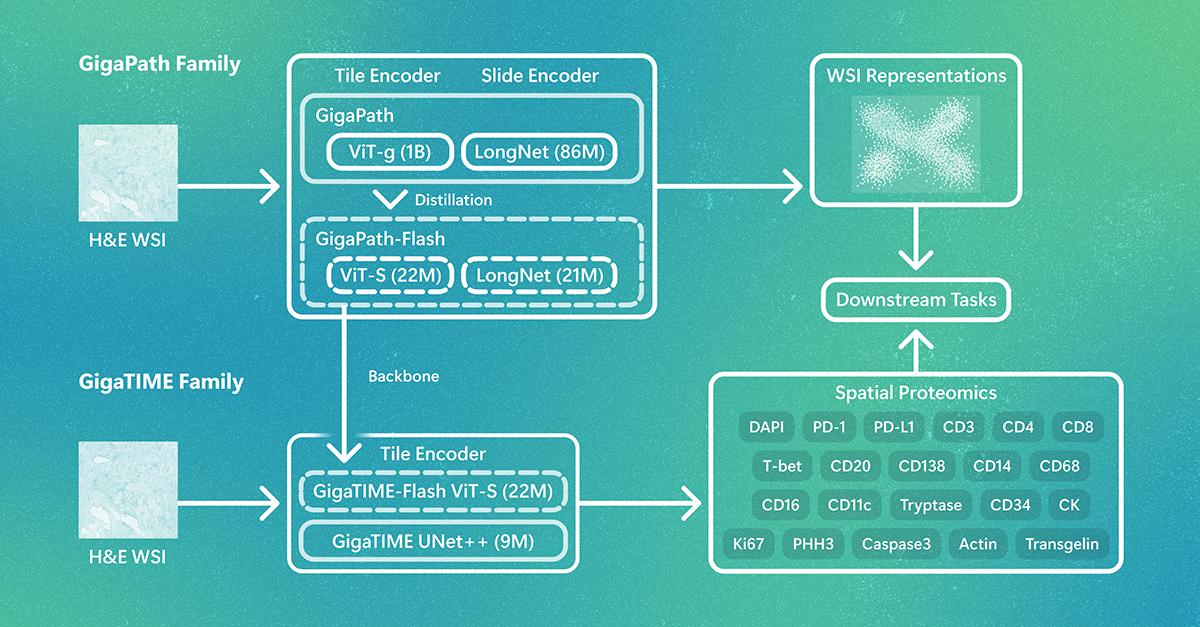
GigaPath-Flash and GigaTIME-Flash: Toward population-scale discovery with efficient pathology foundation models

What if pathology foundation models could do more with less? GigaPath-Flash and GigaTIME-Flash cut computational demands while maintaining strong performance, opening the door to larger studies and broader exploration. The post GigaPath-Flash and GigaTIME-Flash: Toward population-scale discovery with efficient pathology foundation models appeared first on Microsoft Research.

We use cookies to run the site and, with your consent, for analytics and to show ads. See our Cookie Policy.