Jun 2017· International Conference on Evaluation & Assessment in Software Engineering· pp. 134-143· 9 citations· ⚡ 2 influential· 38 references
Computer ScienceBusiness
TL;DR
It is proposed that early contract-based activities could be transformed into a long-term partnership by adopting a startup boundary spanner's role, establishing an inter-personal relationship and maintaining a mutual commitment.
Abstract
Abstract -- Software startups are becoming increasingly popular in software industry as well as other sectors of economy. Startups that lack necessary competences often seek for external resources from outsourcing partners. Little is known how this outsourcing relationship works and whether it makes sense to outsource the technical competence to an external party. This is among the first investigations on the outsourcing relationships in software startups. By conducting exploratory case studies at six startups, we found a mixed experience with outsourcing. The experimental nature of an early product development makes outsourcing a feasible option, although startups often suffer from its uncertainty and managing commitments from partners. Results further propose that early contract-based activities could be transformed into a long-term partnership by adopting a startup boundary spanner's role, establishing an inter-personal relationship and maintaining a mutual commitment.1

It is found that Llama 3 delivers comparable quality to leading language models such as GPT-4 on a plethora of tasks, and performs competitively with the state-of-the-art on image, video, and speech recognition tasks.
This paper investigates developing real-world perception for active agents, proposes Gibson Environment for this purpose, and showcases a set of perceptual tasks learned therein.
F. Xia, Amir Zamir, Zhi-Yang He et al.· 2018 IEEE/CVF Conference on...· 1,069 citations· ⚡112
This publication proposes a definition and a classification of agile software development approaches and analyses ten software development methods that can be characterized as being "agile" against the defined criterion.
P. Abrahamsson, O. Salo, Jussi Ronkainen et al.· arXiv.org· 727 citations· ⚡54
The study shows that agile practices improve both informal and formal communication, but indicates that, in larger development situations involving multiple external stakeholders, a mismatch of adequate communication mechanisms can sometimes even hinder the communication.
M. Pikkarainen, Jukka Haikara, O. Salo et al.· Empirical Software Engineeri...· 401 citations· ⚡48
The results indicate that software engineering work practices are chosen opportunistically, adapted and configured to provide value under the constrains imposed by the startup context.
Nicolò Paternoster, Carmine Giardino, M. Unterkalmsteiner et al.· Information and Software Tec...· 394 citations· ⚡54
Jennifer Neville did not want to go into computer science—but that’s exactly where she landed. Neville discusses the starts and stops that led to her professional sweet spot and her work identifying “surprising failures” making it hard for AI to handle complexity. The post What AI gets wrong and what failure teaches us appeared first on Microsoft Research.
Microsoft Research Blog· microsoft.comJul 30, 2026
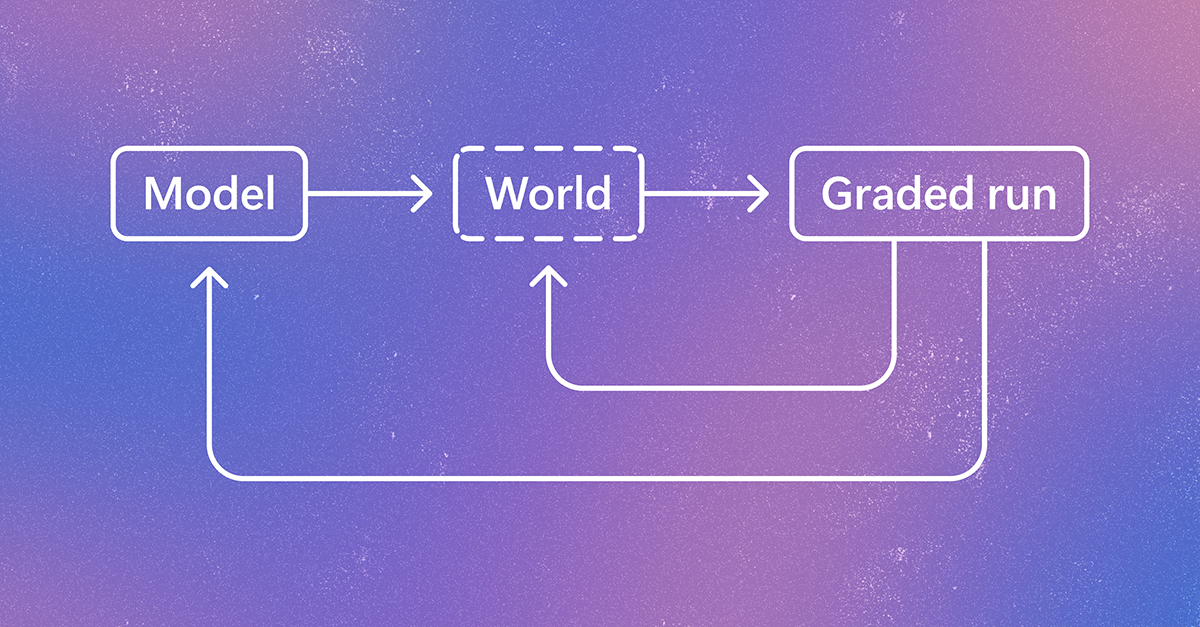
Computer-use AI agents struggle with multi-step workflows like email and customer support. Echoverse trains agents in realistic environments rather than simply providing more training tasks, helping them improve as the tasks, tests, and environments evolve. The post Echoverse: Deep, evolving environments for computer-use agents appeared first on Microsoft Research.