Skip to content

The entrepreneurial logic of startup software development: A study of 40 software startups

Mar 2021 · Empirical Software Engineering · Vol 26 · 23 citations · ⚡ 1 influential · 119 references
Computer Science

TL;DR

This study investigates the tactics behind software engineering (SE) activities by analyzing key engineering events during startup journeys and explores how entrepreneurial mindsets may be associated with SE knowledge areas and with each startup case.

Abstract

Software startups are an essential source of innovation and software-intensive products. The need to understand product development in startups and to provide relevant support are highlighted in software research. While state-of-the-art literature reveals how startups develop their software, the reasons why they adopt these activities are underexplored. This study investigates the tactics behind software engineering (SE) activities by analyzing key engineering events during startup journeys. We explore how entrepreneurial mindsets may be associated with SE knowledge areas and with each startup case. Our theoretical foundation is based on causation and effectuation models. We conducted semi-structured interviews with 40 software startups. We used two-round open coding and thematic analysis to describe and identify entrepreneurial software development patterns. Additionally, we calculated an effectuation index for each startup case. We identified 621 events merged into 32 codes of entrepreneurial logic in SE from the sample. We found a systemic occurrence of the logic in all areas of SE activities. Minimum Viable Product (MVP), Technical Debt (TD), and Customer Involvement (CI) tend to be associated with effectual logic, while testing activities at different levels are associated with causal logic. The effectuation index revealed that startups are either effectuation-driven or mixed-logics-driven. Software startups fall into two types that differentiate between how traditional SE approaches may apply to them. Effectuation seems the most relevant and essential model for explaining and developing suitable SE practices for software startups.


Read PDF

Similar papers

Conference Open access 2026

Critical Success Factors in Global Software Development: A Systematic Literature Review

Seven major CSFs that drive success in globally distributed projects are revealed, highlighting a major paradigm shift within the software industry: socio-technical skills and reliable technology now carry significantly more weight than strict, traditional processes.

Chellal Mostafa, Mohammed Saber, M. Belkasmi · 0 citations
Open access Aug 2026

Technical Debt Management in Continuous Software Engineering: State of the Art and Research Agenda

Software companies have streamlined their engineering processes, and continuous development has been key to achieving flexible, market‐driven software solutions. Continuous software engineering (CSE) emerged as an approach to iteratively develop and maintain software, integrating business strategy, development, and operations aligned with agile principles. CSE activities also lead to technical debt (TD) buildup, negatively impacting software quality over time, so technical debt management (TDM) in CSE is crucial. However, TD in CSE is still poorly understood, as well as its causes and consequences, and how to better manage it. In addition, to the best of our knowledge, no study has investigated TDM in CSE. This paper then presents the state of the art of TDM in CSE, focusing on TD causes and consequences and how to manage them continuously. For this, we carefully examined the literature and selected 56 relevant studies from an initial set of 1299. Our main findings indicate that the field is relatively young and has considerable industry involvement. While most studies reported an experience with TD in continuous and agile contexts or the use of systematic approaches for TDM (e.g., frameworks and processes), none investigated TD explicitly in CSE or tried to understand its causes and consequences in those contexts. Some CSE activities addressed TD, particularly those associated with development, such as continuous architecting, coding, verification/testing, and documentation. Other important activities at the business and operation levels were left aside. These findings supported us in defining a research agenda with important research opportunities that could contribute to maturing the field.

L. Carvalho, J. P. Biazotto, Daniel Feitosa et al. · 0 citations
Open access Mar 2025

LLMs’ reshaping of people, processes, products, and society in software development: a qualitative exploration with early adopters

Interviews with sixteen early-adopter software professionals who integrated LLM-based tools into their day-to-day work in early to mid-2023 offer actionable implications for developers, organizations, educators, and tool designers seeking to integrate LLMs responsibly into professional software practice.

Benyamin T. Tabarsi, Heidi Reichert, Sam Gilson et al. · 22 citations · ⚡1

Related blog posts

Microsoft Research Blog Aug 31, 2026

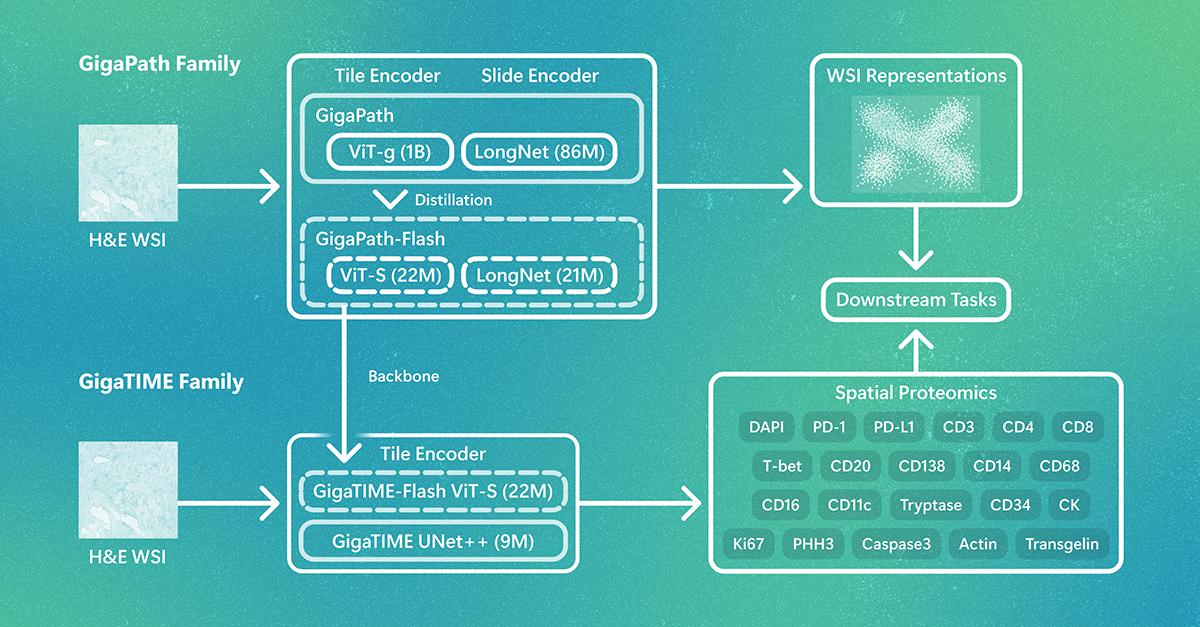
GigaPath-Flash and GigaTIME-Flash: Toward population-scale discovery with efficient pathology foundation models

What if pathology foundation models could do more with less? GigaPath-Flash and GigaTIME-Flash cut computational demands while maintaining strong performance, opening the door to larger studies and broader exploration. The post GigaPath-Flash and GigaTIME-Flash: Toward population-scale discovery with efficient pathology foundation models appeared first on Microsoft Research.

We use cookies to run the site and, with your consent, for analytics and to show ads. See our Cookie Policy.