Skip to content
#machine learning #computer vision Preprint Open access

Road Maps as Free Geometric Priors: Weather-Invariant Drone Geo-Localization with GeoFuse

Yunsong Fang Tingyu Wang Zhedong Zheng
Oct 2026
Machine Learning Computer Vision

Abstract

Drone-view geo-localization aims to match a query drone image, often captured under adverse weather conditions (e.g., rain, snow, fog), against a gallery of geo-tagged satellite images. Weather-induced degradations in the drone view, such as noise, reduced visibility, and partial occlusions, severely exacerbate the intrinsic cross-view domain gap. While prior methods predominantly rely on weather-specific architectures or data augmentations, they have largely overlooked road map data, a readily available modality that provides strong, inherently weather-invariant geometric layout cues (e.g., road networks and building footprints) at negligible additional cost. We introduce GeoFuse, a cross-modal fusion framework that integrates precisely aligned road map tiles with satellite imagery to yield more discriminative and weather-resilient representations. We first augment the existing University-1652 and DenseUAV benchmarks with geo-aligned road maps, supplying structural priors robust to meteorological variations. Building on this, we propose a flexible fusion module that combines satellite and road map features via token-level and channel-level interactions, with a lightweight dynamic gating mechanism that adaptively weights modality contributions per instance. Finally, we employ class-level cross-view contrastive learning to promote robust alignment between weather-degraded drone features and the fused satellite-roadmap representations. Extensive experiments under diverse weather conditions show that GeoFuse consistently outperforms state-of-the-art methods, achieving +3.46% and +23.18% Recall@1 accuracy on the University-1652 and DenseUAV benchmarks, respectively.

View source

Similar papers

#computer vision Review Sep 2017

Agile Software Development Methods: Review and Analysis

This publication proposes a definition and a classification of agile software development approaches and analyses ten software development methods that can be characterized as being "agile" against the defined criterion.

P. Abrahamsson, O. Salo, Jussi Ronkainen et al. · 727 citations · ⚡54
#computer vision Jun 2008

The impact of agile practices on communication in software development

The study shows that agile practices improve both informal and formal communication, but indicates that, in larger development situations involving multiple external stakeholders, a mismatch of adequate communication mechanisms can sometimes even hinder the communication.

M. Pikkarainen, Jukka Haikara, O. Salo et al. · 401 citations · ⚡48
#machine learning Review Open access Oct 2014

Software development in startup companies: A systematic mapping study

The results indicate that software engineering work practices are chosen opportunistically, adapted and configured to provide value under the constrains imposed by the startup context.

Nicolò Paternoster, Carmine Giardino, M. Unterkalmsteiner et al. · 394 citations · ⚡54

Diffusion models as plug-and-play priors

The possibility of inferring high-dimensional data inference in a model that consists of a prior and an auxiliary differentiable constraint given some additional information is considered, thereby allowing a range of potential applications in adapting models to new domains and tasks.

Alexandros Graikos, Esmeralda S. Whitammer, N. Jojic et al. · 316 citations · ⚡15

Trajectory Balance: Improved Credit Assignment in GFlowNets

It is proved that any global minimizer of the trajectory balance objective can define a policy that samples exactly from the target distribution, and empirically demonstrate the benefits of the trajectories balance objective for GFlowNet convergence, diversity of generated samples, and robustness to long action sequenc...

Esmeralda S. Whitammer, Moksh Jain, Emmanuel Bengio et al. · 302 citations · ⚡60

Related blog posts

Microsoft Research Blog Aug 11, 2026

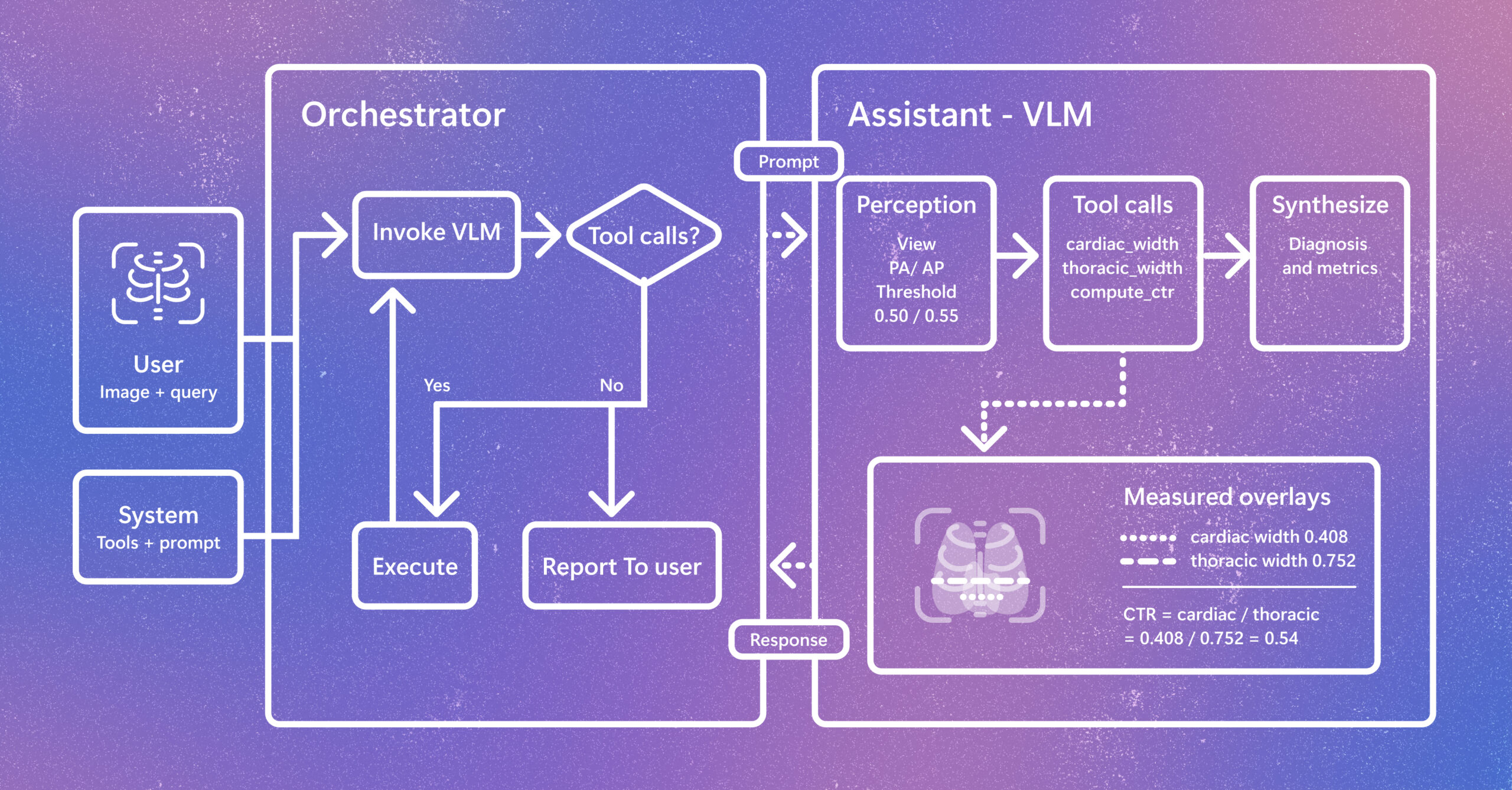
Introducing CARE-X: Towards Clinically Useful Radiology VLMs with Auxiliary Supervision, Reward-Aligned Learning, and Tool-Augmented Measurement

Radiology AI is evolving beyond report generation. CARE-X explores a unified approach that combines flexible reasoning, calibrated predictions, and measurement-based tools for chest X-ray interpretation. The post Introducing CARE-X: Towards Clinically Useful Radiology VLMs with Auxiliary Supervision, Reward-Aligned Learning, and Tool-Augmented Measurement appeared first on Microsoft Research.

We use cookies to run the site and, with your consent, for analytics and to show ads. See our Cookie Policy.