Skip to content

Large-scale Repository Engineering via Agent-Native Reusable Code Primitives

Hai-Bo Jin Peng Kuang Xu-Cheng Yu Jerry Wang De-Hao Wu Hao-Han Wang
Oct 2026 · 0 citations · 41 references
Computer Science

Abstract

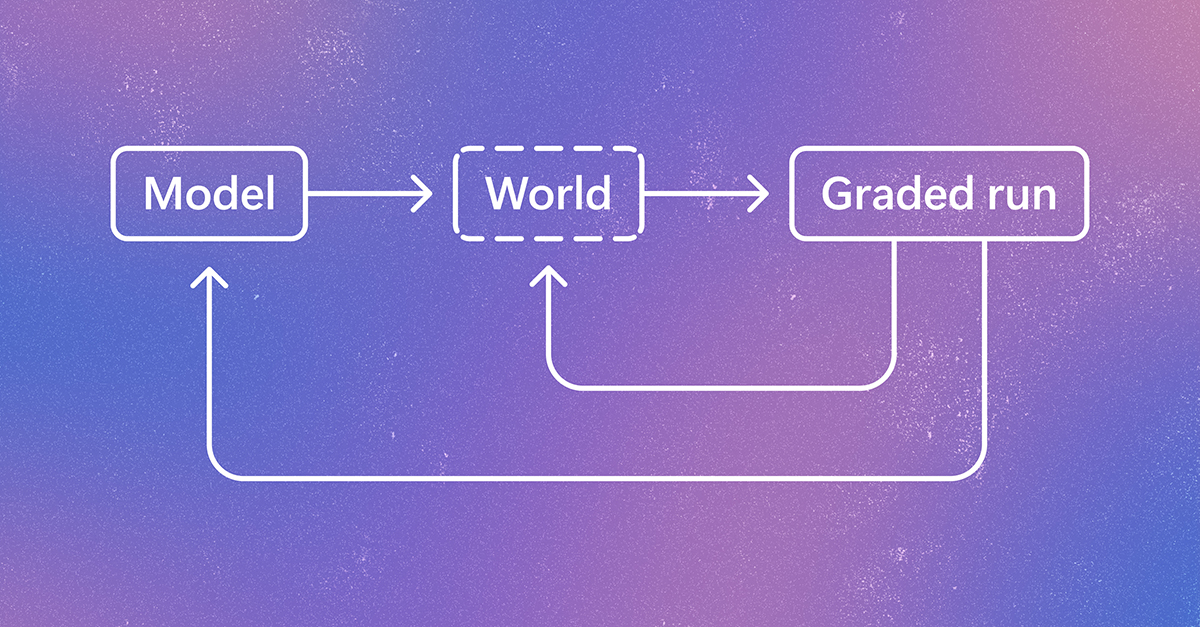
Large language models equipped with development environments have moved code generation toward repository-scale construction, yet building complete repositories remains difficult because interacting modules, interfaces, configurations, tests, and dependencies must work together. We introduce Code Primitives, agent-native reusable executable components with interface contracts, dependency closures, validation tests, and provenance. Each primitive uses a resident LLM to assess relevance and adapt its implementation, interfaces, and dependencies to the target repository, and we organize 1,424 validated primitives in CodeFace, a searchable library for repository construction. We introduce LEGO (Large-scale repository Engineering via aGent-native reusable cOde primitives), which activates task-relevant primitives, integrates their adapted implementations with task-specific code while resolving cross-component constraints, and revises the result against executed tests. To measure construction end to end, we build LEGO-REPO, a benchmark of 522 executable reconstruction tasks spanning seven software domains, 22 capability tracks, and five difficulty levels, scored against native test suites between an empty-package floor and original-source ceiling. The strongest of 13 evaluated backbones reaches a delivery score of 0.318 and scores zero on 41.0% of tasks; LEGO improves all 13 by 0.1474 on average and raises GPT-5.6-terra from 0.3180 to 0.5134 (+61.4%). In controlled comparisons, adapted primitives outperform retrieved code supplied as context or vendored unchanged. The effect persists against independent repository agents, across three external benchmarks, and with a disjointly re-mined CodeFace; GPT-OSS-20B for adaptation and diagnosis retains 95.1% of the homogeneous score at 24.0% lower cost.
View source

Similar papers

#computer vision Review Sep 2017

Agile Software Development Methods: Review and Analysis

This publication proposes a definition and a classification of agile software development approaches and analyses ten software development methods that can be characterized as being "agile" against the defined criterion.

P. Abrahamsson, O. Salo, Jussi Ronkainen et al. · 727 citations · ⚡54
#computer vision Jun 2008

The impact of agile practices on communication in software development

The study shows that agile practices improve both informal and formal communication, but indicates that, in larger development situations involving multiple external stakeholders, a mismatch of adequate communication mechanisms can sometimes even hinder the communication.

M. Pikkarainen, Jukka Haikara, O. Salo et al. · 401 citations · ⚡48
#machine learning Review Open access Oct 2014

Software development in startup companies: A systematic mapping study

The results indicate that software engineering work practices are chosen opportunistically, adapted and configured to provide value under the constrains imposed by the startup context.

Nicolò Paternoster, Carmine Giardino, M. Unterkalmsteiner et al. · 394 citations · ⚡54

Diffusion models as plug-and-play priors

The possibility of inferring high-dimensional data inference in a model that consists of a prior and an auxiliary differentiable constraint given some additional information is considered, thereby allowing a range of potential applications in adapting models to new domains and tasks.

Alexandros Graikos, Esmeralda S. Whitammer, N. Jojic et al. · 316 citations · ⚡15

Related blog posts

Microsoft Research Blog Jul 30, 2026

Echoverse: Deep, evolving environments for computer-use agents

Computer-use AI agents struggle with multi-step workflows like email and customer support. Echoverse trains agents in realistic environments rather than simply providing more training tasks, helping them improve as the tasks, tests, and environments evolve. The post Echoverse: Deep, evolving environments for computer-use agents appeared first on Microsoft Research.

MIT News · Artificial Intelligence Jun 3, 2026

MIT researchers teach AI models to interpret charts

The new ChartNet training dataset could improve the accuracy of vision-language models that help analyze business trends or interpret scientific figures.

We use cookies to run the site and, with your consent, for analytics and to show ads. See our Cookie Policy.