Skip to content
#machine learning #computer vision Preprint Open access

Component-Adaptive and Lesion-Level Supervision for Improved Small Structure Segmentation in Brain MRI

Minh Sao Khue Luu Evgeniy N. Pavlovskiy Bair N. Tuchinov
Oct 2026
Machine Learning Computer Vision

Abstract

Small lesions in brain MRI are hard to segment because they occupy a tiny fraction of the volume and are dominated by background and larger lesions during voxel-wise optimization, so a model can reach a high Dice similarity coefficient (DSC) while missing many of them. We propose CATMIL, a training objective that adds two auxiliary terms to the standard nnU-Net Dice and cross-entropy loss without changing the architecture. The Component-Adaptive Tversky (CAT) term weights lesion voxels by the inverse size of their connected component, so each lesion contributes nearly equally regardless of volume. The lesion-level Multiple Instance Learning (MIL) term treats each lesion as a bag of voxels and penalizes lesions with no detected voxel. For multiple sclerosis lesion segmentation on MSLesSeg, CATMIL achieves the highest small-lesion recall (0.873 vs. 0.796 for Dice+CE; 95% CI of the difference +0.030 to +0.157, higher in all six test patients) and about 48% fewer missed lesions, with comparable DSC and HD95. The gain holds for lesions of at least 3 mm in diameter, the clinical reading size (recall 0.944 vs. 0.870). Standard losses produce no probability response to most small lesions they miss, so no threshold can recover them. The cost is more small false-positive components; a simple component-size filter removes most of them while keeping the sensitivity gain, and at matched lesion-wise precision CATMIL detects more small lesions with higher lesion-wise F1. An ablation attributes the detection gain to the MIL term. On a second dataset, 3D-MR-MS, CATMIL with the same loss weights again improves small-lesion recall, at a larger false-positive cost and slightly lower DSC. Code: https://github.com/luumsk/SmallLesionMRI

View source

Similar papers

#computer vision Review Sep 2017

Agile Software Development Methods: Review and Analysis

This publication proposes a definition and a classification of agile software development approaches and analyses ten software development methods that can be characterized as being "agile" against the defined criterion.

P. Abrahamsson, O. Salo, Jussi Ronkainen et al. · 727 citations · ⚡54
#computer vision Jun 2008

The impact of agile practices on communication in software development

The study shows that agile practices improve both informal and formal communication, but indicates that, in larger development situations involving multiple external stakeholders, a mismatch of adequate communication mechanisms can sometimes even hinder the communication.

M. Pikkarainen, Jukka Haikara, O. Salo et al. · 401 citations · ⚡48
#machine learning Review Open access Oct 2014

Software development in startup companies: A systematic mapping study

The results indicate that software engineering work practices are chosen opportunistically, adapted and configured to provide value under the constrains imposed by the startup context.

Nicolò Paternoster, Carmine Giardino, M. Unterkalmsteiner et al. · 394 citations · ⚡54

Diffusion models as plug-and-play priors

The possibility of inferring high-dimensional data inference in a model that consists of a prior and an auxiliary differentiable constraint given some additional information is considered, thereby allowing a range of potential applications in adapting models to new domains and tasks.

Alexandros Graikos, Esmeralda S. Whitammer, N. Jojic et al. · 316 citations · ⚡15

Related blog posts

Microsoft Research Blog Aug 11, 2026

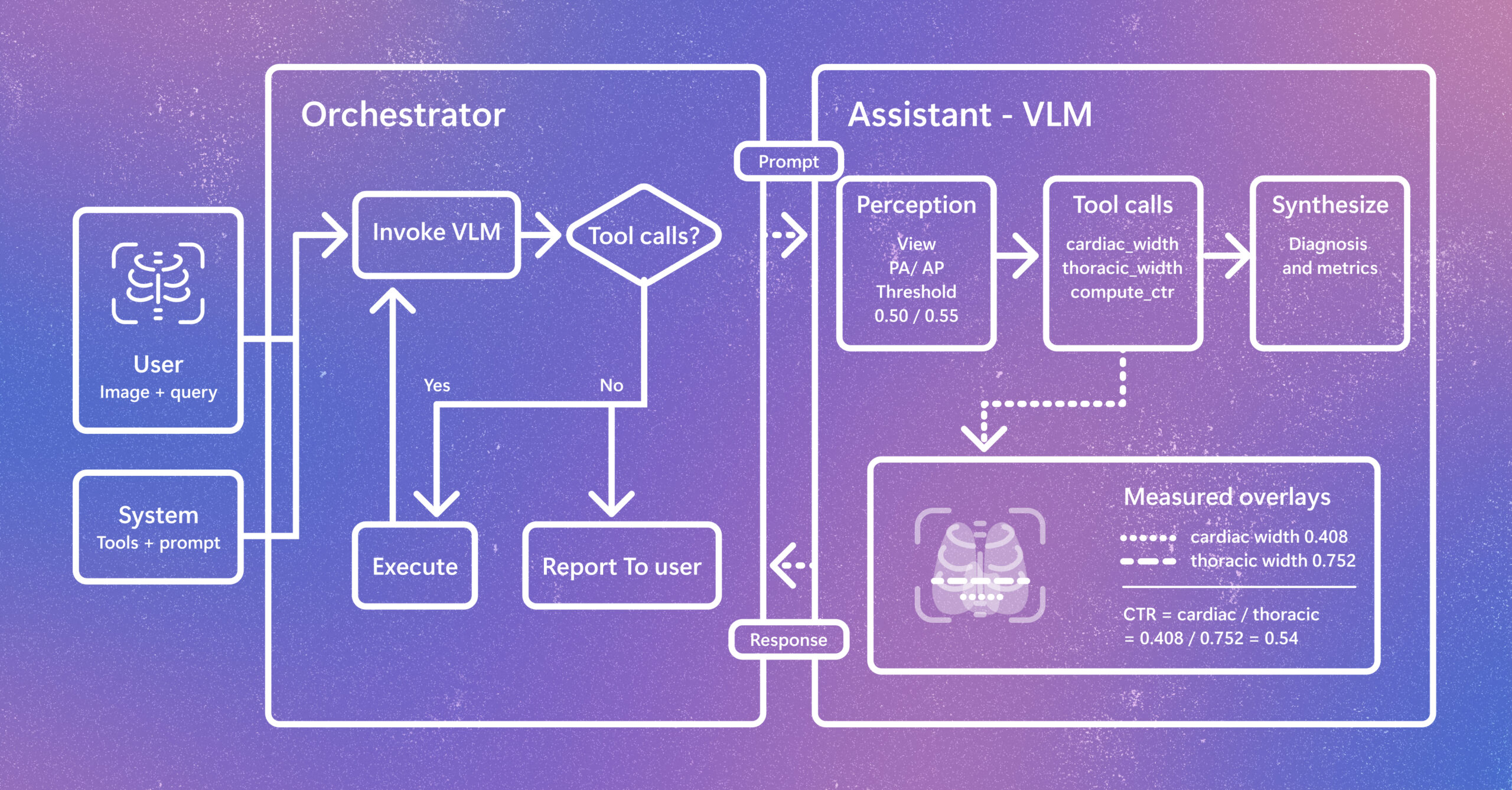
Introducing CARE-X: Towards Clinically Useful Radiology VLMs with Auxiliary Supervision, Reward-Aligned Learning, and Tool-Augmented Measurement

Radiology AI is evolving beyond report generation. CARE-X explores a unified approach that combines flexible reasoning, calibrated predictions, and measurement-based tools for chest X-ray interpretation. The post Introducing CARE-X: Towards Clinically Useful Radiology VLMs with Auxiliary Supervision, Reward-Aligned Learning, and Tool-Augmented Measurement appeared first on Microsoft Research.

MIT News · Artificial Intelligence Oct 7, 2026

Discovering the value of humanistic inquiry

Students in MIT’s Concourse program delve deeply into the human condition, debate challenging questions, and learn to develop judgment about issues that can’t be quantified.

We use cookies to run the site and, with your consent, for analytics and to show ads. See our Cookie Policy.
