It Is Not Seeing the Hazard: A Frozen Vision-Language Safety Score Measures Its Caption Bank
Samuel TettehCody Fleming
Oct 2026
Machine LearningComputer Vision
Abstract
Frozen vision-language models increasingly provide safety signals for reinforcement learning. Their use assumes that similarity to language describing danger indicates the hazard itself. Yet policy return and collision rate cannot reveal whether a score detects hazards or responds to correlated features of the scene. VLM-based methods have reported gains in driving and safe-RL benchmarks by converting image-text similarity into rewards, costs, or confidence weights. Such signals promise to reduce reliance on manually designed feedback. They may also reflect prompt structure, embedding geometry, or camera viewpoint, leaving their safety meaning unverified. To address this gap, we present a controlled evaluation of a frozen CLIP prompt-margin safety score. We apply the score to trajectories generated by policies that never receive it, match pre-contact observations to contact-free observations with comparable hazard geometry, and vary the captions, encoder, and camera view. Across three policies, 180 episodes, and 130 isolated contact onsets, the score decreases for about twenty steps before contact. Mechanism controls indicate that the score mainly tracks resemblance to the scene shared by its captions and changes with caption separation and camera view. A constant-confidence control retains the lower catastrophe-rate point estimate, so policy gains do not establish hazard perception.
This publication proposes a definition and a classification of agile software development approaches and analyses ten software development methods that can be characterized as being "agile" against the defined criterion.
P. Abrahamsson, O. Salo, Jussi Ronkainen et al.· arXiv.org· 727 citations· ⚡54
The study shows that agile practices improve both informal and formal communication, but indicates that, in larger development situations involving multiple external stakeholders, a mismatch of adequate communication mechanisms can sometimes even hinder the communication.
M. Pikkarainen, Jukka Haikara, O. Salo et al.· Empirical Software Engineeri...· 401 citations· ⚡48
The results indicate that software engineering work practices are chosen opportunistically, adapted and configured to provide value under the constrains imposed by the startup context.
Nicolò Paternoster, Carmine Giardino, M. Unterkalmsteiner et al.· Information and Software Tec...· 394 citations· ⚡54
The possibility of inferring high-dimensional data inference in a model that consists of a prior and an auxiliary differentiable constraint given some additional information is considered, thereby allowing a range of potential applications in adapting models to new domains and tasks.
Alexandros Graikos, Esmeralda S. Whitammer, N. Jojic et al.· Neural Information Processin...· 316 citations· ⚡15
It is proved that any global minimizer of the trajectory balance objective can define a policy that samples exactly from the target distribution, and empirically demonstrate the benefits of the trajectories balance objective for GFlowNet convergence, diversity of generated samples, and robustness to long action sequenc...
Esmeralda S. Whitammer, Moksh Jain, Emmanuel Bengio et al.· Neural Information Processin...· 302 citations· ⚡60
Exploring how generative AI could make machine vision more accessible to businesses. The post GenEye in a Box: Making Machine Vision Something You Can Just Ask For appeared first on GPT-Lab.
Microsoft Research Blog· microsoft.comAug 11, 2026
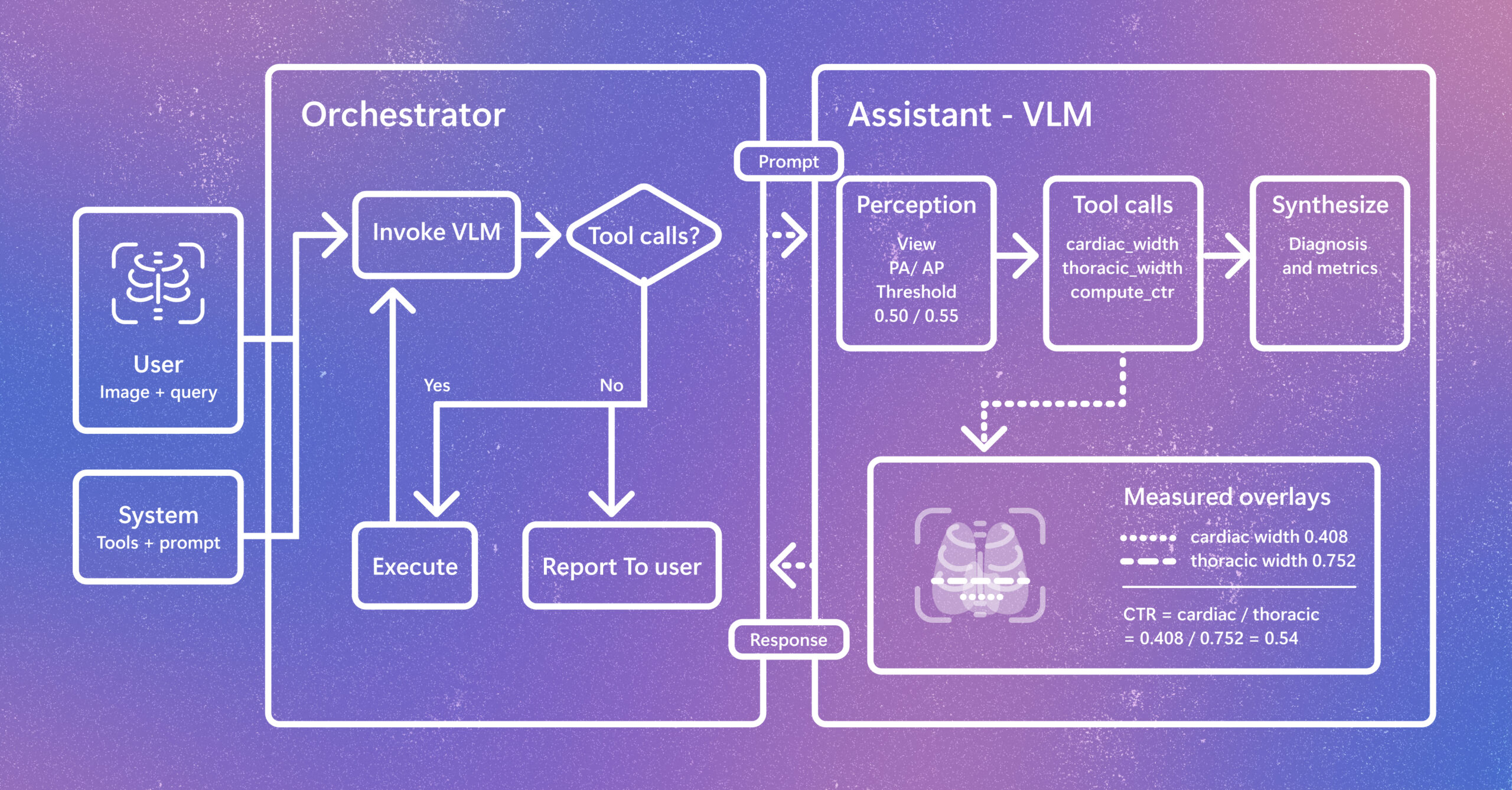
Radiology AI is evolving beyond report generation. CARE-X explores a unified approach that combines flexible reasoning, calibrated predictions, and measurement-based tools for chest X-ray interpretation. The post Introducing CARE-X: Towards Clinically Useful Radiology VLMs with Auxiliary Supervision, Reward-Aligned Learning, and Tool-Augmented Measurement appeared first on Microsoft Research.
Students in MIT’s Concourse program delve deeply into the human condition, debate challenging questions, and learn to develop judgment about issues that can’t be quantified.
We use cookies to run the site and, with your consent, for analytics and to show ads.
See our Cookie Policy.