Skip to content
#machine learning #computer vision Preprint Open access

An Invariant Tangent-Angle Descriptor and a Band U-Net for 2D Fragment Adjacency Prediction

Guillaume Brouillette (Universit\'e du Qu\'ebec \`a Trois-Rivi\`eres Trois-Rivi\`eres Canada) Alain Goupil (Universit\'e du Qu\'ebec \`a Trois-Rivi\`eres Trois-Rivi\`eres Canada) Pierre-Olivier Paris\'e (Universit\'e du Qu\'ebec \`a Trois-Rivi\`eres Trois-Rivi\`eres Canada) Fadel Tour\'e (Universit\'e du Qu\'ebec \`a Trois-Rivi\`eres Trois-Rivi\`eres Canada)
Oct 2026
Machine Learning Computer Vision

Abstract

This paper addresses the prediction of adjacency between pairs of 2D fragments based on their contours. We improved the two-stage architecture proposed in Beaulac's thesis, in which a rotation-equivariant Siamese convolutional neural network scores pairs of local image windows along the two contours of two fragments. The scores are gathered in an adjacency matrix in which a ResNet detects the partial anti-diagonal band that reveals the adjacency of two fragments. In the current work, we keep the pipeline and replace the local score by a comparison of tangent-angle profiles of contour windows, making it, by construction, invariant to fragment rotation and agnostic to the selected contour-starting point. These adaptations may be either a training-free likelihood ratio or a small one-dimensional convolutional model trained on corresponding points. We also replaced the final classifier by a band U-Net that segments the band and classifies the pair, so that the shared arc is obtained along with the decision. In the synthetic data set of the original thesis, the tangent descriptor performs as well as or better than the image-window approach in all tested configurations. The proposed pipeline reaches an accuracy of 98%, vs 93% to 95% for the original approach once its evaluation is corrected. We tested our pipeline, with models trained only on synthetic data, on the PairingNet benchmark, and obtained an AUC of 0.93. Furthermore, under the PairingNet pair-searching protocol conditions, our learned descriptor obtains a Recall@10 of 0.82 on the real set against 0.56 from the best model of the original paper.

View source

Similar papers

#computer vision Review Sep 2017

Agile Software Development Methods: Review and Analysis

This publication proposes a definition and a classification of agile software development approaches and analyses ten software development methods that can be characterized as being "agile" against the defined criterion.

P. Abrahamsson, O. Salo, Jussi Ronkainen et al. · 727 citations · ⚡54
#computer vision Jun 2008

The impact of agile practices on communication in software development

The study shows that agile practices improve both informal and formal communication, but indicates that, in larger development situations involving multiple external stakeholders, a mismatch of adequate communication mechanisms can sometimes even hinder the communication.

M. Pikkarainen, Jukka Haikara, O. Salo et al. · 401 citations · ⚡48
#machine learning Review Open access Oct 2014

Software development in startup companies: A systematic mapping study

The results indicate that software engineering work practices are chosen opportunistically, adapted and configured to provide value under the constrains imposed by the startup context.

Nicolò Paternoster, Carmine Giardino, M. Unterkalmsteiner et al. · 394 citations · ⚡54

Diffusion models as plug-and-play priors

The possibility of inferring high-dimensional data inference in a model that consists of a prior and an auxiliary differentiable constraint given some additional information is considered, thereby allowing a range of potential applications in adapting models to new domains and tasks.

Alexandros Graikos, Esmeralda S. Whitammer, N. Jojic et al. · 316 citations · ⚡15

Trajectory Balance: Improved Credit Assignment in GFlowNets

It is proved that any global minimizer of the trajectory balance objective can define a policy that samples exactly from the target distribution, and empirically demonstrate the benefits of the trajectories balance objective for GFlowNet convergence, diversity of generated samples, and robustness to long action sequenc...

Esmeralda S. Whitammer, Moksh Jain, Emmanuel Bengio et al. · 302 citations · ⚡60

Related blog posts

Microsoft Research Blog Aug 11, 2026

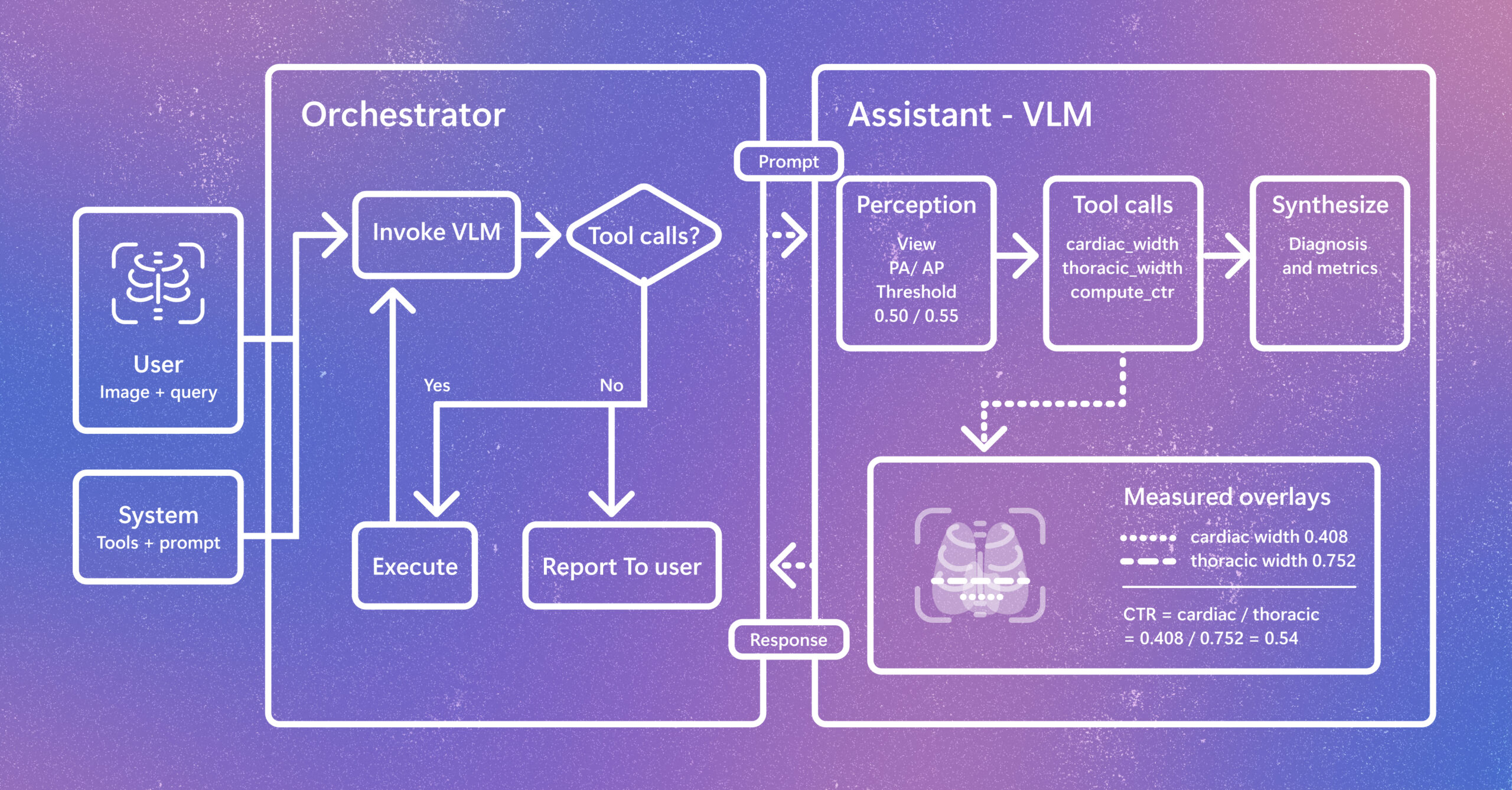
Introducing CARE-X: Towards Clinically Useful Radiology VLMs with Auxiliary Supervision, Reward-Aligned Learning, and Tool-Augmented Measurement

Radiology AI is evolving beyond report generation. CARE-X explores a unified approach that combines flexible reasoning, calibrated predictions, and measurement-based tools for chest X-ray interpretation. The post Introducing CARE-X: Towards Clinically Useful Radiology VLMs with Auxiliary Supervision, Reward-Aligned Learning, and Tool-Augmented Measurement appeared first on Microsoft Research.

MIT News · Artificial Intelligence Oct 7, 2026

Discovering the value of humanistic inquiry

Students in MIT’s Concourse program delve deeply into the human condition, debate challenging questions, and learn to develop judgment about issues that can’t be quantified.

We use cookies to run the site and, with your consent, for analytics and to show ads. See our Cookie Policy.
