World models offer a data-driven alternative to traditional simulators for robotics, with applications spanning policy evaluation, improvement, and planning. All of these uses depend on faithful 3D geometry, yet current video-based world models are trained on RGB alone and produce rollouts that look correct frame-by-frame but do not compose into a consistent 3D world. Closing this gap requires progress on two fronts: large-scale 3D supervision for manipulation, and an architecture that can absorb it without disturbing strong pretrained video priors. We introduce a calibration pipeline that combines learned stereo depth with a joint factor graph, pooling all episodes collected from the same physical robot to recover its shared kinematic parameters alongside per-scene extrinsics. Applied to the DROID dataset, this yields DROID-3D, a calibrated 3D dataset providing dense metric depth and recalibrated multi-view extrinsics (achieving <0.7 px reprojection error on 90% of episodes for external cameras). We then train DepthWorld, a Stable Video Diffusion-based world model that jointly predicts multi-view RGB and depth via spatial latent tiling, leaving the pretrained Variational Autoencoder (VAE) unchanged. Depth supervision improves RGB prediction itself by +1.48 dB PSNR over an identical RGB-only baseline at equal training budget, while simultaneously yielding accurate metric depth for downstream geometric reasoning.

This publication proposes a definition and a classification of agile software development approaches and analyses ten software development methods that can be characterized as being "agile" against the defined criterion.
P. Abrahamsson, O. Salo, Jussi Ronkainen et al.· arXiv.org· 727 citations· ⚡54
The study shows that agile practices improve both informal and formal communication, but indicates that, in larger development situations involving multiple external stakeholders, a mismatch of adequate communication mechanisms can sometimes even hinder the communication.
M. Pikkarainen, Jukka Haikara, O. Salo et al.· Empirical Software Engineeri...· 401 citations· ⚡48
The results indicate that software engineering work practices are chosen opportunistically, adapted and configured to provide value under the constrains imposed by the startup context.
Nicolò Paternoster, Carmine Giardino, M. Unterkalmsteiner et al.· Information and Software Tec...· 394 citations· ⚡54
The possibility of inferring high-dimensional data inference in a model that consists of a prior and an auxiliary differentiable constraint given some additional information is considered, thereby allowing a range of potential applications in adapting models to new domains and tasks.
Alexandros Graikos, Esmeralda S. Whitammer, N. Jojic et al.· Neural Information Processin...· 316 citations· ⚡15
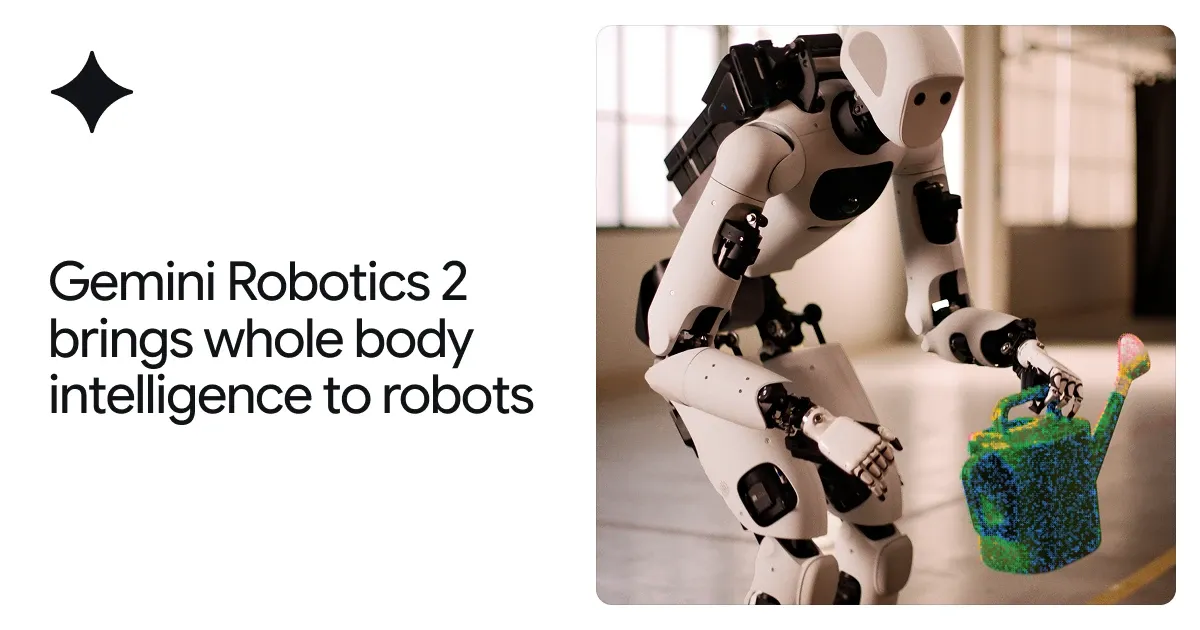
From feet to fingertips — we are teaching robots intelligent whole-body control, fine dexterity, and teamwork to complete a broad range of complex tasks.
Known for his clear and elegant writing style, Bertsekas shaped fields from control and optimization to large-scale computation and artificial intelligence.
We use cookies to run the site and, with your consent, for analytics and to show ads.
See our Cookie Policy.