Water quality has emerged as a critical global concern that requires advanced monitoring and management strategies. Traditional water-quality assessment methods predominantly rely on laboratory-oriented analysis that are time consuming, expensive, and are often labor-intensive. This study presents a thorough overview of the paradigm shift from conventional lab analysis towards intelligent and automated, AI-based assessment and monitoring frameworks. The survey systematically explains the use of machine learning (ML), deep learning (DL), and hybrid models to analyze complicated multidimensional and nonlinear water parameters. This study evaluates predictive architectures ranging from traditional regression-based models to advanced ensembles and deep neural networks (CNNs, ANNs, and RNNs) integrated with IoT computing technologies for continuous water quality monitoring. Enhancing models’ interpretability and transparency through Explainable Artificial Intelligence methods like SHAP and LIME are analyzed. This survey addresses existing challenges like data scarcity, interpretability of the model, and computational complexity. Self-attention-based architectures, generative AI, and edge computing used to improve the robustness of future water-quality management systems are also assessed. An overall structured research perspective on AI-driven water-quality assessment with methodological gaps with future scope are established in this survey.
This publication proposes a definition and a classification of agile software development approaches and analyses ten software development methods that can be characterized as being "agile" against the defined criterion.
P. Abrahamsson, O. Salo, Jussi Ronkainen et al.· arXiv.org· 727 citations· ⚡54
The study shows that agile practices improve both informal and formal communication, but indicates that, in larger development situations involving multiple external stakeholders, a mismatch of adequate communication mechanisms can sometimes even hinder the communication.
M. Pikkarainen, Jukka Haikara, O. Salo et al.· Empirical Software Engineeri...· 401 citations· ⚡48
The results indicate that software engineering work practices are chosen opportunistically, adapted and configured to provide value under the constrains imposed by the startup context.
Nicolò Paternoster, Carmine Giardino, M. Unterkalmsteiner et al.· Information and Software Tec...· 394 citations· ⚡54
The perception of the impact of agile methods is predominantly positive, and several challenge areas were discovered, but based on this study, agile methods are here to stay.
M. Laanti, O. Salo, P. Abrahamsson· Information and Software Tec...· 260 citations· ⚡20
Related blog posts
MIT News · Artificial Intelligence· news.mit.eduOct 8, 2026
Jennifer Neville did not want to go into computer science—but that’s exactly where she landed. Neville discusses the starts and stops that led to her professional sweet spot and her work identifying “surprising failures” making it hard for AI to handle complexity. The post What AI gets wrong and what failure teaches us appeared first on Microsoft Research.
Microsoft Research Blog· microsoft.comSep 29, 2026
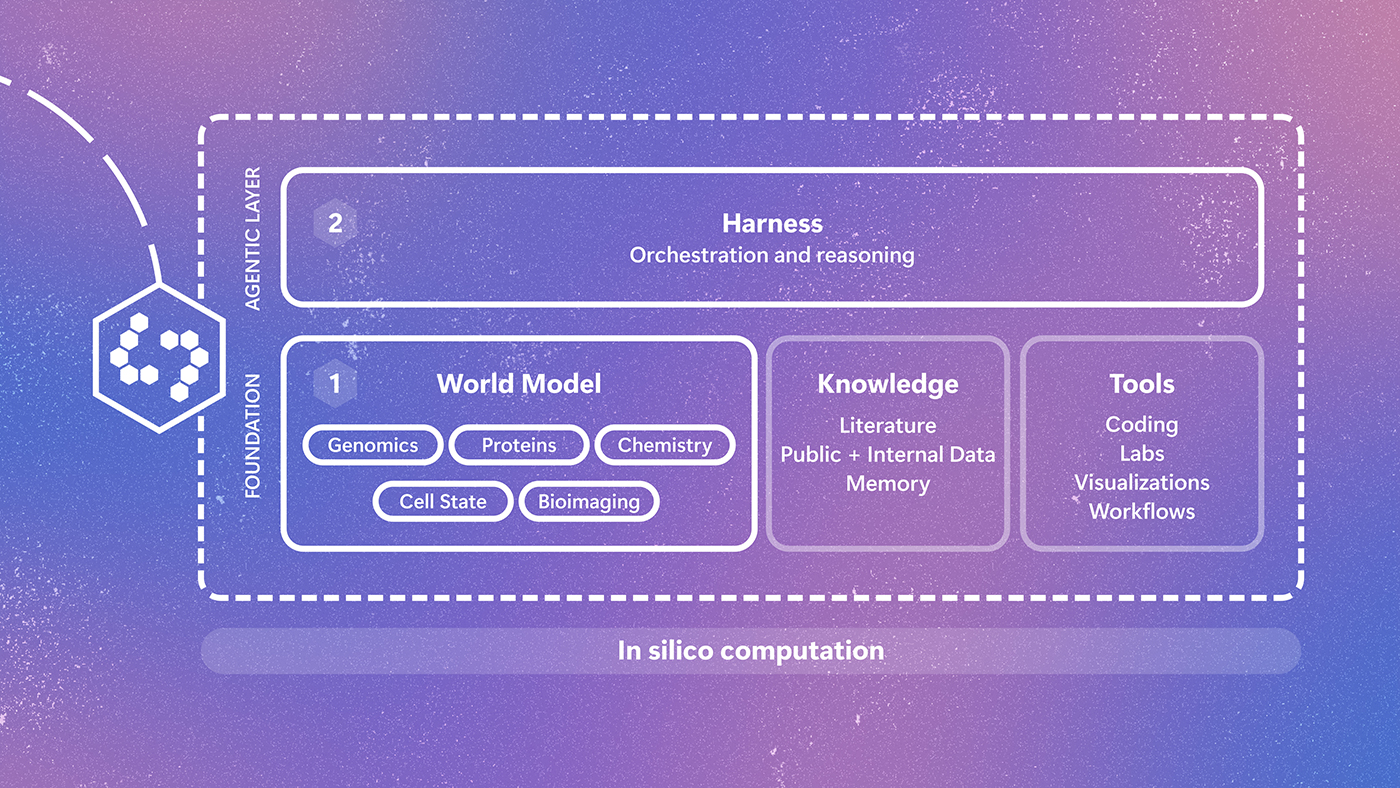
Biology doesn't operate in silos, and neither should the AI representation of it. Quine is an early-stage research effort to create a multimodal world model of biology. By connecting insights across biological scales and modalities, Quine helps scientists computationally search a space far larger than intuition allows and prioritize hypotheses before they reach the lab. Experimental results provide important feedback, helping researchers sharpen future research directions. The post Introducing Q…
We use cookies to run the site and, with your consent, for analytics and to show ads.
See our Cookie Policy.