Skip to content

Code and result tables for "Adaptive UAV traffic monitoring under partial and delayed sensing: when does the expected value of surrogate-risk information change dispatch?"

Oct 2026 · Zenodo (CERN European Organization for Nuclear Research)
Air Traffic Management and Optimization

Abstract

Scripts, configurations and result tables for the article "Adaptive UAV traffic monitoring under partial and delayed sensing: when does the expected value of surrogate-risk information change dispatch?" by A. Mahmoodi, M. Davoodi, E. A. Torkamani and S. M. Sajadi, submitted to Transportation Research Part C: Emerging Technologies. The archive holds a chronological replay of pNEUMA drone trajectories (Athens, October 2018) that compares information-valued (EVRI) and risk-greedy dispatch of one to four UAVs under partial and delayed ground sensing, in two areas. It contains the pipeline scripts, the ground-sensing scenario configurations and flight graphs, the fitted measurement updates, and the result tables reported in the article. The README inside the archive describes the layout, the order of the pipeline and the software used. Not included: the pNEUMA trajectory files, which are available at https://doi.org/10.5281/zenodo.10491409; the derived trajectories; and the per-run replay logs, which are available from the corresponding author. Road geometry extracts are from OpenStreetMap (© OpenStreetMap contributors) and remain under the ODbL. Use of AI tools: the scripts in this archive were prepared with a generative AI tool (Claude, Anthropic) under the authors' direction; the authors reviewed them and take responsibility for them. Their outputs were checked with deletion audits, unit tests and a reproduction check, as described in the article. The file outputs/phase4_visual_audit/audit_results.json contains first-pass labels of video clips that were produced with the same tool and then confirmed by two of the authors.

View source

Similar papers

#computer vision Review Sep 2017

Agile Software Development Methods: Review and Analysis

This publication proposes a definition and a classification of agile software development approaches and analyses ten software development methods that can be characterized as being "agile" against the defined criterion.

P. Abrahamsson, O. Salo, Jussi Ronkainen et al. · 727 citations · ⚡54
#computer vision Jun 2008

The impact of agile practices on communication in software development

The study shows that agile practices improve both informal and formal communication, but indicates that, in larger development situations involving multiple external stakeholders, a mismatch of adequate communication mechanisms can sometimes even hinder the communication.

M. Pikkarainen, Jukka Haikara, O. Salo et al. · 401 citations · ⚡48
#machine learning Review Open access Oct 2014

Software development in startup companies: A systematic mapping study

The results indicate that software engineering work practices are chosen opportunistically, adapted and configured to provide value under the constrains imposed by the startup context.

Nicolò Paternoster, Carmine Giardino, M. Unterkalmsteiner et al. · 394 citations · ⚡54
#computer vision Review Mar 2008

Agile methods in European embedded software development organisations: a survey on the actual use and usefulness of Extreme Programming and Scrum

The results show that the embedded industry has been able to apply agile methods in its development processes and that the appreciation of the agile methods and their individual practices appears to increase once adopted and applied in practice.

O. Salo, P. Abrahamsson · 238 citations · ⚡9
#computer vision Open access Jul 2017

What happens when software developers are (un)happy

Consequences of happiness and unhappiness that are beneficial and detrimental for developers' mental well-being, the software development process, and the produced artifacts are found.

D. Graziotin, Fabian Fagerholm, Xiaofeng Wang et al. · 236 citations · ⚡13
#computer vision Open access Oct 2004

Mobile-D: an agile approach for mobile application development

The Mobile-D approach is briefly outlined here and the experiences gained from four case studies are discussed, which helped develop an agile development approach for mobile application development.

P. Abrahamsson, Antti Hanhineva, H. Hulkko et al. · 225 citations · ⚡18

Related blog posts

GPT-Lab Sep 23, 2026

Requirements Don’t Live in Isolation: What We’re Exploring with Req-Space

Requirements in large systems rarely exist in isolation. Their meaning depends on the wider project context - other requirements, policies, decisions, tests, and implementation details. That becomes especially important when AI is used for review, because spotting a possible conflict or gap is only the beginning. ReqSpace explores how AI, visualisation, and connected project context can help reviewers understand those findings, trace the relationships behind them, and focus on the questions that…

GPT-Lab Sep 17, 2026

Beyond Prompt Engineering: The Role of Tacit Knowledge in Software Engineering

AI is making software generation faster, but speed does not remove the need for expertise. As more work is delegated to AI, tacit knowledge may become one of the most important human advantages in software engineering. The post Beyond Prompt Engineering: The Role of Tacit Knowledge in Software Engineering appeared first on GPT-Lab.

Microsoft Research Blog Aug 12, 2026

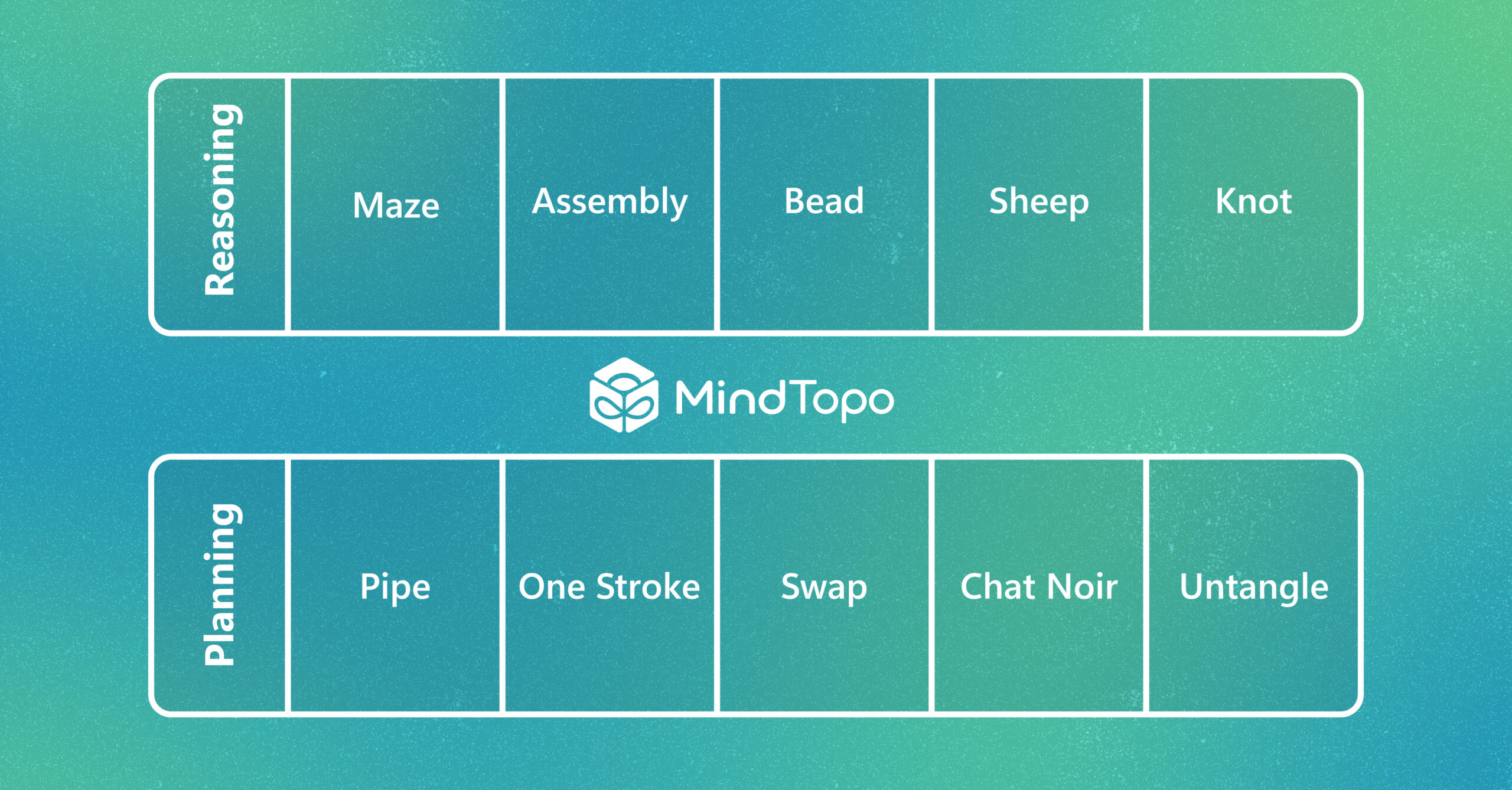
MindTopo reveals VLMs’ spatial reasoning abilities

A path, a fence, a knot. MindTopo sets a new benchmark for testing how AI understands topological relationships and highlights new opportunities to strengthen spatial reasoning and planning. The post MindTopo reveals VLMs’ spatial reasoning abilities appeared first on Microsoft Research.

We use cookies to run the site and, with your consent, for analytics and to show ads. See our Cookie Policy.