Oct 2026· Proceedings of the 3rd ACM Workshop on Open and AI RAN· 0 citations· 11 references
Software-Defined Networks and 5GIoT and Edge/Fog Computing
TL;DR
This work recovers DU-side scheduling behavior and radio-side execution, including the per-beam and per-layer beamforming weights carried on the C-plane, separating measured quantities from those conditioned on an array hypothesis, and ground an eleven-agent platform in which a language model only interprets measurements.
Abstract
Operational RAN observability is reported every 5 to 15 minutes, averaging over as many as 1.8 million slots. Resolution is only half the problem: the quantities that explain a physical-layer fault, such as the beamforming weights the DU computed and the elements each layer actually drove, are not counted at all. Neither limit will cope with 6G integrated sensing, non-terrestrial networks, and ever-larger MIMO arrays. The 7.2x fronthaul split puts a standardized, tappable boundary in the middle of every modern base station; we argue it is the right place to obtain real-time observability, and that the analysis must run at the far edge, because the evidence is transient: it crosses the wire once, cannot be averaged down without losing the fault, and is not recoverable afterwards at any resolution. From passive captures, with no vendor-supplied instrumentation and no cooperation from either the DU or the radio supplier, we recover DU-side scheduling behavior and radio-side execution, including the per-beam and per-layer beamforming weights carried on the C-plane, separating measured quantities from those conditioned on an array hypothesis. On that extraction we ground an eleven-agent platform in which a language model only interprets measurements. Across three independent capture labs covering 4T4R, 32T32R, and 64T64R radios, a fourth lab read over the M-plane, and a dataset of 87 distinct captures, one unmodified code path recovered per-layer weights and revealed three faults nobody was looking for, two of them on the DU side, including a pair of effectively un-beamformed layers for which no alarm currently exists. A separate root-cause diagnosis was confirmed by the repair that followed.
This publication proposes a definition and a classification of agile software development approaches and analyses ten software development methods that can be characterized as being "agile" against the defined criterion.
P. Abrahamsson, O. Salo, Jussi Ronkainen et al.· arXiv.org· 727 citations· ⚡54
The study shows that agile practices improve both informal and formal communication, but indicates that, in larger development situations involving multiple external stakeholders, a mismatch of adequate communication mechanisms can sometimes even hinder the communication.
M. Pikkarainen, Jukka Haikara, O. Salo et al.· Empirical Software Engineeri...· 401 citations· ⚡48
The results indicate that software engineering work practices are chosen opportunistically, adapted and configured to provide value under the constrains imposed by the startup context.
Nicolò Paternoster, Carmine Giardino, M. Unterkalmsteiner et al.· Information and Software Tec...· 394 citations· ⚡54
The perception of the impact of agile methods is predominantly positive, and several challenge areas were discovered, but based on this study, agile methods are here to stay.
M. Laanti, O. Salo, P. Abrahamsson· Information and Software Tec...· 260 citations· ⚡20
Related blog posts
MIT News · Artificial Intelligence· news.mit.eduOct 8, 2026
Jennifer Neville did not want to go into computer science—but that’s exactly where she landed. Neville discusses the starts and stops that led to her professional sweet spot and her work identifying “surprising failures” making it hard for AI to handle complexity. The post What AI gets wrong and what failure teaches us appeared first on Microsoft Research.
Microsoft Research Blog· microsoft.comSep 29, 2026
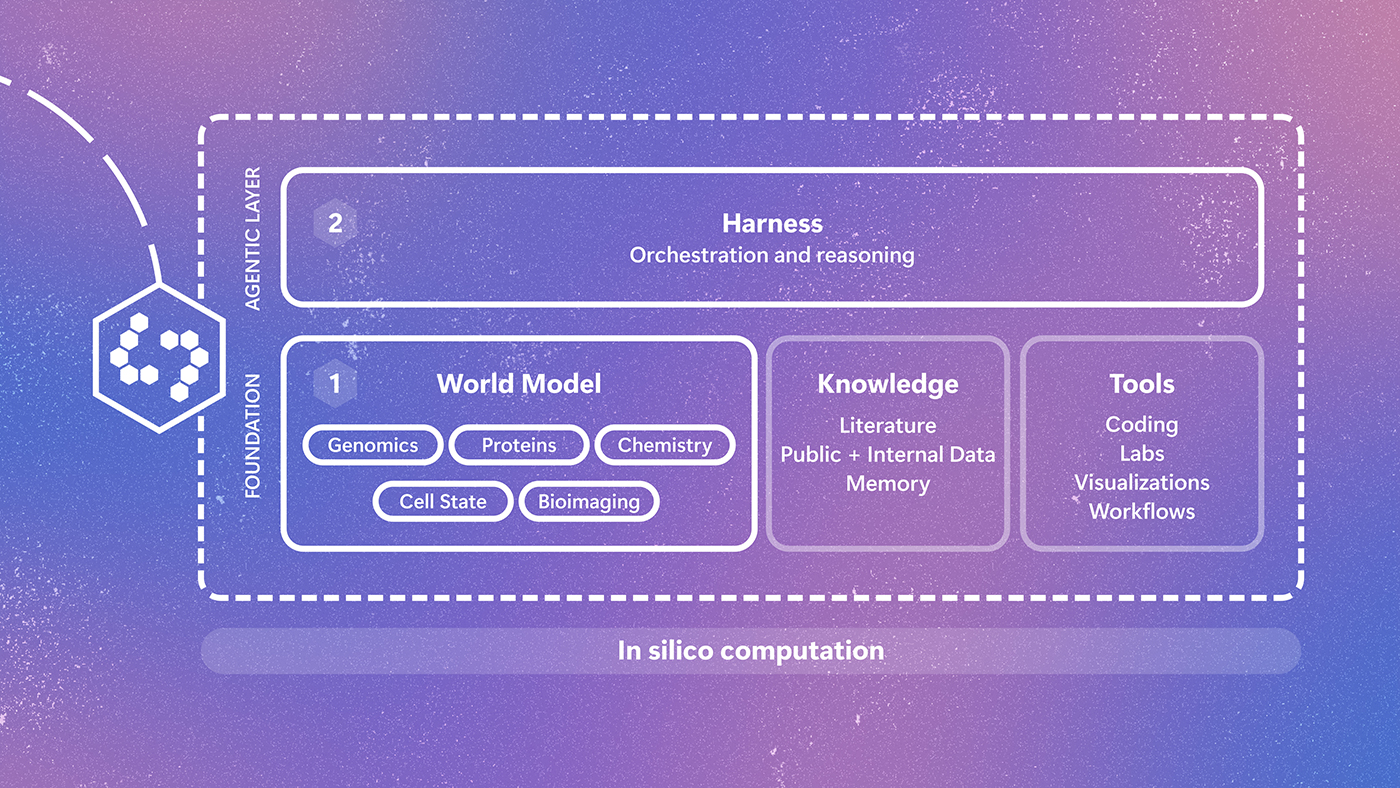
Biology doesn't operate in silos, and neither should the AI representation of it. Quine is an early-stage research effort to create a multimodal world model of biology. By connecting insights across biological scales and modalities, Quine helps scientists computationally search a space far larger than intuition allows and prioritize hypotheses before they reach the lab. Experimental results provide important feedback, helping researchers sharpen future research directions. The post Introducing Q…
We use cookies to run the site and, with your consent, for analytics and to show ads.
See our Cookie Policy.