Skip to content
#machine learning #computer vision Preprint Open access

Co-Evolving Paths and Flows via Path-Flow Alignment

Zeyu Michael Li William Xingxu Chen Xiang Cheng
Oct 2026
Machine Learning Computer Vision

Abstract

We study path-flow alignment as a unified training objective for flow matching. Instead of fixing the interpolation path and learning only the velocity field, we jointly train an endpoint-preserving path network and a flow network using the same alignment loss: the flow learns to match the path velocity, and the path learns to align its velocity to the current flow. Although every fixed learned path defines a valid flow-matching objective, the alignment loss alone is not a reliable criterion for path learning. We identify path overfitting, a failure mode in which the alignment loss decreases while sample quality worsens. We find that this failure is associated with low-entropy bottlenecks in the induced probability path, where the learned path routes samples through overly concentrated intermediate marginals. Motivated by this diagnosis, we introduce a stochastic path regularizer that hides part of the source information from the path network while preserving exact endpoints. The resulting regularization gives an explicit entropy floor for the stochastic training-path marginals and empirically suppresses the bottleneck in the learned sampler, making joint path-flow training effective. On ImageNet-256x256 with SiT backbones, our method consistently improves FID across model scales, extends to model-guidance training, and leaves the inference-time architecture and sampler unchanged. Code is available at https://github.com/lizeyu090312/traj_opt_paper

View source

Similar papers

#computer vision Review Sep 2017

Agile Software Development Methods: Review and Analysis

This publication proposes a definition and a classification of agile software development approaches and analyses ten software development methods that can be characterized as being "agile" against the defined criterion.

P. Abrahamsson, O. Salo, Jussi Ronkainen et al. · 727 citations · ⚡54
#computer vision Jun 2008

The impact of agile practices on communication in software development

The study shows that agile practices improve both informal and formal communication, but indicates that, in larger development situations involving multiple external stakeholders, a mismatch of adequate communication mechanisms can sometimes even hinder the communication.

M. Pikkarainen, Jukka Haikara, O. Salo et al. · 401 citations · ⚡48
#machine learning Review Open access Oct 2014

Software development in startup companies: A systematic mapping study

The results indicate that software engineering work practices are chosen opportunistically, adapted and configured to provide value under the constrains imposed by the startup context.

Nicolò Paternoster, Carmine Giardino, M. Unterkalmsteiner et al. · 394 citations · ⚡54

Diffusion models as plug-and-play priors

The possibility of inferring high-dimensional data inference in a model that consists of a prior and an auxiliary differentiable constraint given some additional information is considered, thereby allowing a range of potential applications in adapting models to new domains and tasks.

Alexandros Graikos, Esmeralda S. Whitammer, N. Jojic et al. · 316 citations · ⚡15

Related blog posts

Microsoft Research Blog Aug 11, 2026

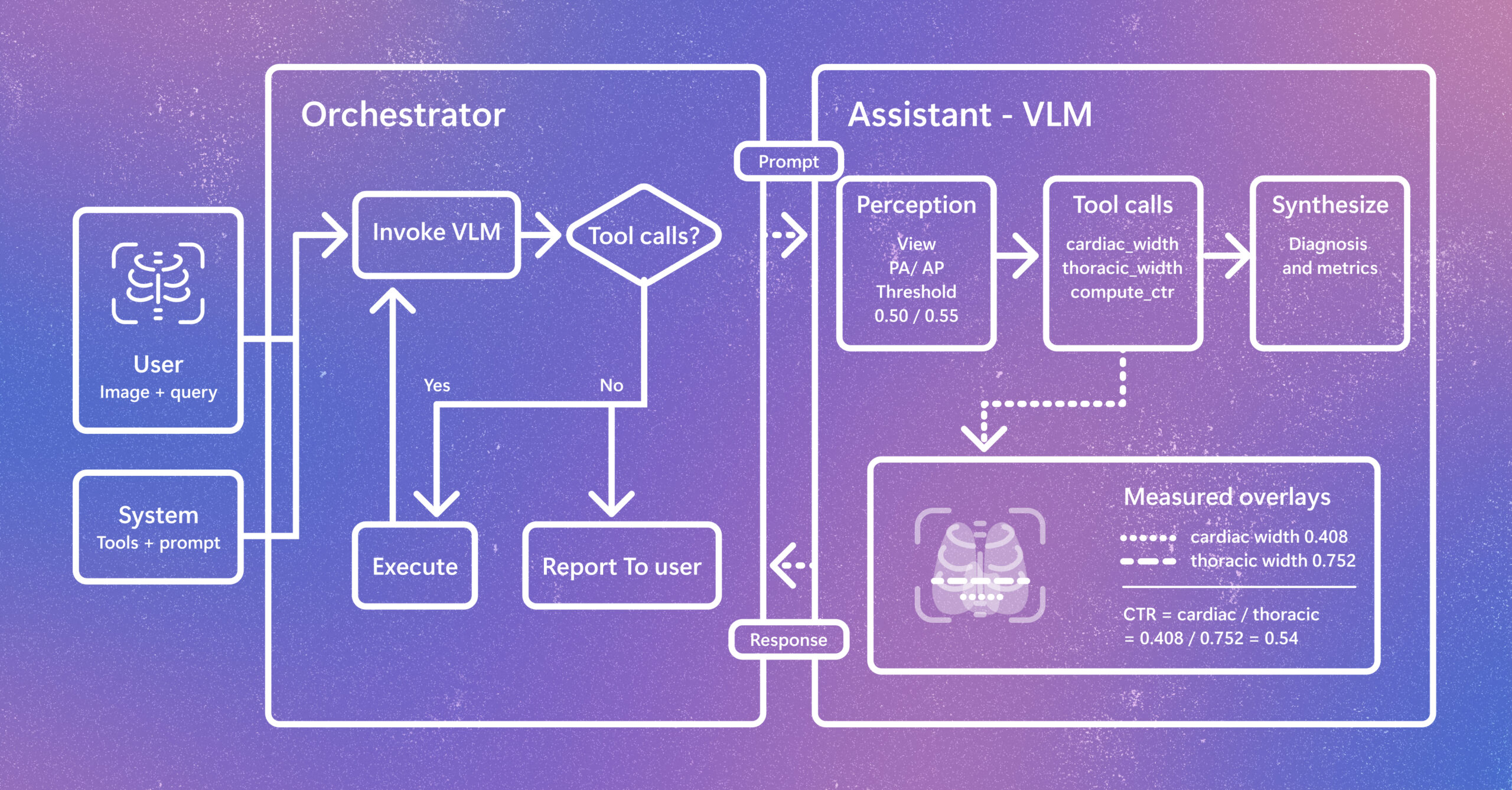
Introducing CARE-X: Towards Clinically Useful Radiology VLMs with Auxiliary Supervision, Reward-Aligned Learning, and Tool-Augmented Measurement

Radiology AI is evolving beyond report generation. CARE-X explores a unified approach that combines flexible reasoning, calibrated predictions, and measurement-based tools for chest X-ray interpretation. The post Introducing CARE-X: Towards Clinically Useful Radiology VLMs with Auxiliary Supervision, Reward-Aligned Learning, and Tool-Augmented Measurement appeared first on Microsoft Research.

MIT News · Artificial Intelligence Oct 7, 2026

Discovering the value of humanistic inquiry

Students in MIT’s Concourse program delve deeply into the human condition, debate challenging questions, and learn to develop judgment about issues that can’t be quantified.

We use cookies to run the site and, with your consent, for analytics and to show ads. See our Cookie Policy.
