Skin cancer is a major global health concern, and early detection and accurate lesion delineation are important for effective diagnosis and treatment planning. Automated skin lesion analysis can assist dermatologists, with lesion segmentation serving as a fundamental step in computer-aided diagnostic systems. Conventional deep learning-based segmentation models typically rely on centralized training, where images and their corresponding segmentation masks are collected on a central server. Such data aggregation raises privacy concerns in medical applications and requires substantial centralized computational resources. To address these limitations, we investigate the feasibility of federated learning for privacy-preserving skin lesion segmentation. The training and validation sets of the ISIC 2018 Skin Lesion Segmentation Challenge dataset are used to simulate a distributed learning environment and develop a federated segmentation model. The resulting model is evaluated on the ISIC 2018 test set and the PH2 dataset to assess its performance and generalizability. Experimental results demonstrate that the federated model achieves performance comparable to centralized training while consistently improving upon the locally trained models. These findings demonstrate the potential of federated learning for collaborative skin lesion segmentation without requiring centralized aggregation of medical images.

This publication proposes a definition and a classification of agile software development approaches and analyses ten software development methods that can be characterized as being "agile" against the defined criterion.
P. Abrahamsson, O. Salo, Jussi Ronkainen et al.· arXiv.org· 727 citations· ⚡54
The study shows that agile practices improve both informal and formal communication, but indicates that, in larger development situations involving multiple external stakeholders, a mismatch of adequate communication mechanisms can sometimes even hinder the communication.
M. Pikkarainen, Jukka Haikara, O. Salo et al.· Empirical Software Engineeri...· 401 citations· ⚡48
The results indicate that software engineering work practices are chosen opportunistically, adapted and configured to provide value under the constrains imposed by the startup context.
Nicolò Paternoster, Carmine Giardino, M. Unterkalmsteiner et al.· Information and Software Tec...· 394 citations· ⚡54
The possibility of inferring high-dimensional data inference in a model that consists of a prior and an auxiliary differentiable constraint given some additional information is considered, thereby allowing a range of potential applications in adapting models to new domains and tasks.
Alexandros Graikos, Esmeralda S. Whitammer, N. Jojic et al.· Neural Information Processin...· 316 citations· ⚡15
It is proved that any global minimizer of the trajectory balance objective can define a policy that samples exactly from the target distribution, and empirically demonstrate the benefits of the trajectories balance objective for GFlowNet convergence, diversity of generated samples, and robustness to long action sequenc...
Esmeralda S. Whitammer, Moksh Jain, Emmanuel Bengio et al.· Neural Information Processin...· 302 citations· ⚡60
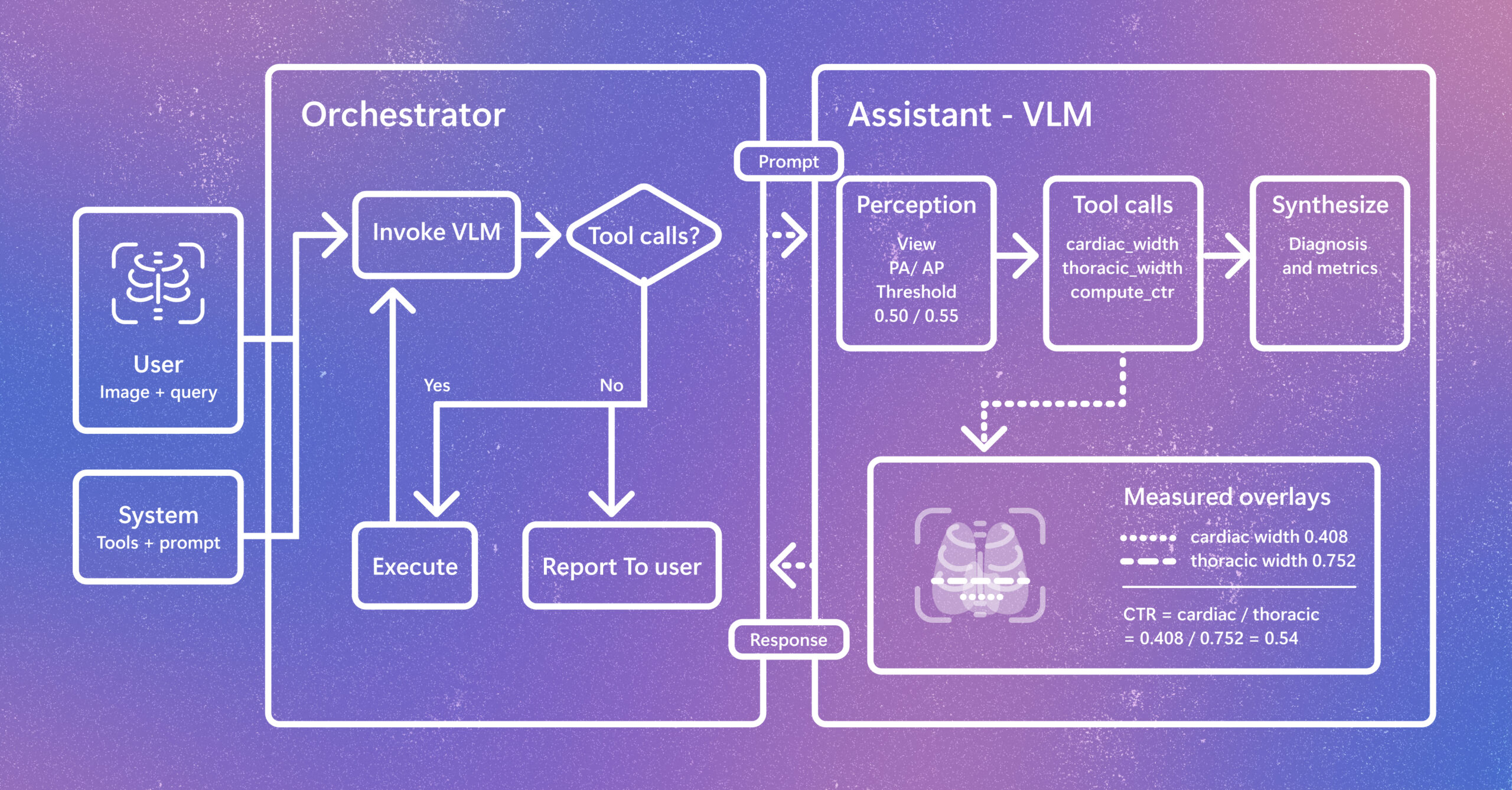
Radiology AI is evolving beyond report generation. CARE-X explores a unified approach that combines flexible reasoning, calibrated predictions, and measurement-based tools for chest X-ray interpretation. The post Introducing CARE-X: Towards Clinically Useful Radiology VLMs with Auxiliary Supervision, Reward-Aligned Learning, and Tool-Augmented Measurement appeared first on Microsoft Research.