Skip to content
#machine learning #computer vision Preprint Open access

Mu-DisCoCat: A Variational Pipeline for Compositional Generalization on Quantum Processors

Mina Abbaszadeh Matilda Karabina Moore Raem Haq Martha Lewis Mehrnoosh Sadrzadeh
Oct 2026
Machine Learning Computer Vision

Abstract

Achieving compositional concept generalization (CoCoGen), the ability to understand novel situations by recombining learned primitives, remains a fundamental challenge in artificial intelligence. Compositional semantic models such as Compositional Distributional Semantics (DisCoCat) offer solutions by generalising vectors to tensors, but suffer from scaling bottlenecks when learning the tensors. Mapping DisCoCat onto Variational Quantum Circuits (VQCs) resolves this limitation for text, yet the methodology has not been expanded to multimodal situations such as the ones involved in CoCoGen. This paper introduces Mu-DisCoCat: a multimodal variational quantum learning framework for DisCoCat that achieves CoCoGen. The framework first learns stable object representations from single-object image-text pairs, then fixes these and uses them to learn the relations between them in multi-object situations. In classical simulations, the model used Uhlmann state fidelity to compute the overlap between the multimodal circuit representations and achieved higher relational OOD accuracy than the evaluated CLIP baseline. Its deployment was evaluated using the destructive SWAP test across noisy quantum emulators, including a range of IBM fake backends, IQM FakeAphrodite, and the IBM Marrakesh quantum processor. Despite real-world device noise, the hardware-executed models maintained a strong positive correlation with simulated fidelities, reliably distinguishing unseen similar and dissimilar pairs. Our work establishes a framework for executing CoCoGen on VQCs, demonstrating a viable use case for near-term quantum hardware.

View source

Similar papers

#computer vision Review Sep 2017

Agile Software Development Methods: Review and Analysis

This publication proposes a definition and a classification of agile software development approaches and analyses ten software development methods that can be characterized as being "agile" against the defined criterion.

P. Abrahamsson, O. Salo, Jussi Ronkainen et al. · 727 citations · ⚡54
#computer vision Jun 2008

The impact of agile practices on communication in software development

The study shows that agile practices improve both informal and formal communication, but indicates that, in larger development situations involving multiple external stakeholders, a mismatch of adequate communication mechanisms can sometimes even hinder the communication.

M. Pikkarainen, Jukka Haikara, O. Salo et al. · 401 citations · ⚡48
#machine learning Review Open access Oct 2014

Software development in startup companies: A systematic mapping study

The results indicate that software engineering work practices are chosen opportunistically, adapted and configured to provide value under the constrains imposed by the startup context.

Nicolò Paternoster, Carmine Giardino, M. Unterkalmsteiner et al. · 394 citations · ⚡54

Diffusion models as plug-and-play priors

The possibility of inferring high-dimensional data inference in a model that consists of a prior and an auxiliary differentiable constraint given some additional information is considered, thereby allowing a range of potential applications in adapting models to new domains and tasks.

Alexandros Graikos, Esmeralda S. Whitammer, N. Jojic et al. · 316 citations · ⚡15

Trajectory Balance: Improved Credit Assignment in GFlowNets

It is proved that any global minimizer of the trajectory balance objective can define a policy that samples exactly from the target distribution, and empirically demonstrate the benefits of the trajectories balance objective for GFlowNet convergence, diversity of generated samples, and robustness to long action sequenc...

Esmeralda S. Whitammer, Moksh Jain, Emmanuel Bengio et al. · 302 citations · ⚡60

Related blog posts

Microsoft Research Blog Aug 11, 2026

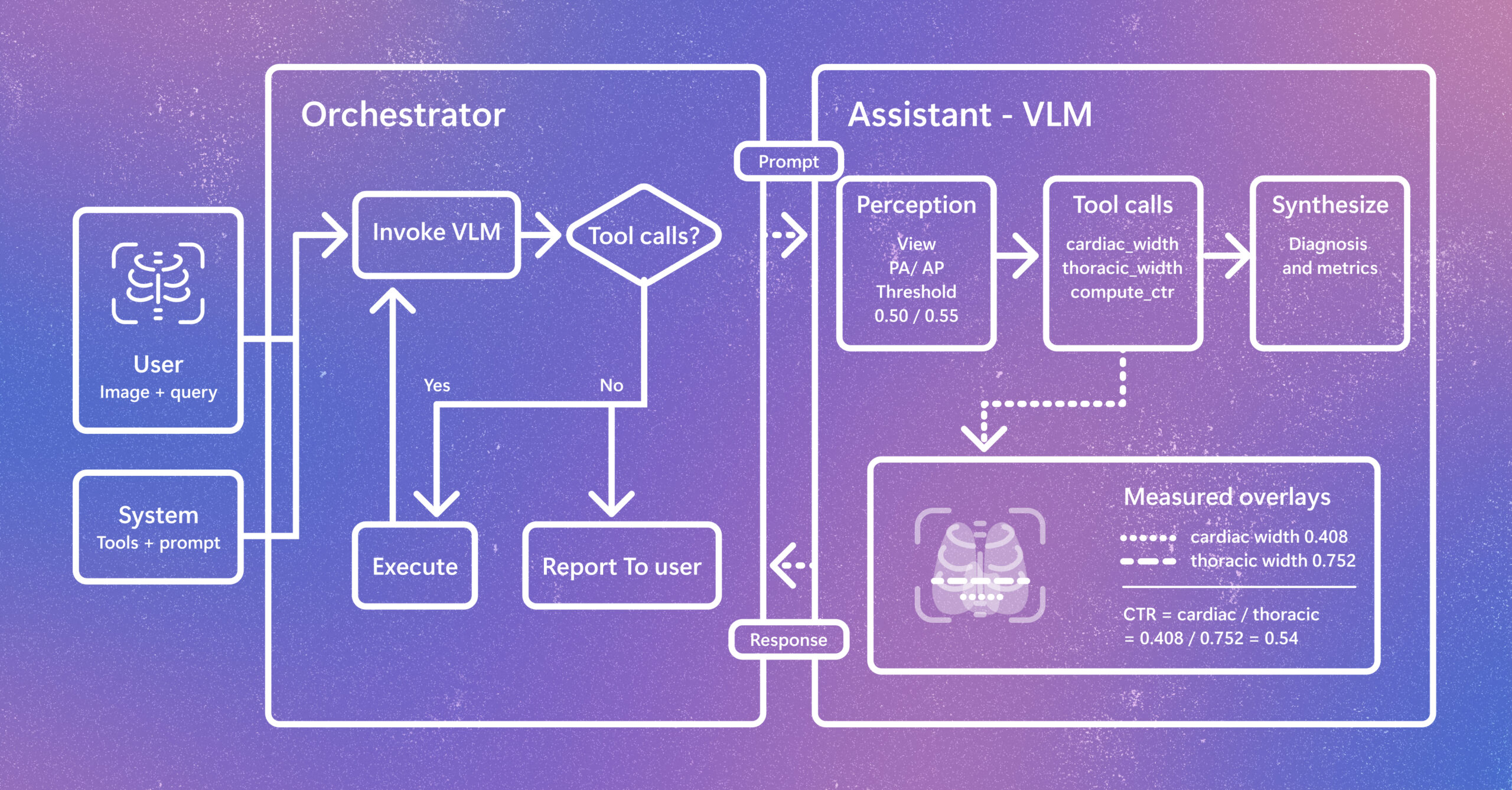
Introducing CARE-X: Towards Clinically Useful Radiology VLMs with Auxiliary Supervision, Reward-Aligned Learning, and Tool-Augmented Measurement

Radiology AI is evolving beyond report generation. CARE-X explores a unified approach that combines flexible reasoning, calibrated predictions, and measurement-based tools for chest X-ray interpretation. The post Introducing CARE-X: Towards Clinically Useful Radiology VLMs with Auxiliary Supervision, Reward-Aligned Learning, and Tool-Augmented Measurement appeared first on Microsoft Research.

MIT News · Artificial Intelligence Oct 7, 2026

Discovering the value of humanistic inquiry

Students in MIT’s Concourse program delve deeply into the human condition, debate challenging questions, and learn to develop judgment about issues that can’t be quantified.

We use cookies to run the site and, with your consent, for analytics and to show ads. See our Cookie Policy.
