High-dimensional Bayesian optimization (BO) often fits Gaussian process (GP) surrogates from far fewer observations than input dimensions. Modern Vanilla BO can perform well in this regime with dimension-aware priors, initialization, and acquisition optimization, but it typically retains automatic relevance determination (ARD), fitting one lengthscale per input coordinate. We study this modeling choice and propose Iso-BO, a controlled modification that replaces the ARD GP with an isotropic GP using one shared lengthscale while keeping the surrounding BO pipeline matched. For radial kernels, we show that the marginal log likelihood (MLL) depends on the inverse-squared ARD lengthscales only through weighted pairwise distances among the observed inputs. The current design can therefore leave some ARD directions exactly invisible or only weakly constrained by the MLL. Iso-BO removes coordinatewise reweighting and fits a single shared scale instead. Lengthscale-fitting and predictive-density diagnostics show that this finite-data effect appears in practice, including when the data-generating process is anisotropic. Across GP-prior, synthetic, and real-world benchmarks, Iso-BO often improves over matched modern Vanilla BO and remains competitive with the included high-dimensional BO baselines under the tested budgets. Stress tests also show the expected boundary wherein sufficiently strong, learnable anisotropy can favor the more flexible ARD model.
It is found that Llama 3 delivers comparable quality to leading language models such as GPT-4 on a plethora of tasks, and performs competitively with the state-of-the-art on image, video, and speech recognition tasks.
This paper investigates developing real-world perception for active agents, proposes Gibson Environment for this purpose, and showcases a set of perceptual tasks learned therein.
F. Xia, Amir Zamir, Zhi-Yang He et al.· 2018 IEEE/CVF Conference on...· 1,069 citations· ⚡112
This publication proposes a definition and a classification of agile software development approaches and analyses ten software development methods that can be characterized as being "agile" against the defined criterion.
P. Abrahamsson, O. Salo, Jussi Ronkainen et al.· arXiv.org· 727 citations· ⚡54
The study shows that agile practices improve both informal and formal communication, but indicates that, in larger development situations involving multiple external stakeholders, a mismatch of adequate communication mechanisms can sometimes even hinder the communication.
M. Pikkarainen, Jukka Haikara, O. Salo et al.· Empirical Software Engineeri...· 401 citations· ⚡48
The results indicate that software engineering work practices are chosen opportunistically, adapted and configured to provide value under the constrains imposed by the startup context.
Nicolò Paternoster, Carmine Giardino, M. Unterkalmsteiner et al.· Information and Software Tec...· 394 citations· ⚡54
Related blog posts
MIT News · Artificial Intelligence· news.mit.eduNov 6, 2026
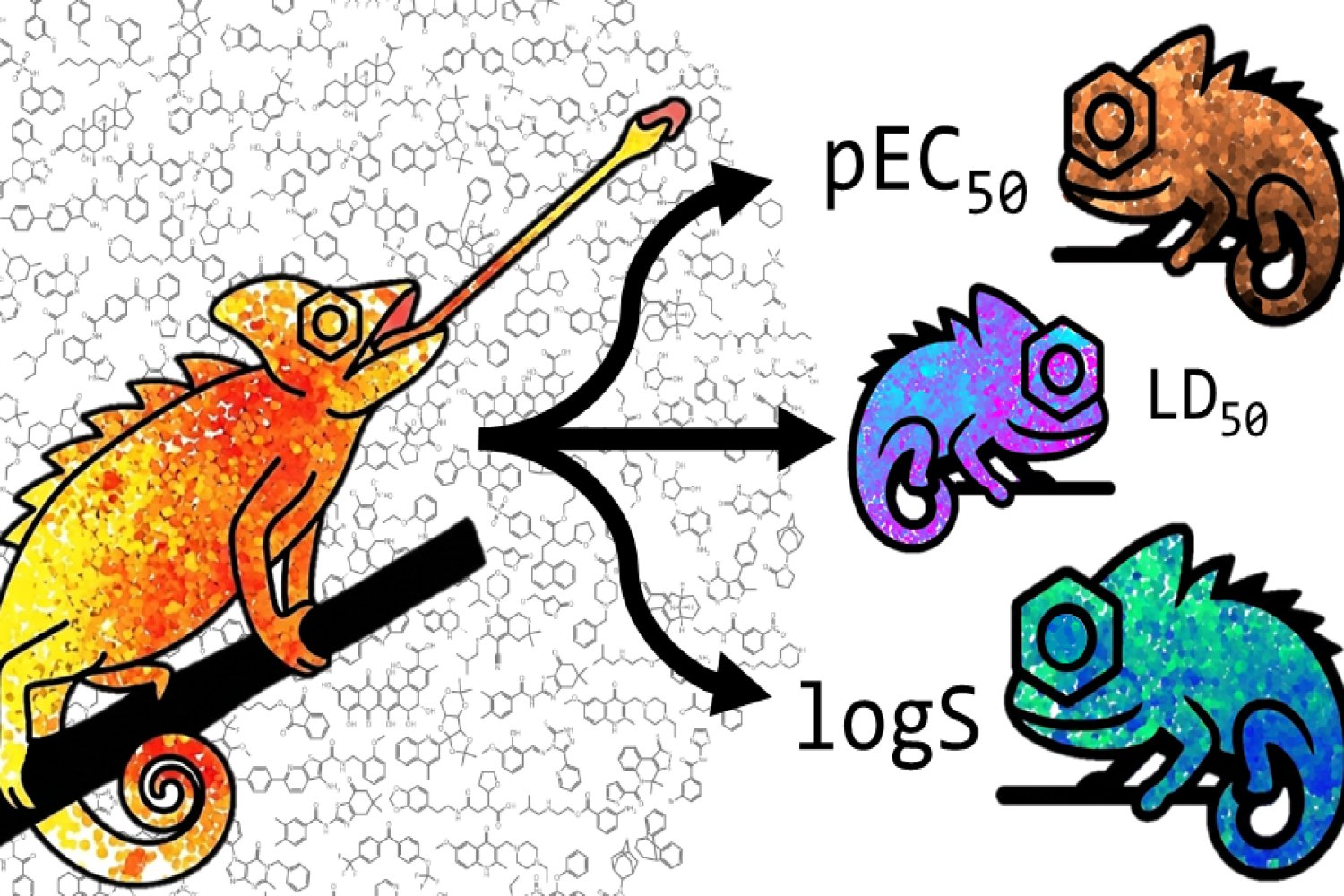
A machine-learning approach called CheMeleon provides a practical way to develop new drugs or other molecules with much less detailed, expensive experimentation.
Learn how Google DeepMind and GovTech Singapore uses lightweight on-device Gemma models to intercept conversational scams in private chats with zero cloud data egress.