Skip to content

UnAct: Gradient-Free Unlearning via Targeted Activation Intervention

Oct 2026 · 0 citations · 38 references
Computer Science

Abstract

Machine unlearning seeks to remove the influence of designated training data from a trained model without retraining from scratch. Retrain-free methods such as Selective Synaptic Dampening (SSD) and its label-free variant LFSSD avoid full retraining but still require backpropagation and parameter importance computed over the entire dataset. We ask: what happens when a deletion request arrives with only a few images of the class to be forgotten? To answer this question, we introduce UnAct, a gradient-free class-unlearning method that needs only forward passes over the forget images. UnAct scores late-layer units by their responses, attenuates the most responsive connections, and repeats this for up to 20 rounds using no gradients, no labels, and no retained data. On ResNet-18 trained with CIFAR-10, CIFAR-20, and CIFAR-100, UnAct is competitive with SSD and LFSSD when forgetting entire classes and, unlike them, never collapses the network when forget data is scarce. On ResNet-18, across all tested sizes, UnAct's retain accuracy stays within 2.5 points of retraining, while SSD and LFSSD, at their full-class operating points, lose up to 86 points on some classes. With five forget images on CIFAR-10, UnAct's distance to retraining is 0.21 points, against 67 for LFSSD and 90 for SSD, and re-selecting SSD's threshold at each size with an oracle does not close the gap. In preliminary transfer to ViT-B/16, UnAct's distance to retraining is 11.5 against 33.7 for SSD, and a request is 19x faster than SSD when SSD computes its importance at request time. The code is available at https://github.com/abdulmuizz0903/UnAct

View source

Similar papers

#computer vision Review Sep 2017

Agile Software Development Methods: Review and Analysis

This publication proposes a definition and a classification of agile software development approaches and analyses ten software development methods that can be characterized as being "agile" against the defined criterion.

P. Abrahamsson, O. Salo, Jussi Ronkainen et al. · 727 citations · ⚡54
#computer vision Jun 2008

The impact of agile practices on communication in software development

The study shows that agile practices improve both informal and formal communication, but indicates that, in larger development situations involving multiple external stakeholders, a mismatch of adequate communication mechanisms can sometimes even hinder the communication.

M. Pikkarainen, Jukka Haikara, O. Salo et al. · 401 citations · ⚡48
#machine learning Review Open access Oct 2014

Software development in startup companies: A systematic mapping study

The results indicate that software engineering work practices are chosen opportunistically, adapted and configured to provide value under the constrains imposed by the startup context.

Nicolò Paternoster, Carmine Giardino, M. Unterkalmsteiner et al. · 394 citations · ⚡54

Diffusion models as plug-and-play priors

The possibility of inferring high-dimensional data inference in a model that consists of a prior and an auxiliary differentiable constraint given some additional information is considered, thereby allowing a range of potential applications in adapting models to new domains and tasks.

Alexandros Graikos, Esmeralda S. Whitammer, N. Jojic et al. · 316 citations · ⚡15

Trajectory Balance: Improved Credit Assignment in GFlowNets

It is proved that any global minimizer of the trajectory balance objective can define a policy that samples exactly from the target distribution, and empirically demonstrate the benefits of the trajectories balance objective for GFlowNet convergence, diversity of generated samples, and robustness to long action sequenc...

Esmeralda S. Whitammer, Moksh Jain, Emmanuel Bengio et al. · 302 citations · ⚡60

Related blog posts

Microsoft Research Blog Aug 11, 2026

Introducing CARE-X: Towards Clinically Useful Radiology VLMs with Auxiliary Supervision, Reward-Aligned Learning, and Tool-Augmented Measurement

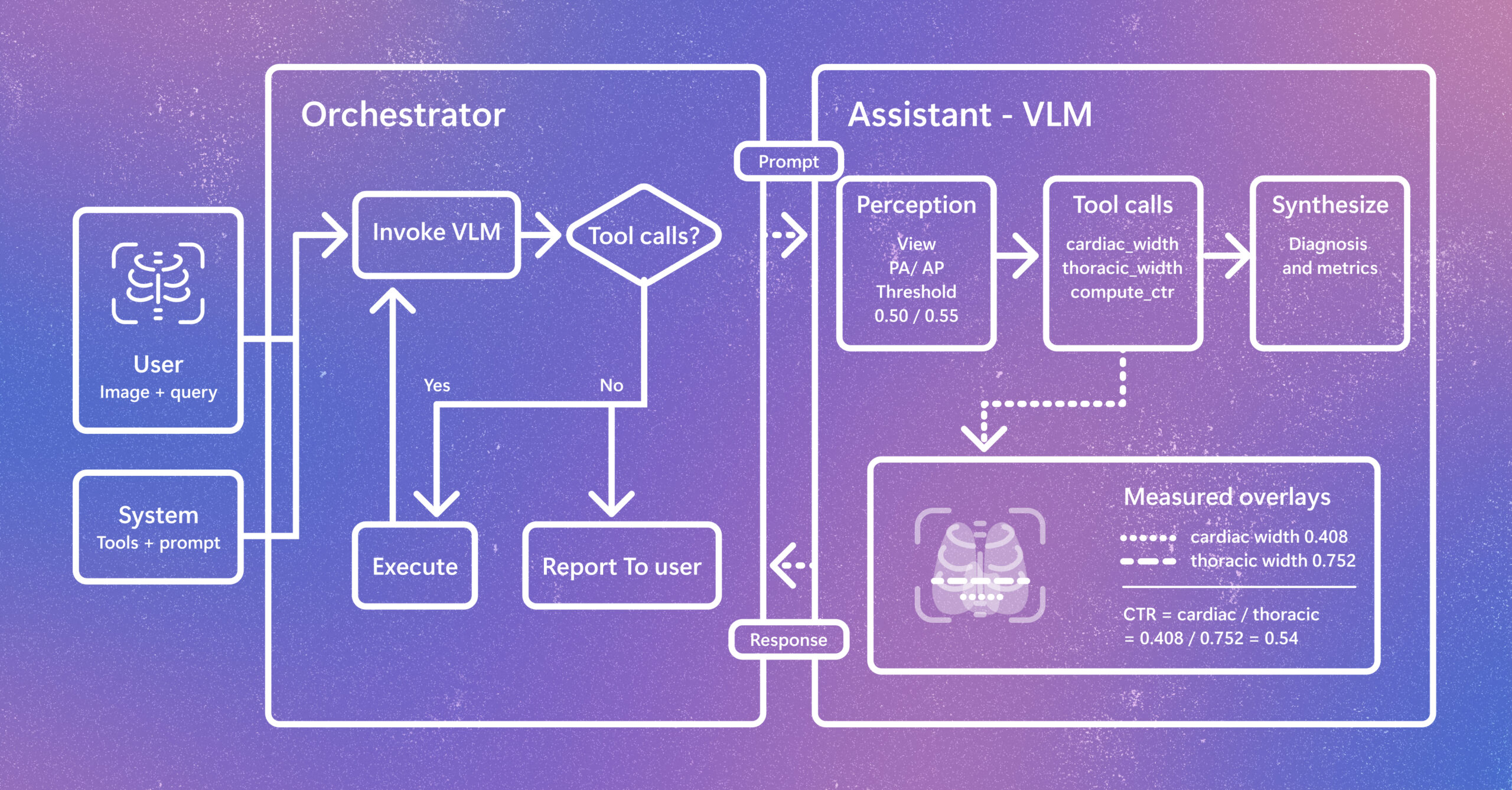
Radiology AI is evolving beyond report generation. CARE-X explores a unified approach that combines flexible reasoning, calibrated predictions, and measurement-based tools for chest X-ray interpretation. The post Introducing CARE-X: Towards Clinically Useful Radiology VLMs with Auxiliary Supervision, Reward-Aligned Learning, and Tool-Augmented Measurement appeared first on Microsoft Research.

MIT News · Artificial Intelligence Oct 7, 2026

Discovering the value of humanistic inquiry

Students in MIT’s Concourse program delve deeply into the human condition, debate challenging questions, and learn to develop judgment about issues that can’t be quantified.

We use cookies to run the site and, with your consent, for analytics and to show ads. See our Cookie Policy.
