LLM agents that orchestrate frozen vision-language-action (VLA) policies improve across episodes through text memory, which records what the agent did but not how the task is done. A demonstration video shows it, but fits poorly into an agent's context. The full video slows every turn, fixed keyframes lose the contact detail that decides whether a grasp holds, and what the agent needs shifts from the task's structure while planning to the frames around each contact. We introduce Recursive Video In-Context Learning (RV-ICL), a training-free method that turns a demonstration into a hierarchy the agent navigates rather than a prompt it receives. The hierarchy is built from the sub-events of the demonstration, such as grasps and releases. Its levels grow finer, from keyframes of the whole task to phases, moments and short clips, and are exposed through read-only tools. The agent reads the coarse levels before planning. During execution it re-enters the hierarchy whenever a step needs more detail and loads only the clip of its current sub-goal. One demonstration per task is enough. Built on RPent, RV-ICL raises success from 92.6% to 96.5% on LIBERO-PRO and from 86.7% to 95.8% on LIBERO-Plus.

This publication proposes a definition and a classification of agile software development approaches and analyses ten software development methods that can be characterized as being "agile" against the defined criterion.
P. Abrahamsson, O. Salo, Jussi Ronkainen et al.· arXiv.org· 727 citations· ⚡54
Consequences of happiness and unhappiness that are beneficial and detrimental for developers' mental well-being, the software development process, and the produced artifacts are found.
D. Graziotin, Fabian Fagerholm, Xiaofeng Wang et al.· Journal of Systems and Softw...· 236 citations· ⚡13
The Mobile-D approach is briefly outlined here and the experiences gained from four case studies are discussed, which helped develop an agile development approach for mobile application development.
P. Abrahamsson, Antti Hanhineva, H. Hulkko et al.· Conference on Object-Oriente...· 225 citations· ⚡18
GAOKAO-Bench is introduced, an intuitive benchmark that employs questions from the Chinese GAOKAO examination as test samples, including both subjective and objective questions that contribute a robust evaluation benchmark for future large language models and offers valuable insights into the advantages and limitations...
Xiaotian Zhang, Chun-yan Li, Yi Zong et al.· arXiv.org· 216 citations· ⚡17
A study with 42 participants investigates the relationship between the affective states, creativity, and analytical problem-solving skills of software developers and offers support for the claim that happy developers are indeed better problem solvers in terms of their analytical abilities.
D. Graziotin, Xiaofeng Wang, P. Abrahamsson· PeerJ· 216 citations· ⚡13
This state-of-practice investigation was performed using a literature review followed by a multiple-case study approach and presents how inconsistency between managerial strategies and execution can lead to failure by means of a behavioral framework.
Carmine Giardino, Xiaofeng Wang, P. Abrahamsson· International Conference on...· 175 citations· ⚡19
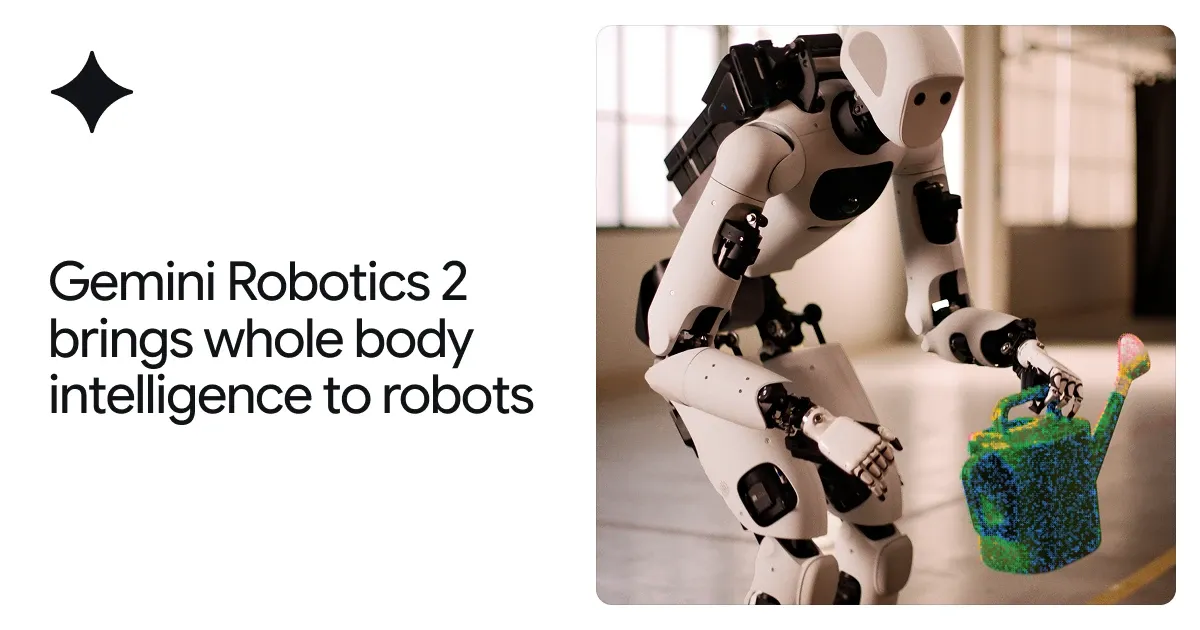
From feet to fingertips — we are teaching robots intelligent whole-body control, fine dexterity, and teamwork to complete a broad range of complex tasks.
MIT News · Artificial Intelligence· news.mit.eduJun 26, 2026
To help robots do chores in places like homes and factories, a new approach from MIT uses one language model to clarify users’ instructions, then another to ignore irrelevant info.
We use cookies to run the site and, with your consent, for analytics and to show ads.
See our Cookie Policy.