Skip to content

Nexus: An Execution Fabric for AI Agents Across Cloud, Edge, and Devices

Oct 2026 · 0 citations
Computer Science

Abstract

Language-model agents are evolving into long-running services that interact with models, tools, computers, mobile devices, and distributed environments. Existing agent frameworks simplify reasoning and tool invocation. However, cloud-centric designs face three limitations: centralized execution increases failure impact, scaling pressure, and compute cost; extending agents across computers, mobile devices, and edge environments requires a unified execution abstraction with permission control; and long-running executions require consistent lifecycle management across failures, recovery, results, usage, and settlement. We present Nexus, a cloud-edge platform that treats each invocation as a persistent task. Nexus uses an OpenWrt-based runtime for distributed serving, run-scoped delegation for authorized access to Computer and Mobile environments, and persistent records to track execution, outputs, failures, recovery, usage, and charging across cloud and edge components. We evaluate Nexus on controlled, cross-device, and model-driven workloads. All ten Computer-Android workflows succeed, and all six revocation tests block subsequent writes while preserving prior authorized reads. Under worker loss, journaling eliminates duplicate appends (six to zero per task), adding 0.933 s mean normal-path overhead. Across 24 matched task pairs, Nexus completes 24 tasks versus Dify's 22 and is a median 3.88 s faster on jointly successful pairs. In a separate workload, Nexus operates under a smaller tested incremental-runtime memory ceiling than Dapr (16 versus 64 MiB), although Dapr achieves lower successful-call latency. These results demonstrate how locality, operation-scoped authority, and persistent result identity support cloud-edge agent services with workload-dependent costs.

View source

Similar papers

#computer vision Review Sep 2017

Agile Software Development Methods: Review and Analysis

This publication proposes a definition and a classification of agile software development approaches and analyses ten software development methods that can be characterized as being "agile" against the defined criterion.

P. Abrahamsson, O. Salo, Jussi Ronkainen et al. · 727 citations · ⚡54
#computer vision Jun 2008

The impact of agile practices on communication in software development

The study shows that agile practices improve both informal and formal communication, but indicates that, in larger development situations involving multiple external stakeholders, a mismatch of adequate communication mechanisms can sometimes even hinder the communication.

M. Pikkarainen, Jukka Haikara, O. Salo et al. · 401 citations · ⚡48
#machine learning Review Open access Oct 2014

Software development in startup companies: A systematic mapping study

The results indicate that software engineering work practices are chosen opportunistically, adapted and configured to provide value under the constrains imposed by the startup context.

Nicolò Paternoster, Carmine Giardino, M. Unterkalmsteiner et al. · 394 citations · ⚡54

Related blog posts

Microsoft Research Blog Sep 29, 2026

Introducing Quine: An AI research system designed for the complexity of biology

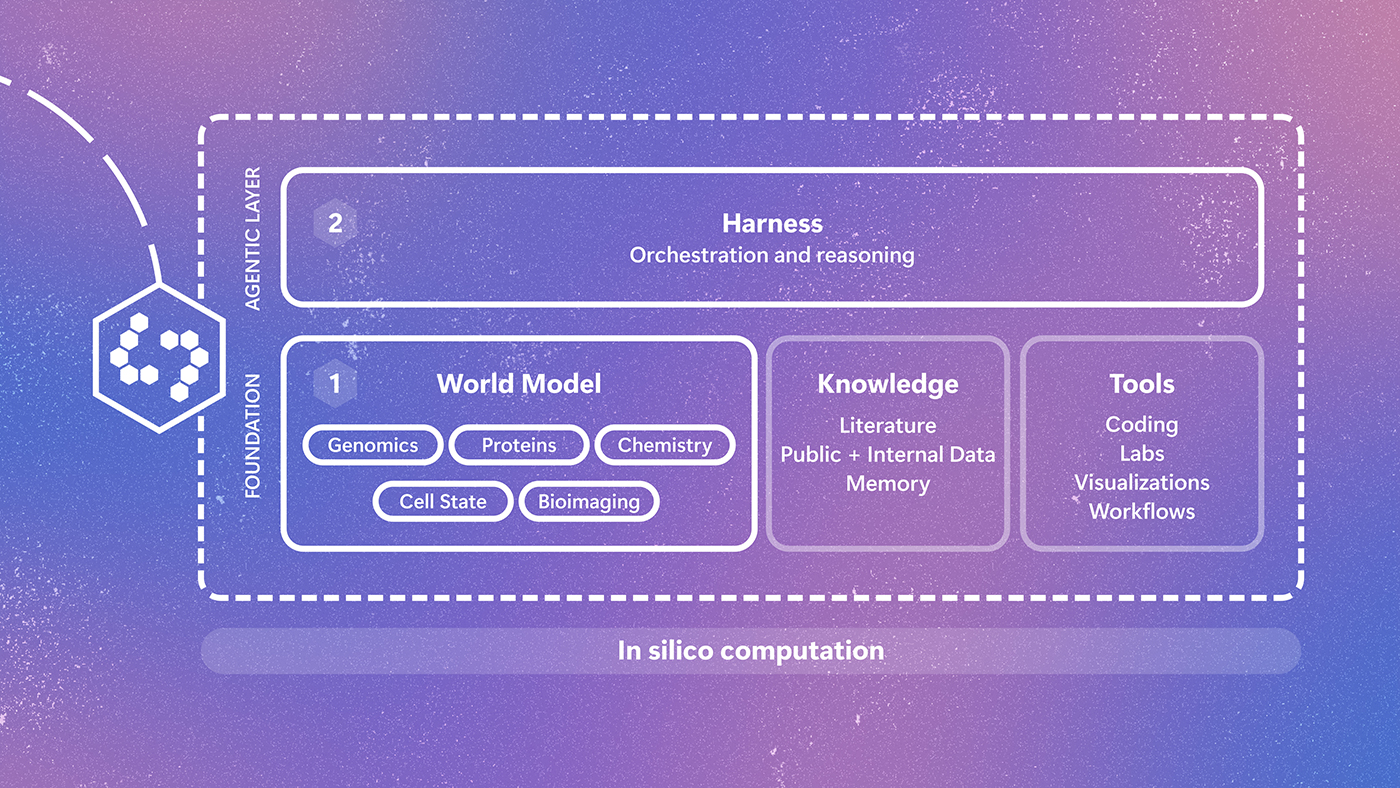
Biology doesn't operate in silos, and neither should the AI representation of it. Quine is an early-stage research effort to create a multimodal world model of biology. By connecting insights across biological scales and modalities, Quine helps scientists computationally search a space far larger than intuition allows and prioritize hypotheses before they reach the lab. Experimental results provide important feedback, helping researchers sharpen future research directions. The post Introducing Q…

We use cookies to run the site and, with your consent, for analytics and to show ads. See our Cookie Policy.