Skip to content

UndoBench: Separating Task Competence from Recovery Capability in Tool-Using AI Agents

Oct 2026 · 0 citations · 23 references
Computer Science

Abstract

Tool-using AI agents are increasingly deployed across enterprise software systems, yet widely used benchmarks primarily evaluate nominal task completion, conflating baseline planning competence with operational fault recovery. We introduce UndoBench, a benchmark spanning 36 base workflows and 36 fault scenarios across 8 enterprise domains, decoupling task competence from recovery capability via counterfactual paired trials under identical seeds alongside wire-level effect-history and environment-state oracles. On 12 held-out TEST workflows across two open-weight models, two frameworks, and three recovery paradigms (5,760 executions / 2,880 paired trials) in the frozen lost-acknowledgment study, nominal competence reached 83.54% while conditional recovery success rate (CRSR) fell to 46.72%, with naive retry producing duplicate external effects in 53.33% of trials. Extensions to commercial API models reproduced this competence-recovery separation. Evaluations across complementary execution boundaries show that recovery is phase-dependent: before mutation, methods perform similarly without duplicate effects among capable trials; during partial mutation, naive retry, per-call idempotency, and zero-privilege journaling collapse on the evaluated composite workflows; after commit but before acknowledgment, verification and server-side idempotency substantially improve safety. These findings demonstrate that evaluating nominal completion alone masks critical, phase-dependent recovery vulnerabilities in autonomous agents.

View source

Similar papers

#computer vision Review Sep 2017

Agile Software Development Methods: Review and Analysis

This publication proposes a definition and a classification of agile software development approaches and analyses ten software development methods that can be characterized as being "agile" against the defined criterion.

P. Abrahamsson, O. Salo, Jussi Ronkainen et al. · 727 citations · ⚡54
#computer vision Jun 2008

The impact of agile practices on communication in software development

The study shows that agile practices improve both informal and formal communication, but indicates that, in larger development situations involving multiple external stakeholders, a mismatch of adequate communication mechanisms can sometimes even hinder the communication.

M. Pikkarainen, Jukka Haikara, O. Salo et al. · 401 citations · ⚡48
#machine learning Review Open access Oct 2014

Software development in startup companies: A systematic mapping study

The results indicate that software engineering work practices are chosen opportunistically, adapted and configured to provide value under the constrains imposed by the startup context.

Nicolò Paternoster, Carmine Giardino, M. Unterkalmsteiner et al. · 394 citations · ⚡54
#computer vision Review Mar 2008

Agile methods in European embedded software development organisations: a survey on the actual use and usefulness of Extreme Programming and Scrum

The results show that the embedded industry has been able to apply agile methods in its development processes and that the appreciation of the agile methods and their individual practices appears to increase once adopted and applied in practice.

O. Salo, P. Abrahamsson · 238 citations · ⚡9
#computer vision Open access Jul 2017

What happens when software developers are (un)happy

Consequences of happiness and unhappiness that are beneficial and detrimental for developers' mental well-being, the software development process, and the produced artifacts are found.

D. Graziotin, Fabian Fagerholm, Xiaofeng Wang et al. · 236 citations · ⚡13
#computer vision Open access Oct 2004

Mobile-D: an agile approach for mobile application development

The Mobile-D approach is briefly outlined here and the experiences gained from four case studies are discussed, which helped develop an agile development approach for mobile application development.

P. Abrahamsson, Antti Hanhineva, H. Hulkko et al. · 225 citations · ⚡18

Related blog posts

MIT News · Artificial Intelligence Oct 2, 2026

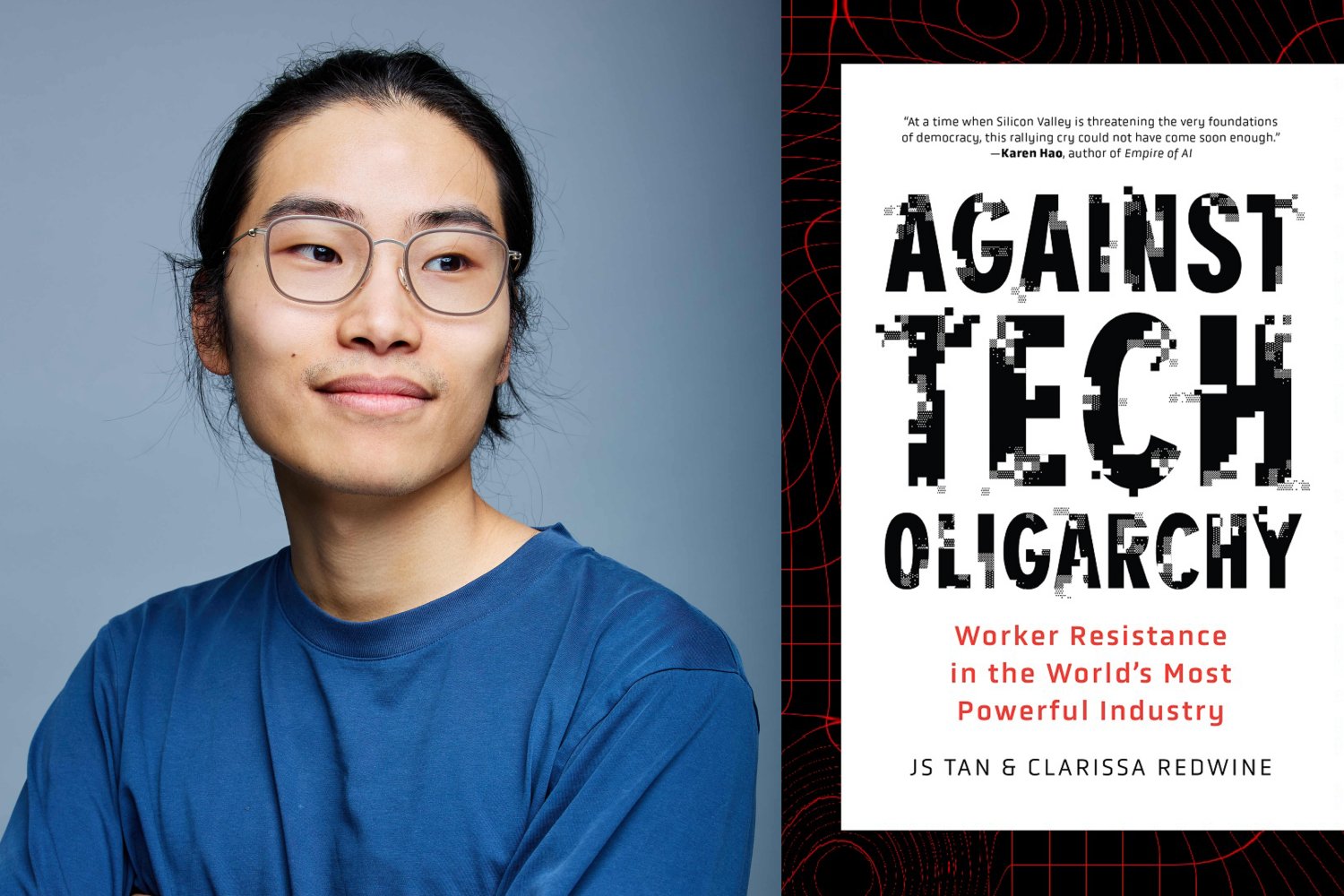
Documenting the tech worker movement

Writing as a participant and researcher, PhD student JS Tan SM ’22 has co-authored a new book about the rise of tech worker protests and the employer backlash that followed.

We use cookies to run the site and, with your consent, for analytics and to show ads. See our Cookie Policy.
