A Unified Dynamics Framework for Reinforcement Learning and Classical Control of a Six-DOF Pipeline-Tracking ROV in NVIDIA Isaac Sim
Cheng Siong ChinM. VenkateshkumarJianhua Zhang
Oct 2026
Artificial IntelligenceRobotics
Abstract
Reinforcement learning controllers for underwater vehicles are usually trained against one physics representation and deployed against another, so reported performance does not always describe behavior outside training. This paper presents a pipeline-tracking architecture for a six-degree-of-freedom remotely operated vehicle (ROV) in which one Universal Scene Description (USD) scene supplies the real BlueROV2-Heavy mass, added-mass, damping, buoyancy, and thruster parameters to both halves of the system: a vectorized NumPy implementation of Fossen's marine-craft equations, and an interactive NVIDIA Isaac Sim deployment applying the identical equations as PhysX forces at every step. The Coriolis-centripetal term is the primary dynamics model in both branches; a controlled ablation on PPO and TRPO shows that including it does not destabilize either algorithm and modestly improves tracking, about 19 percent lower standoff RMS error for TRPO. Five reinforcement learning algorithms, PPO, soft actor-critic, TD3, DDPG, and TRPO, are trained against one environment, reward, and randomized evaluation harness through a checkpoint-compatibility layer scoring any policy with the same code. The pipeline is extended with six classical baselines, PID, sliding-mode, fuzzy logic, feedback linearization, model predictive control, and an adaptive neuro-fuzzy inference system, driven by the same guidance geometry and thruster allocation as the learned policies. Under Coriolis-enabled dynamics, PPO, TRPO, and feedback linearization reach the strongest combination of 100 percent success and competitive accuracy; PID, fuzzy control, and the neuro-fuzzy baseline also reach 100 percent success with looser tracking; DDPG and TD3 each show a specific, explainable failure mode rather than a general weakness of off-policy learning; and classical control remains a strong baseline against the best learned policies.

GAOKAO-Bench is introduced, an intuitive benchmark that employs questions from the Chinese GAOKAO examination as test samples, including both subjective and objective questions that contribute a robust evaluation benchmark for future large language models and offers valuable insights into the advantages and limitations...
Xiaotian Zhang, Chun-yan Li, Yi Zong et al.· arXiv.org· 216 citations· ⚡17
This work investigates the possibilities of using LLMs in a resume screening setting via a document retrieval framework that simulates job candidate selection and finds that the MTEs are biased, significantly favoring White-associated names in 85% of cases and female-associated names in only 11.1% of cases.
This paper presents a comprehensive overview of the Ultralytics YOLO family, emphasizing architectural evolution, benchmarking, deployment, and emerging directions from YOLOv5 through YOLO27, and examines detection, segmentation, depth, classification, pose, oriented detection, tracking, export, quantization, and deplo...
A novel threat is unveiled in which attackers steer the RAG system's response by injecting malicious passages into its knowledge base, enabling the attacker to steer the response without altering the user input or modifying the RAG weights.
Jiaqi Xue, Meng Zheng, Yebowen Hu et al.· arXiv.org· 109 citations· ⚡8
This work revisits schema linking when using the latest generation of large language models (LLMs) and finds empirically that newer models are adept at utilizing relevant schema elements during generation even in the presence of large numbers of irrelevant ones.
Karime Maamari, Fadhil Abubaker, Daniel Jaroslawicz et al.· arXiv.org· 109 citations· ⚡19
Empirically, PRISM reduces the end-to-end time for data selection and model tuning to just 30% of conventional pipelines, and achieves this efficiency while simultaneously enhancing performance, surpassing models fine-tuned on the full dataset across eight multimodal and three language understanding benchmarks.
Jinhe Bi, Yifan Wang, Danqi Yan et al.· arXiv.org· 73 citations· ⚡4
Related blog posts
MIT News · Artificial Intelligence· news.mit.eduJul 30, 2026
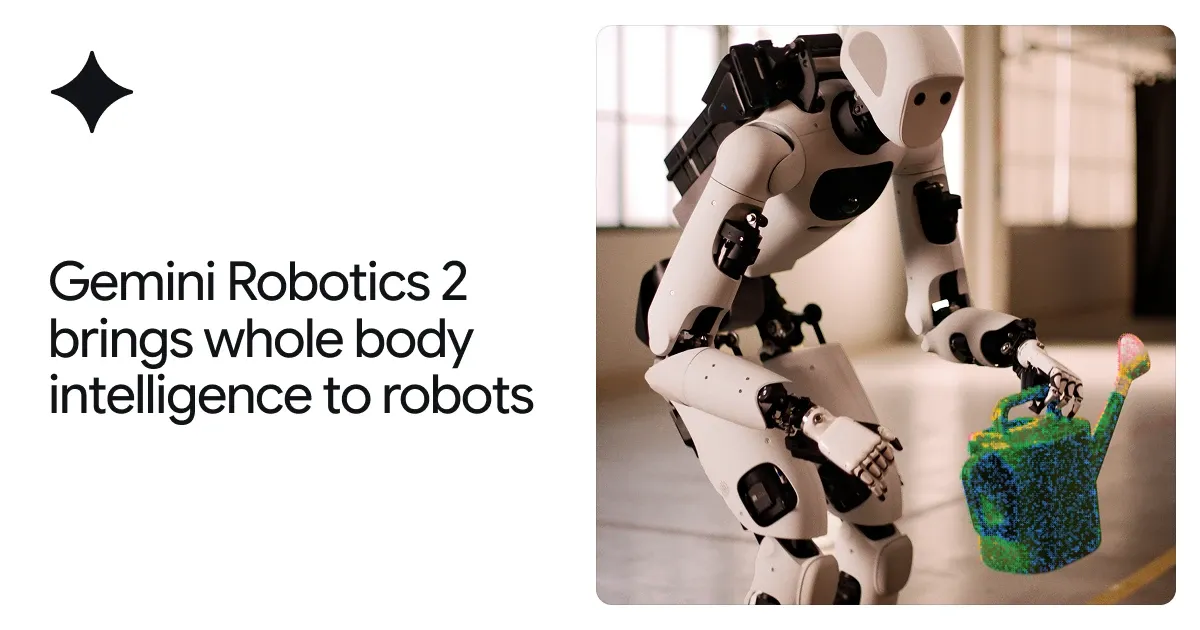
From feet to fingertips — we are teaching robots intelligent whole-body control, fine dexterity, and teamwork to complete a broad range of complex tasks.
With $2.1 million funding from Google.org, the open-source Public Transit Intelligence Hub will unify public transit monitoring, operations, and passenger communication.
We use cookies to run the site and, with your consent, for analytics and to show ads.
See our Cookie Policy.