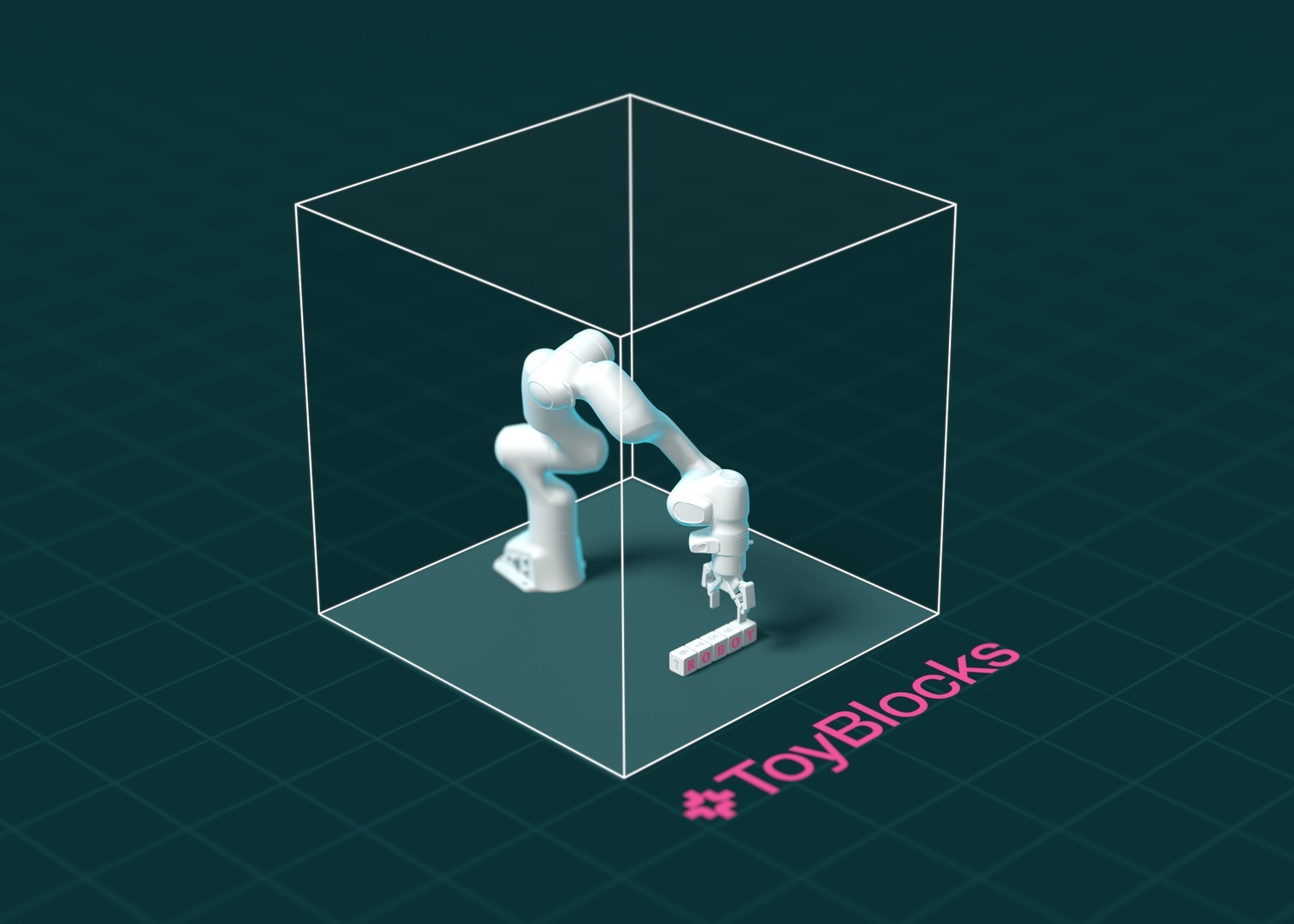
DiVeR is proposed, which estimates decision criticality from the dispersion of sampled action representations and uses this signal to reweight verifier learning toward states where action selection is most consequential, without requiring step-level annotations or additional environment interaction.
Abstract
Scaling robot data and model capacity has improved Vision-Language-Action (VLA) policies, but further progress is constrained by the high cost of robotic data. Verifier-guided test-time scaling offers an efficient alternative by sampling multiple action candidates and selecting the one most likely to lead to task success at inference time. Existing classification-based verifiers learn from trajectory-level outcomes but treat all visited states equally, even though their value for candidate discrimination can vary across a trajectory. At many states, plausible actions are similar and provide limited discrimination signal, while only a sparse set of decision-critical states admits meaningfully different actions that can substantially affect downstream outcomes. To address this, we propose DiVeR, which estimates decision criticality from the dispersion of sampled action representations. DiVeR then uses this signal to reweight verifier learning toward states where action selection is most consequential, without requiring step-level annotations or additional environment interaction. Across LIBERO, RoboCasa, and real-world experiments on a Franka Research 3 robot, DiVeR consistently improves task success through more effective verifier-guided action selection, while adding negligible verifier inference overhead.

Dual-system Vision-Language-Action (VLA) models improve real-time robotic control by pairing a slow, reasoning-capable generalist with a fast specialist action expert. However, existing methods invoke the generalist at a fixed frequency, ignoring the fact that decision-making complexity varies throughout a rollout. Thi...
Hyemin Yang, Wooseong Jeong, Giwon Lee et al.· 1 citation· ⚡1
Learning from human demonstrations is a reliable way to teach robots new tasks, but the gains from each additional demonstration shrink as the policy improves. Continued improvement can instead come from supervised deployment, where an operator places the objects and intervenes when the policy fails. We ask how to maxi...
L. Ankile, Perry Dong, R. Bhowmik et al.· 0 citations
The analysis of the imitation objective shows how narrow conditional action support can leave grounded and instruction-keyed solutions indistinguishable on the demonstrations, and motivates Equivariant Counterfactual Training (ECT), which acts at two levels.
Vision-language-action models (VLAs) have trans- formed the field of robotic manipulation in recent years by combining the semantic understanding of LLMs with the precise control of flow-matching policies. Advantage conditioning is a recent technique that iteratively improves VLAs by training a value function on deploy...
Vision-language-action (VLA) models offer a promising path toward general-purpose robot manipulation. While inference latency can affect task success in a constantly evolving physical world, the relationship between latency and task success rate remains poorly understood. In this paper, we introduce VLALagBench, a comp...
Qi-Sheng Wen, Bo-Rui Xu, Hussein Amro et al.· 0 citations
This work dissects advantage-guided VLA post-training through a controlled empirical study that separates these design choices while accounting for their distinct estimands, and develops stage-specific offline evaluation methods to screen alternative choices efficiently, without requiring extensive real-robot policy ev...
Jia-Hang Cao, Han-Ye Zhao, Hang Lai et al.· arXiv.org· 0 citations
Related blog posts
MIT News · Artificial Intelligence· news.mit.eduNov 9, 2026
Machine-learning networks can learn without detailed instructions from a designer. Those that do may offer insight into how the brain reorganizes itself during learning.
We use cookies to run the site and, with your consent, for analytics and to show ads.
See our Cookie Policy.