Wrong Organ, Right Physics: Transferring Echocardiography Pretraining to Lung Ultrasound for Tuberculosis Screening
Christiaan M. GeldenhuysJoshua M. Jansen van V\"urenV\'eronique SuttelsTrevor BrokowskiAblo P. WachinouMary-Anne HartleyRensu P. TheartGrant TheronThomas R. Niesler
Oct 2026
Machine LearningComputer Vision
Abstract
Lung ultrasound (LUS) is attractive for tuberculosis (TB) screening at primary-care level, but labelled cohorts are small. Echocardiography carries no such constraint, while sharing the same underlying ultrasound imaging physics, signal processing and B-mode appearance as LUS. We ask whether an encoder pretrained on that high-resource ultrasound domain carries representations that remain usable in the low-resource one. Only the encoder varies, across seventeen encoders spanning three architecture families. Among them, a latent-predictive video encoder pretrained on generic video (V-JEPA2-L) and its echocardiography counterpart (EchoJEPA-L) differ in pretraining corpus alone. The choice among these encoders does not resolve the classification, the whole family spanning 2.50 percentage points against a measurement resolution of 2.71. What moves the task instead is feature conditioning. Standardising the features between the encoder and the classifier improves all seventeen encoders by a mean of +1.23 percentage points at $p=1.5\times10^{-5}$. On the held-out test set every encoder selected on the development folds stands above the baseline system by up to +2.57 percentage points of area under the receiver operating characteristic curve (AUROC), and specificity at 90% sensitivity reaches 79.3% against 60.3%. The contrast specified in advance, EchoJEPA-L against V-JEPA2-L, measures -0.16 percentage points at $p=0.926$. We therefore find no evidence that shared ultrasonic physics alone makes echocardiography a more productive pretraining corpus than generic video, and any advantage, if present, is smaller than this cohort can resolve. The video encoders receive replicated still images, however, so whether this absence of an effect reflects the pretraining domain or a video encoder applied to static frames cannot be separated. The limiting factor is the labelled cohort rather than the encoder.
This publication proposes a definition and a classification of agile software development approaches and analyses ten software development methods that can be characterized as being "agile" against the defined criterion.
P. Abrahamsson, O. Salo, Jussi Ronkainen et al.· arXiv.org· 727 citations· ⚡54
The study shows that agile practices improve both informal and formal communication, but indicates that, in larger development situations involving multiple external stakeholders, a mismatch of adequate communication mechanisms can sometimes even hinder the communication.
M. Pikkarainen, Jukka Haikara, O. Salo et al.· Empirical Software Engineeri...· 401 citations· ⚡48
The results indicate that software engineering work practices are chosen opportunistically, adapted and configured to provide value under the constrains imposed by the startup context.
Nicolò Paternoster, Carmine Giardino, M. Unterkalmsteiner et al.· Information and Software Tec...· 394 citations· ⚡54
The possibility of inferring high-dimensional data inference in a model that consists of a prior and an auxiliary differentiable constraint given some additional information is considered, thereby allowing a range of potential applications in adapting models to new domains and tasks.
Alexandros Graikos, Esmeralda S. Whitammer, N. Jojic et al.· Neural Information Processin...· 316 citations· ⚡15
Exploring how generative AI could make machine vision more accessible to businesses. The post GenEye in a Box: Making Machine Vision Something You Can Just Ask For appeared first on GPT-Lab.
Microsoft Research Blog· microsoft.comAug 11, 2026
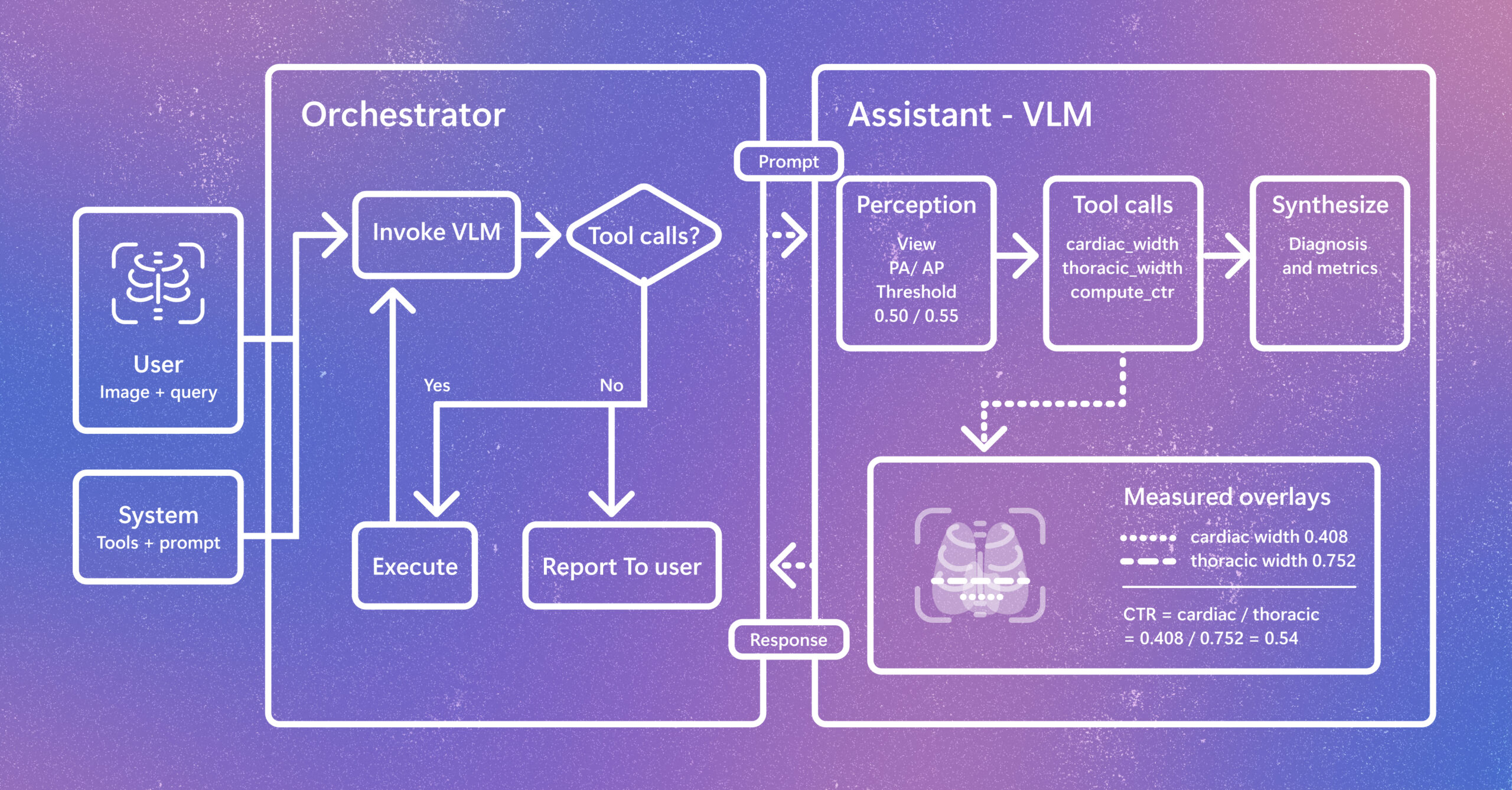
Radiology AI is evolving beyond report generation. CARE-X explores a unified approach that combines flexible reasoning, calibrated predictions, and measurement-based tools for chest X-ray interpretation. The post Introducing CARE-X: Towards Clinically Useful Radiology VLMs with Auxiliary Supervision, Reward-Aligned Learning, and Tool-Augmented Measurement appeared first on Microsoft Research.
Students in MIT’s Concourse program delve deeply into the human condition, debate challenging questions, and learn to develop judgment about issues that can’t be quantified.
We use cookies to run the site and, with your consent, for analytics and to show ads.
See our Cookie Policy.