Oct 2026· Clinical Oral Investigations· 38 references
Dental Erosion and Treatment
Abstract
Abstract Objectives To evaluate hydrogen peroxide (HP) penetration in teeth with enamel cracks and to investigate if adhesive-based strategies can reduce its permeability without compromising bleaching efficacy (BE). Materials and methods Fifty human premolars ( n = 10 per group) were allocated into five groups: unbleached sound teeth (control), bleached sound teeth, bleached teeth with enamel cracks without adhesive strategy (cracked enamel), and two groups with enamel cracks receiving adhesive protection prior to bleaching (three-step etch-and-rinse adhesive [3-stepER] and universal adhesive used in an etch-and-rinse strategy [UA-ER]). Enamel cracks were detected using transillumination and measured using ImageJ software. In the adhesive groups, phosphoric acid etching was followed by adhesive application before two bleaching sessions. HP penetration into the pulp chamber was quantified using UV–Vis spectrophotometry. Color was assessed at baseline and after 7 and 14 days using digital spectrophotometry. Final bleaching efficacy was calculated from the color change between baseline and day 14 (ΔE ab, ΔE 00 and ΔWI D ). Data were analyzed using one-way ANOVA followed by Tukey’s post hoc test (α = 0.05). Results HP penetration differed among the bleached groups ( p < 0.05). The sound group showed the lowest HP levels (0.21 ± 0.06 µg mL⁻¹), whereas the cracked enamel (0.36 ± 0.23 µg mL⁻¹) and 3-stepER (0.32 ± 0.11 µg mL⁻¹) groups showed similar intermediate values. The UA-ER strategy showed the highest HP penetration (1.81 ± 0.34 µg mL⁻¹; p < 0.05). No significant differences in BE were observed among the bleached groups. Conclusions Neither adhesive-based strategy provided a protective effect against HP diffusion in teeth with enamel cracks. The 3-stepER strategy did not reduce HP penetration compared with unprotected cracked enamel, whereas the UA-ER strategy resulted in significantly greater HP penetration, indicating an adhesive-dependent response. Clinical Relevance The use of adhesive systems as a protective strategy during in-office bleaching may not effectively reduce HP diffusion in teeth with enamel cracks. Clinicians should exercise caution when adopting such approaches.
This publication proposes a definition and a classification of agile software development approaches and analyses ten software development methods that can be characterized as being "agile" against the defined criterion.
P. Abrahamsson, O. Salo, Jussi Ronkainen et al.· arXiv.org· 727 citations· ⚡54
The study shows that agile practices improve both informal and formal communication, but indicates that, in larger development situations involving multiple external stakeholders, a mismatch of adequate communication mechanisms can sometimes even hinder the communication.
M. Pikkarainen, Jukka Haikara, O. Salo et al.· Empirical Software Engineeri...· 401 citations· ⚡48
The results indicate that software engineering work practices are chosen opportunistically, adapted and configured to provide value under the constrains imposed by the startup context.
Nicolò Paternoster, Carmine Giardino, M. Unterkalmsteiner et al.· Information and Software Tec...· 394 citations· ⚡54
The results show that the embedded industry has been able to apply agile methods in its development processes and that the appreciation of the agile methods and their individual practices appears to increase once adopted and applied in practice.
O. Salo, P. Abrahamsson· IET Software· 238 citations· ⚡9
Consequences of happiness and unhappiness that are beneficial and detrimental for developers' mental well-being, the software development process, and the produced artifacts are found.
D. Graziotin, Fabian Fagerholm, Xiaofeng Wang et al.· Journal of Systems and Softw...· 236 citations· ⚡13
The Mobile-D approach is briefly outlined here and the experiences gained from four case studies are discussed, which helped develop an agile development approach for mobile application development.
P. Abrahamsson, Antti Hanhineva, H. Hulkko et al.· Conference on Object-Oriente...· 225 citations· ⚡18
Related blog posts
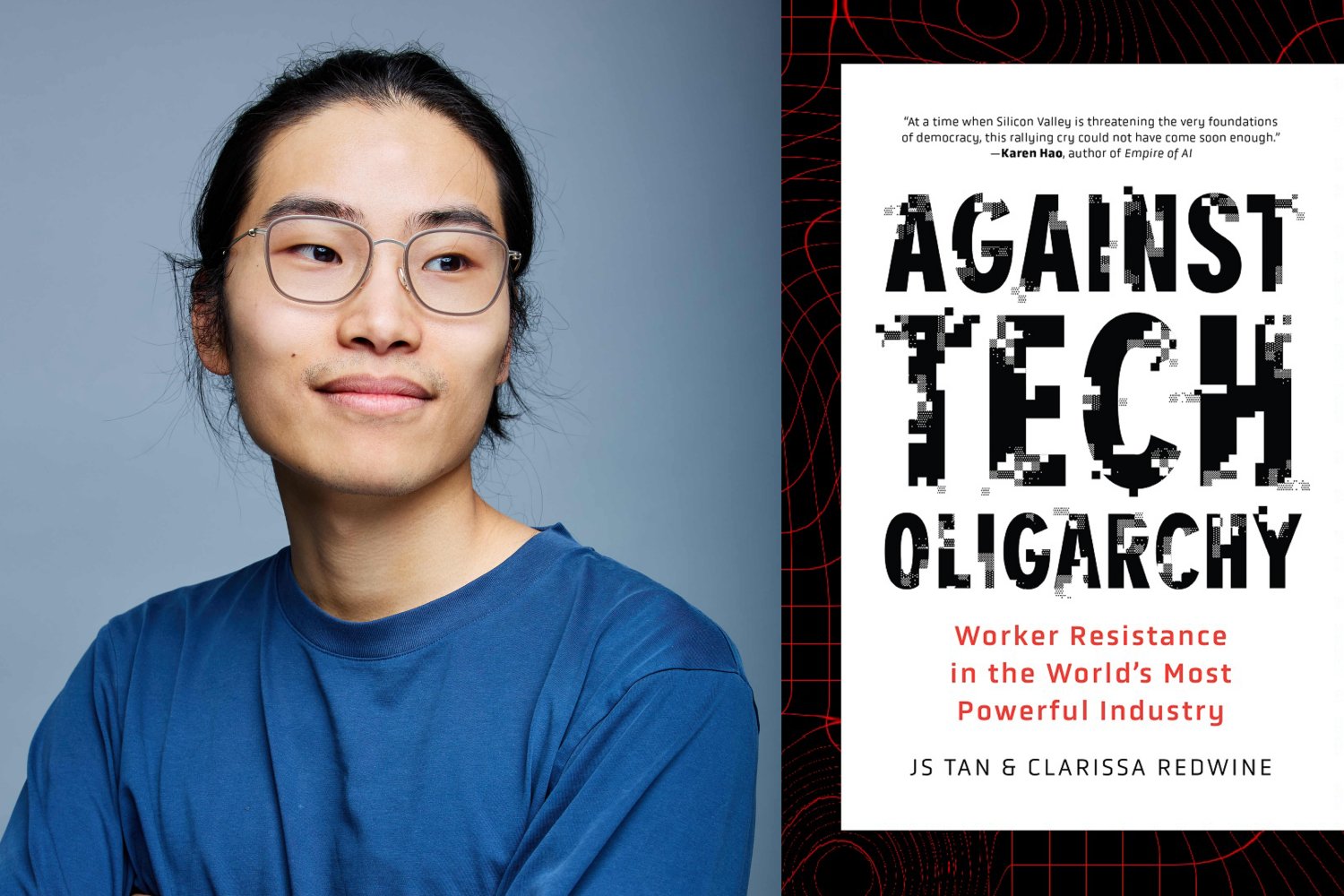
MIT News · Artificial Intelligence· news.mit.eduOct 6, 2026
Writing as a participant and researcher, PhD student JS Tan SM ’22 has co-authored a new book about the rise of tech worker protests and the employer backlash that followed.
Requirements in large systems rarely exist in isolation. Their meaning depends on the wider project context - other requirements, policies, decisions, tests, and implementation details. That becomes especially important when AI is used for review, because spotting a possible conflict or gap is only the beginning. ReqSpace explores how AI, visualisation, and connected project context can help reviewers understand those findings, trace the relationships behind them, and focus on the questions that…
AI is making software generation faster, but speed does not remove the need for expertise. As more work is delegated to AI, tacit knowledge may become one of the most important human advantages in software engineering. The post Beyond Prompt Engineering: The Role of Tacit Knowledge in Software Engineering appeared first on GPT-Lab.
We use cookies to run the site and, with your consent, for analytics and to show ads.
See our Cookie Policy.