Skip to content

Beyond Models: Building Trusted AI in the Age of Autonomous Agents

Sep 2026 · Proceedings of the Raptors Conference · 0 citations

TL;DR

This presentation introduces the emerging paradigm of multi-agentic AI in cybersecurity, where systems evolve from passive tools to autonomous decision-making entities, and presents the concept of a "lethal trifecta of risks that redefine traditional security boundaries.

Abstract

This presentation introduces the emerging paradigm of multi-agentic AI in cybersecurity, where systems evolve from passive tools to autonomous decision-making entities. This explores the rise of agentic AI and its transformative impact on modern cybersecurity. As AI systems evolve from assistive tools into autonomous agents capable of independent decision-making and action, they introduce a new class of dynamic, fast-moving, and highly adaptive threats. The session examines the architecture and behavior of these agents, highlighting critical vulnerabilities that emerge from autonomy, orchestration, and trust dependencies. It presents the concept of a "lethal trifecta" of risks that redefine traditional security boundaries. Through practical scenarios, the workshop illustrates how adversarial agents exploit interconnected systems and data flows at scale. It then outlines a defense-first approach grounded in observability, governance, and secure infrastructure design, emphasizing a shift toward "secure-by-design" principles. The discussion also addresses the evolving balance between human oversight and machine autonomy. Participants will gain actionable frameworks to design resilient, trustworthy agentic systems and transition toward proactive, self-healing cybersecurity models.

Read PDF

Similar papers

Oct 2026

The agentic frontier: A risk and resilience framework for autonomous AI reasoning

The Internet is shifting from a human-centric web towards an agentic frontier, with artificial intelligence (AI) agents increasingly integrated into daily life. The transition from instruction-based bots to goal-orientated agents is accelerating, signalling a move from automation to autonomy. According to internal Akam...

Karan Mankodi, Ryan Gao · 0 citations
#large language models Review Open access Oct 2026

Cyber Defence, Agentic AI, and the Sociotechnical Paradigm: A Survey of AI-Driven Cybersecurity

Artificial Intelligence (AI) and Large Language Models (LLMs) are reshaping cybersecurity, moving it from signature-based reactive security to agentic, self-evolving, and proactive operations. However, the fast deployment of autonomous agents entails significant security issues, physical-layer attacks in cyber-physical...

Rupsingh Mathwale · 0 citations
Open access 2026

Autonomous Adversaries: AI-driven Conflicts in Cybersecurity Systems

This research emphasizes the need for continuing to advance the development of defensive AI technologies to counter Red AI initiated attacks, while also providing a foundation for simulating this adversarial situation (Red AIs attack) against the understanding of future cybersecurity incidents.

Nader Shahata · 0 citations
#artificial intelligence Review Sep 2026

Trustworthy Agentic AI: A Comprehensive Cybersecurity and Systems Survey on Threat Landscapes, Defense Architectures, and Open Challenges

This survey systematically analyze threat surfaces across intra-execution loops and interaction planes, formulate a multi-layered zero-trust defense-in-depth architecture integrating Dual-LLM isolation, Capability-Based Access Control, kernel eBPF probes, and sandboxed runtimes, and map technical controls to internatio...

Seyedakbar Mostafavi · 0 citations
Review Open access Sep 2026

Governing Agentic AI in the Administrative State: Human Oversight, Cybersecurity Accountability, and Risk in Autonomous Digital Systems

Agentic artificial intelligence (AI) shifts digital government from systems that generate recommendations toward networked systems that perceive, plan, communicate, invoke tools, initiate actions, and adapt with limited direct supervision. This article examines agentic AI as an intelligent cybersecurity governance prob...

Haris Alibašić · 0 citations

Related blog posts

Microsoft Research Blog Nov 16, 2026

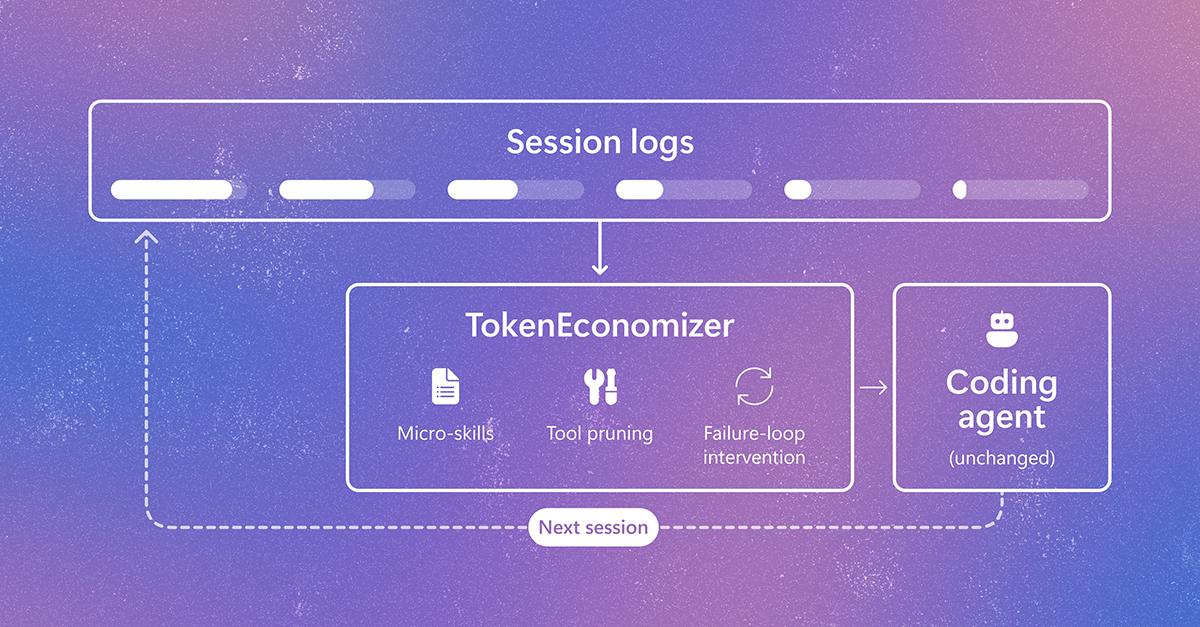
TokenEconomizer: Learning from Experience to Make AI Coding Agents More Efficient

AI coding agents are increasingly help developers fix bugs and build features largely on their own, but every interaction with their models consumes tokens. In each session, an agent sends instructions, tool descriptions, and session history to its model. Most efforts to reduce this cost focus on individual tasks. Yet developers return to the same […] The post TokenEconomizer: Learning from Experience to Make AI Coding Agents More Efficient appeared first on Microsoft Research.

MIT News · Artificial Intelligence Oct 23, 2026

Q&A: How AI came to model the “messy” human mind

Assistant Professor Benjamin Lindquist studies how engineers deliberately injected randomness into early AI, giving rise to deep-learning models that sometimes hallucinate.

We use cookies to run the site and, with your consent, for analytics and to show ads. See our Cookie Policy.

