Skip to content

Computational Chemical Engineering Explained: Models & Simulation

Oct 2026 · Zenodo (CERN European Organization for Nuclear Research)

Abstract

Computational Chemical Engineering Explained: Models & Simulation serves as an open educational resource (OER) curriculum framework and foundational reference manual connecting first-principles transport phenomena, numerical methods, and modern data-driven architectures to chemical process design and control. Developed by Prep4Uni.Online, this module explores mechanistic and empirical modeling, flowsheet simulation (ASPEN Plus, HYSYS), computational fluid dynamics (CFD), molecular dynamics (MD), multiscale modeling, and AI-driven plant-wide optimization. Core Pedagogical Coverage: Systems Engineering & IDEF0 Modeling: Deconstructs computational chemical workflows via Inputs (physical models, experimental data), Controls (model assumptions, numerical convergence criteria), Mechanisms (computational platforms, numerical solvers), and Outputs (rigorous process simulation, optimization skills). Modeling Paradigms & Multiscale Hierarchy: Formulates the continuum from quantum chemistry (DFT) and molecular dynamics up through CFD mesh-based Navier-Stokes solvers and equation-oriented flowsheet simulation platforms. Process Optimization & Advanced Control: Linear/non-linear programming, genetic algorithms, Pareto multi-objective optimization, Model Predictive Control (MPC), and Real-Time Optimization (RTO). Digital Twins & AI Frontiers: Explores industrial digital twin implementations, High-Performance Computing (HPC), Physics-Informed Neural Networks (PINNs), and Deep Operator Networks (DeepONets) for real-time edge deployment and surrogate modeling. Self-Assessment & Quantitative Calculations: Comprehensive foundational concepts, scenario-based analytical evaluations, and step-by-step worked numerical calculations covering Arrhenius kinetics, CSTR reactor sizing, simulation heat duty balances, numerical integration via the Trapezoidal Rule, PFR scaling, multi-objective penalty weightings, and pipe flow Reynolds number evaluations. Interactive Companion & Curriculum Navigation: This publication accompanies the interactive digital learning module featuring dynamic batch reactor exothermic kinetic and thermal simulators, interdisciplinary curriculum pathways, and the Prep4Uni career diagnostic portal. Permanent Webpage URL: https://prep4uni.online/stem/physical-technologies/chemical-engineering/computational-chemical-engineering/
View source

Similar papers

#computer vision Review Sep 2017

Agile Software Development Methods: Review and Analysis

This publication proposes a definition and a classification of agile software development approaches and analyses ten software development methods that can be characterized as being "agile" against the defined criterion.

P. Abrahamsson, O. Salo, Jussi Ronkainen et al. · 727 citations · ⚡54
#computer vision Jun 2008

The impact of agile practices on communication in software development

The study shows that agile practices improve both informal and formal communication, but indicates that, in larger development situations involving multiple external stakeholders, a mismatch of adequate communication mechanisms can sometimes even hinder the communication.

M. Pikkarainen, Jukka Haikara, O. Salo et al. · 401 citations · ⚡48
#machine learning Review Open access Oct 2014

Software development in startup companies: A systematic mapping study

The results indicate that software engineering work practices are chosen opportunistically, adapted and configured to provide value under the constrains imposed by the startup context.

Nicolò Paternoster, Carmine Giardino, M. Unterkalmsteiner et al. · 394 citations · ⚡54

Related blog posts

Microsoft Research Blog Oct 6, 2026

What AI gets wrong and what failure teaches us

Jennifer Neville did not want to go into computer science—but that’s exactly where she landed. Neville discusses the starts and stops that led to her professional sweet spot and her work identifying “surprising failures” making it hard for AI to handle complexity.  The post What AI gets wrong and what failure teaches us appeared first on Microsoft Research.

Microsoft Research Blog Sep 29, 2026

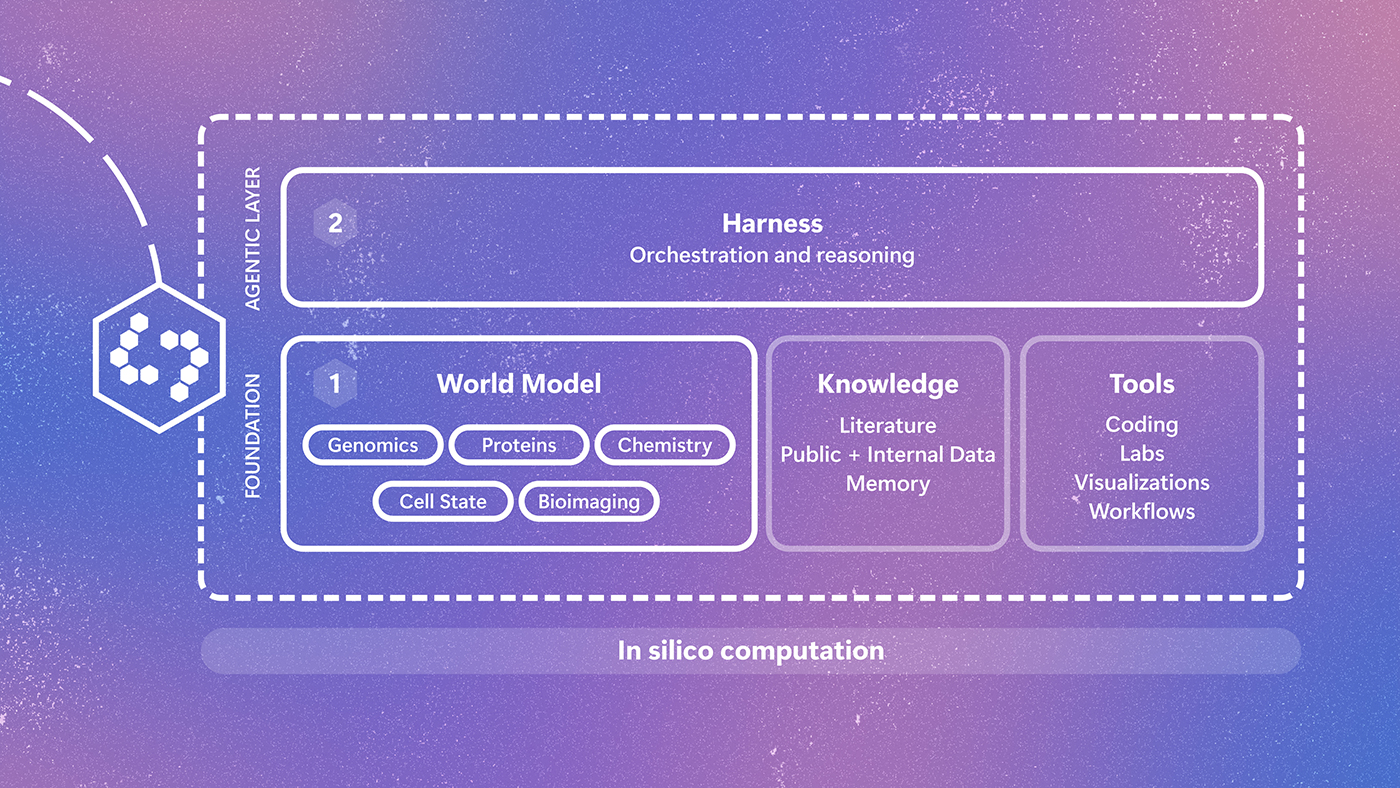
Introducing Quine: An AI research system designed for the complexity of biology

Biology doesn't operate in silos, and neither should the AI representation of it. Quine is an early-stage research effort to create a multimodal world model of biology. By connecting insights across biological scales and modalities, Quine helps scientists computationally search a space far larger than intuition allows and prioritize hypotheses before they reach the lab. Experimental results provide important feedback, helping researchers sharpen future research directions. The post Introducing Q…

We use cookies to run the site and, with your consent, for analytics and to show ads. See our Cookie Policy.