Oct 2026· International Journal of Intelligent Unmanned Systems· 0 citations· 68 references
Digital Transformation in Industry
Abstract
This paper aims to examine the synergistic integration of Cyber-Physical Systems (CPS) and Machine Learning (ML) as a foundational enabler for Industry 5.0, focusing on creating human-centric, sustainable and resilient manufacturing ecosystems.
The study utilizes a synthesis and review approach, analyzing recent advances in ML-driven CPS applications such as workflow optimization and predictive maintenance, alongside enabling technologies like 5G and digital twins.
The findings show that the integration of ML in multi-tier Edge-Fog-Cloud CPS brings significant operational advantages for the shop floor, such as sub-millisecond real-time control, more efficient human–robot interaction and a 10–20% reduction in energy used by the shop floor. But, the benefits of such physical manufacturing solutions rely on the need to work through a number of operational challenges. These include formally verifying non-deterministic ML policies, reducing IT/OT cybersecurity threats, including data poisoning and signal spoofing, reducing data heterogeneity in Federated Learning (FL) and lowering high deployment costs for small and medium-sized enterprises (SMEs).
Future implementation requires addressing the need for Explainable AI (XAI) for transparency, FL for privacy and reinforcement learning for human-in-the-loop control.
The proposed paradigm is applicable in smart factories, autonomous production lines and supply chain optimization, helping manufacturers maximize asset output and reduce environmental impact.
This paper highlights the essential shift from “technology-driven” (Industry 4.0) to “value-driven” (Industry 5.0) manufacturing, identifying the CPS-ML convergence as the critical engine for this transition.
The results indicate that software engineering work practices are chosen opportunistically, adapted and configured to provide value under the constrains imposed by the startup context.
Nicolò Paternoster, Carmine Giardino, M. Unterkalmsteiner et al.· Information and Software Tec...· 394 citations· ⚡54
This state-of-practice investigation was performed using a literature review followed by a multiple-case study approach and presents how inconsistency between managerial strategies and execution can lead to failure by means of a behavioral framework.
Carmine Giardino, Xiaofeng Wang, P. Abrahamsson· International Conference on...· 175 citations· ⚡19
This study conducts a case survey study based on the secondary data of the major pivots happened in 49 software startups, and demonstrates that customer need pivot is the most common among all pivot types.
Sohaib Shahid Bajwa, Xiaofeng Wang, Anh Nguyen-Duc et al.· Empirical Software Engineeri...· 127 citations· ⚡15
It is found that roles of MVPs in startups were not fully aware by entrepreneurs, and entrepreneurs should consider a systematic approach to fully explore the value of MVP, as a multiple facet product (MFP).
Anh Nguyen-Duc, P. Abrahamsson· International Conference on...· 93 citations· ⚡9
The method, ECCOLA, is presented, which aims at making the high-level AI ethics principles more practical, making it possible for developers to more easily implement them in practice.
Ville Vakkuri, Kai-Kristian Kemell, P. Abrahamsson· EUROMICRO Conference on Soft...· 64 citations· ⚡6
The goal is to not only refine the accuracy of the LLM-based tool but also to underscore its potential in streamlining the software development lifecycle through proactive code improvement and education.
Z. Rasheed, Malik Abdul Sami, Muhammad Waseem et al.· arXiv.org· 62 citations· ⚡3
Training AI agents with reinforcement learning can be challenging because their tools, context, and decision-making are managed by complex frameworks. Agent Lightning connects existing agents to RL training, making it easier to improve them without rebuilding them. The post Agent Lightning v1.0: A 3,500-Line Lightweight Agentic RL Framework for Training Agents with Real Harnesses appeared first on Microsoft Research.
MIT News · Artificial Intelligence· news.mit.eduOct 6, 2026
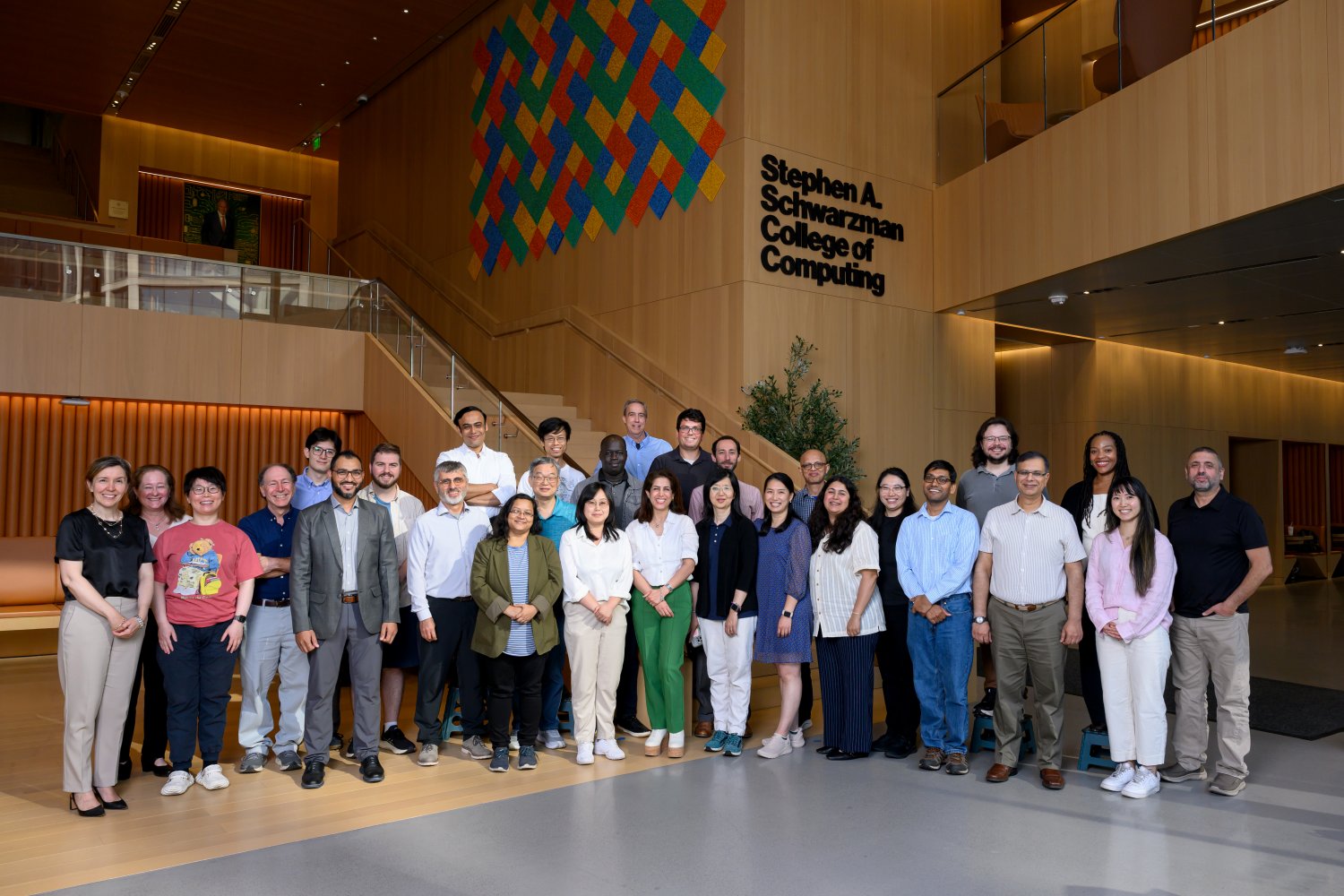
A weeklong summer workshop brought higher education faculty to campus to explore how AI and machine learning materials can be adapted for their classrooms.
What does it take to trust AI-driven HVAC optimization? Our AI Model Factory combines agents, machine learning, reinforcement learning and deterministic checks in a governed workflow designed for messy, real-world building data. The post We built an AI factory for HVAC control appeared first on GPT-Lab.
We use cookies to run the site and, with your consent, for analytics and to show ads.
See our Cookie Policy.