Skip to content

Future Trends of AI, Big Data and Digital Business Transformation

Oct 2026 · Zenodo (CERN European Organization for Nuclear Research)

Abstract

artficial intelligence (AI) and big data analytics have moved from specialised technical functions to the core of how organizations compete, create value and organise work. This concluding chapter looks ahead. It examines the technological, organizational, regulatory and societal trends that are likely to shape the next phase of AI- and data-driven business, and it considers what these trends imply for managers, employees, policymakers and researchers. The chapter begins by situating current developments within the historical evolution of business computing and analytics. It then analyses major technology trends, including generative AI and foundation models, agentic AI systems, edge and real-time analytics, modern data architectures such as the lakehouse and data mesh, privacy-enhancing technologies, digital twins, and longer-horizon developments such as quantum computing. The chapter next develops a framework for digital business transformation grounded in dynamic capabilities theory, and it examines the changing nature of work, including the balance between automation and augmentation and the emerging evidence on generative AI and productivity. Governance and responsibility are treated as central rather than peripheral themes, with discussion of explainability, fairness, sustainability and the evolving regulatory landscape, including the European Union Artificial Intelligence Act, the NIST AI Risk Management Framework and India's Digital Personal Data Protection Act, 2023. Special attention is given to India's digital public infrastructure and national AI initiatives as a distinctive context for transformation. The chapter proposes a phased roadmap for organizations, identifies the capabilities and skills that future managers will need, and outlines a research agenda. It closes with a synthesis of the themes developed throughout the book.
View source

Similar papers

#computer vision Review Sep 2017

Agile Software Development Methods: Review and Analysis

This publication proposes a definition and a classification of agile software development approaches and analyses ten software development methods that can be characterized as being "agile" against the defined criterion.

P. Abrahamsson, O. Salo, Jussi Ronkainen et al. · 727 citations · ⚡54
#computer vision Jun 2008

The impact of agile practices on communication in software development

The study shows that agile practices improve both informal and formal communication, but indicates that, in larger development situations involving multiple external stakeholders, a mismatch of adequate communication mechanisms can sometimes even hinder the communication.

M. Pikkarainen, Jukka Haikara, O. Salo et al. · 401 citations · ⚡48
#machine learning Review Open access Oct 2014

Software development in startup companies: A systematic mapping study

The results indicate that software engineering work practices are chosen opportunistically, adapted and configured to provide value under the constrains imposed by the startup context.

Nicolò Paternoster, Carmine Giardino, M. Unterkalmsteiner et al. · 394 citations · ⚡54

Related blog posts

Microsoft Research Blog Oct 6, 2026

What AI gets wrong and what failure teaches us

Jennifer Neville did not want to go into computer science—but that’s exactly where she landed. Neville discusses the starts and stops that led to her professional sweet spot and her work identifying “surprising failures” making it hard for AI to handle complexity.  The post What AI gets wrong and what failure teaches us appeared first on Microsoft Research.

Microsoft Research Blog Sep 29, 2026

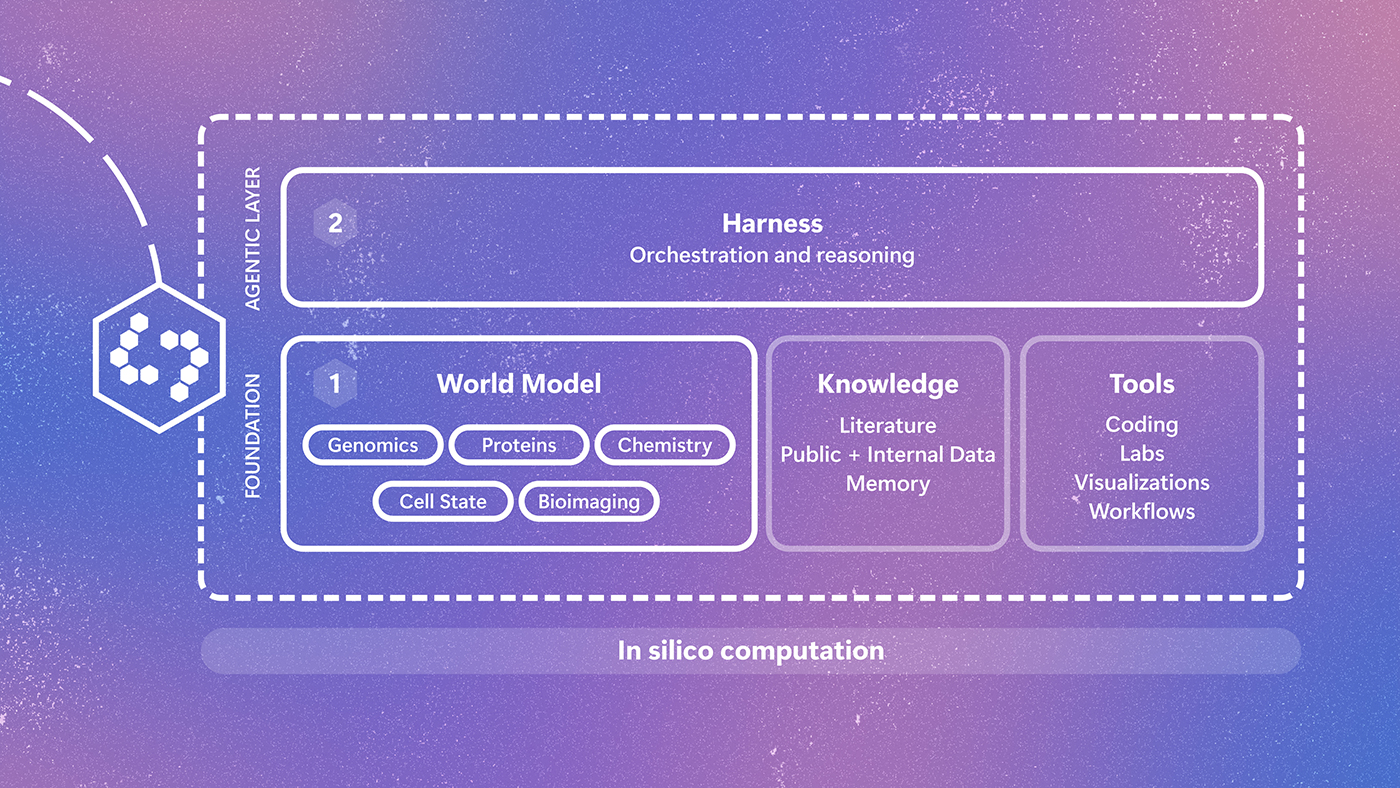
Introducing Quine: An AI research system designed for the complexity of biology

Biology doesn't operate in silos, and neither should the AI representation of it. Quine is an early-stage research effort to create a multimodal world model of biology. By connecting insights across biological scales and modalities, Quine helps scientists computationally search a space far larger than intuition allows and prioritize hypotheses before they reach the lab. Experimental results provide important feedback, helping researchers sharpen future research directions. The post Introducing Q…

We use cookies to run the site and, with your consent, for analytics and to show ads. See our Cookie Policy.