Skip to content

Dataset Identity, Not Novelty: The Source of an Inflated OOD Detection Gain

Oct 2026 · 0 citations · 38 references
Computer Science

Abstract

A post-hoc out-of-distribution (OOD) detector reads the activations of a trained classifier and returns a score. It fits that score on in-distribution data, and the benchmarks that evaluate it supply a second piece of OOD data for the fitting itself. Some detectors tune a constant on it. Others fit a direction in feature space or train a flexible combiner and report the number that it reaches as the gain that is still available. Every such fit is validated on held-out samples of the same OOD dataset. That check rules out memorizing individual images. It says nothing about a fit that has instead learned which dataset it is looking at, and a direction that recognizes one OOD dataset rather than novelty passes it perfectly. The detector that a practitioner installs meets OOD data from a source that nobody fitted it on, so the difference decides what the reported number is worth. We measure it by holding out the whole OOD dataset rather than a sample of it, and we call that gap the inflation. We read it across a range of combiners on ImageNet and CIFAR-100 backbones. Most of the gain that the usual protocol reports turns out to be dataset identity rather than novelty. The size of the fit does not move what survives, so the effect is not ordinary overfitting. The share depends instead on whether the input exposes class identity, and two controls that vary that property alone separate the inflation on every backbone of both benchmarks. A closed form accounts for the effect and computes it from the fitting rows, so a practitioner can tell which fits will inflate without running the hold-out protocol. One of these fits survives, namely the single constant that the field already picks on a designated validation dataset. Anything above it reports a gain that the hold-out protocol does not return, and on one benchmark what survives falls while what is reported climbs.

View source

Similar papers

#computer vision Review Sep 2017

Agile Software Development Methods: Review and Analysis

This publication proposes a definition and a classification of agile software development approaches and analyses ten software development methods that can be characterized as being "agile" against the defined criterion.

P. Abrahamsson, O. Salo, Jussi Ronkainen et al. · 727 citations · ⚡54
#computer vision Jun 2008

The impact of agile practices on communication in software development

The study shows that agile practices improve both informal and formal communication, but indicates that, in larger development situations involving multiple external stakeholders, a mismatch of adequate communication mechanisms can sometimes even hinder the communication.

M. Pikkarainen, Jukka Haikara, O. Salo et al. · 401 citations · ⚡48
#machine learning Review Open access Oct 2014

Software development in startup companies: A systematic mapping study

The results indicate that software engineering work practices are chosen opportunistically, adapted and configured to provide value under the constrains imposed by the startup context.

Nicolò Paternoster, Carmine Giardino, M. Unterkalmsteiner et al. · 394 citations · ⚡54

Diffusion models as plug-and-play priors

The possibility of inferring high-dimensional data inference in a model that consists of a prior and an auxiliary differentiable constraint given some additional information is considered, thereby allowing a range of potential applications in adapting models to new domains and tasks.

Alexandros Graikos, Esmeralda S. Whitammer, N. Jojic et al. · 316 citations · ⚡15

Related blog posts

Microsoft Research Blog Aug 11, 2026

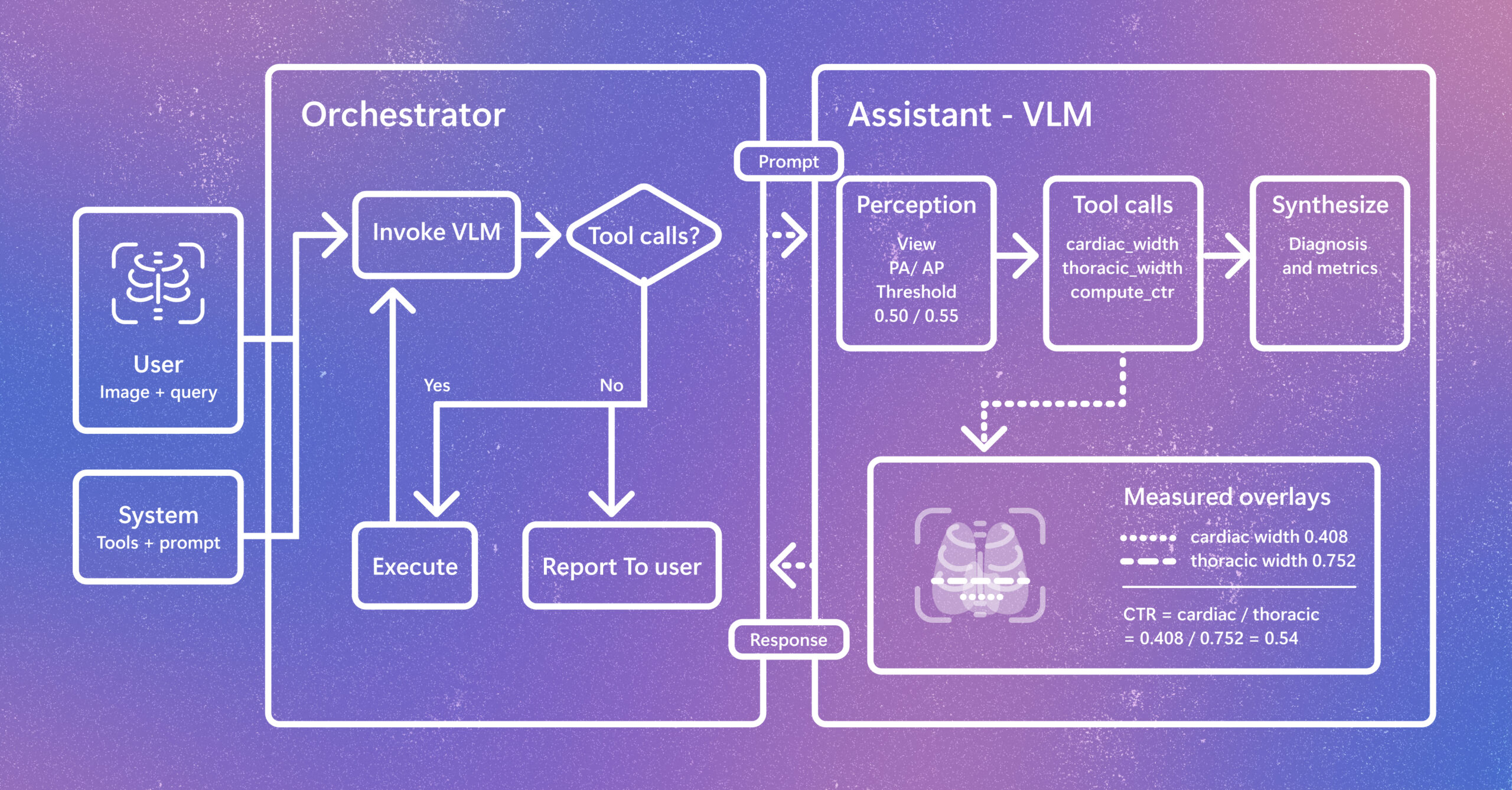
Introducing CARE-X: Towards Clinically Useful Radiology VLMs with Auxiliary Supervision, Reward-Aligned Learning, and Tool-Augmented Measurement

Radiology AI is evolving beyond report generation. CARE-X explores a unified approach that combines flexible reasoning, calibrated predictions, and measurement-based tools for chest X-ray interpretation. The post Introducing CARE-X: Towards Clinically Useful Radiology VLMs with Auxiliary Supervision, Reward-Aligned Learning, and Tool-Augmented Measurement appeared first on Microsoft Research.

MIT News · Artificial Intelligence Oct 7, 2026

Discovering the value of humanistic inquiry

Students in MIT’s Concourse program delve deeply into the human condition, debate challenging questions, and learn to develop judgment about issues that can’t be quantified.

We use cookies to run the site and, with your consent, for analytics and to show ads. See our Cookie Policy.
