Skip to content
#machine learning #computer vision Preprint Open access

Right In-Place (RiP) Convolution: A Simple, General, and Near-Optimal Strategy for Memory-Efficient CNN Inference

Opegbemi Matthias Busoye Tolulope Matthew Busoye Eghonghon-aye Eigbe
Oct 2026
Machine Learning Computer Vision

Abstract

Activation memory, not compute, limits CNN inference on constrained hardware such as microcontrollers. Direct in-place convolution removes the dual-buffer cost, but the memory-optimal formulation of Gural and Murmann assumes valid padding, unit stride, unit dilation, and odd square kernels, and needs a non-sequential traversal costing $2\times$ inference time in transposes. We identify two regimes in which their published closed form does not hold: (1) an under-allocation of exactly $(k-1)C_{in} \bmod (C_{out}-C_{in})$ scalars, active on every convolutional layer of their own deployed network and manifesting as a silent corruption of still-live input; (2) an unbounded overestimate, up to $2{,}432\times$, once the critical leg leaves the output grid. We correct both and generalize to arbitrary stride, dilation, padding, and rectangular kernels. We then propose Right In-Place (RiP) convolution, a bit-identical operation in which every layer reads its input right-aligned in a shared workspace and writes its output left-aligned from index zero. The debt is piecewise affine in the output pixel index, so evaluating its breakpoints in $O(1)$ yields the minimum safe gap without enumerating the output grid, with row-major access preserved. Across $10{,}000$ random layers RiP produced no corruption, and across 84 convolutional layers from 25 architectures it matches the herringbone workspace exactly on 58 and within 5% on 81, using 24.8% less memory than dual buffering on average. Written into TinyEngine's kernels and deployed to a Raspberry Pi Pico 1 and Pico 2, it cuts peak activation memory across eleven MCUNet models by 12.5 to 33.3% at unchanged cycle counts and bit-identical outputs, raising the number of models that fit the Pico 1's 256 KB SRAM from six to nine.

View source

Similar papers

#computer vision Review Sep 2017

Agile Software Development Methods: Review and Analysis

This publication proposes a definition and a classification of agile software development approaches and analyses ten software development methods that can be characterized as being "agile" against the defined criterion.

P. Abrahamsson, O. Salo, Jussi Ronkainen et al. · 727 citations · ⚡54
#computer vision Jun 2008

The impact of agile practices on communication in software development

The study shows that agile practices improve both informal and formal communication, but indicates that, in larger development situations involving multiple external stakeholders, a mismatch of adequate communication mechanisms can sometimes even hinder the communication.

M. Pikkarainen, Jukka Haikara, O. Salo et al. · 401 citations · ⚡48
#machine learning Review Open access Oct 2014

Software development in startup companies: A systematic mapping study

The results indicate that software engineering work practices are chosen opportunistically, adapted and configured to provide value under the constrains imposed by the startup context.

Nicolò Paternoster, Carmine Giardino, M. Unterkalmsteiner et al. · 394 citations · ⚡54

Diffusion models as plug-and-play priors

The possibility of inferring high-dimensional data inference in a model that consists of a prior and an auxiliary differentiable constraint given some additional information is considered, thereby allowing a range of potential applications in adapting models to new domains and tasks.

Alexandros Graikos, Esmeralda S. Whitammer, N. Jojic et al. · 316 citations · ⚡15

Trajectory Balance: Improved Credit Assignment in GFlowNets

It is proved that any global minimizer of the trajectory balance objective can define a policy that samples exactly from the target distribution, and empirically demonstrate the benefits of the trajectories balance objective for GFlowNet convergence, diversity of generated samples, and robustness to long action sequenc...

Esmeralda S. Whitammer, Moksh Jain, Emmanuel Bengio et al. · 302 citations · ⚡60

Related blog posts

Microsoft Research Blog Aug 11, 2026

Introducing CARE-X: Towards Clinically Useful Radiology VLMs with Auxiliary Supervision, Reward-Aligned Learning, and Tool-Augmented Measurement

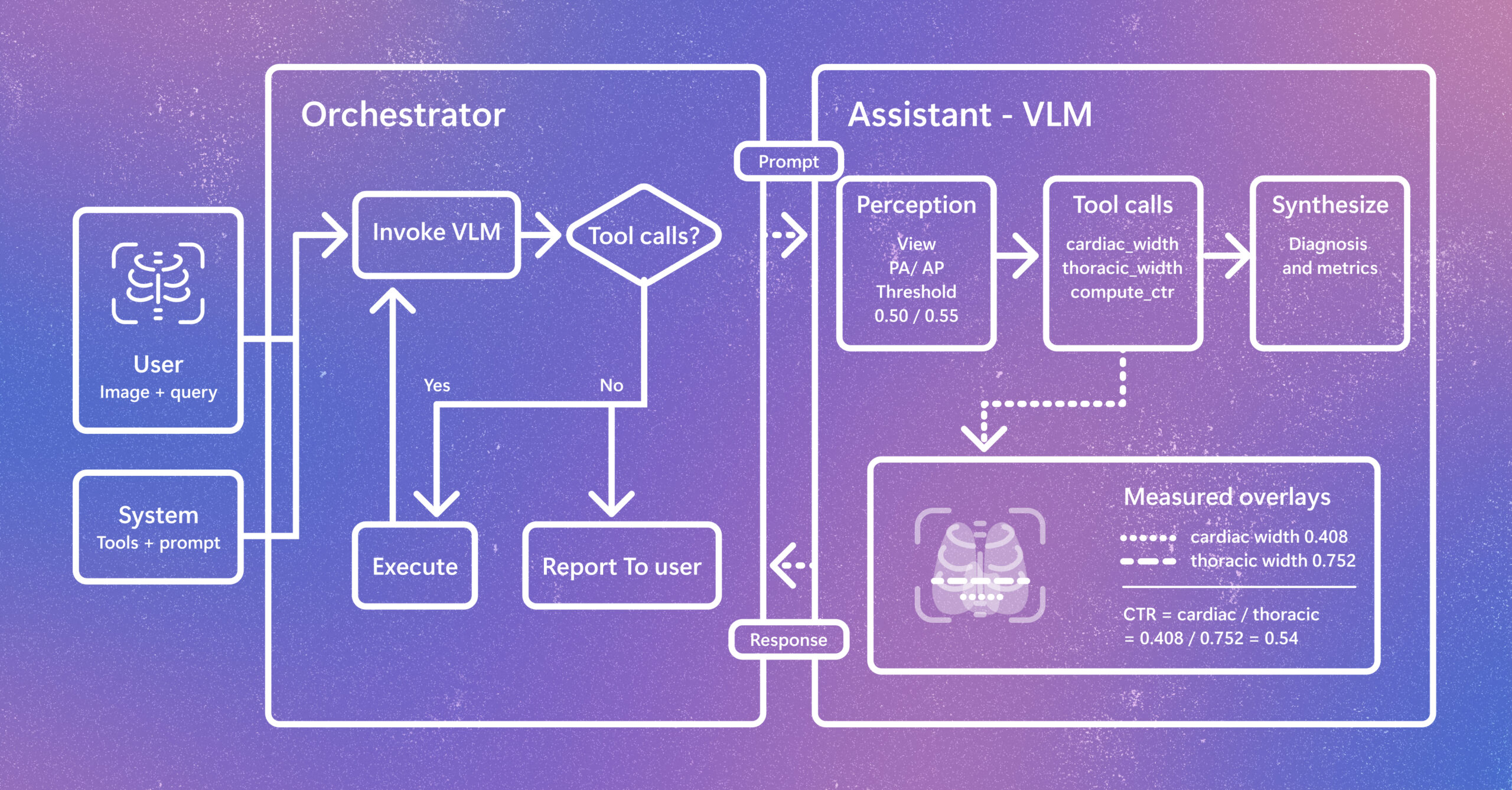
Radiology AI is evolving beyond report generation. CARE-X explores a unified approach that combines flexible reasoning, calibrated predictions, and measurement-based tools for chest X-ray interpretation. The post Introducing CARE-X: Towards Clinically Useful Radiology VLMs with Auxiliary Supervision, Reward-Aligned Learning, and Tool-Augmented Measurement appeared first on Microsoft Research.

MIT News · Artificial Intelligence Oct 7, 2026

Discovering the value of humanistic inquiry

Students in MIT’s Concourse program delve deeply into the human condition, debate challenging questions, and learn to develop judgment about issues that can’t be quantified.

We use cookies to run the site and, with your consent, for analytics and to show ads. See our Cookie Policy.
