FuncBridge: Towards Functional Tool-Use Generalization via Keypoint Trajectory Reasoning
Chuhao ZhouLiquan WangShuxin CaoXiangyu ChenYuxuan HuBoyu MaAnimesh GargJianfei Yang
Oct 2026
Artificial IntelligenceComputer VisionRobotics
Abstract
While humans readily repurpose a book, a stone, or a shoe to drive a nail, robots trained on specific tools fail to transfer the same function to novel ones -- a gap we formalize as functional generalization. Functionally equivalent tools share visually recognizable functional intent, such as where contact can occur and how a contact region should move to the target. However, this perceptual similarity does not directly carry over to action space, where each tool demands a different motor pattern to realize the function. To bridge this gap, we explore intermediate representations including affordance images, human video prompts, functional videos and object masks, and 2D keypoint trajectories, finding that keypoint trajectories best balance functional expressiveness and action groundability. Building on this, we present FuncBridge, a two-stage framework that decouples functional reasoning from action execution: learning to predict generalizable keypoint trajectories from action-free data, then grounding them into robot actions with limited demonstrations. Across a benchmark spanning ten tools and three functions, including hitting, sweeping, and hooking, FuncBridge consistently outperforms state-of-the-art methods on unseen tools in both simulation and the real world.

This publication proposes a definition and a classification of agile software development approaches and analyses ten software development methods that can be characterized as being "agile" against the defined criterion.
P. Abrahamsson, O. Salo, Jussi Ronkainen et al.· arXiv.org· 727 citations· ⚡54
The study shows that agile practices improve both informal and formal communication, but indicates that, in larger development situations involving multiple external stakeholders, a mismatch of adequate communication mechanisms can sometimes even hinder the communication.
M. Pikkarainen, Jukka Haikara, O. Salo et al.· Empirical Software Engineeri...· 401 citations· ⚡48
The results indicate that software engineering work practices are chosen opportunistically, adapted and configured to provide value under the constrains imposed by the startup context.
Nicolò Paternoster, Carmine Giardino, M. Unterkalmsteiner et al.· Information and Software Tec...· 394 citations· ⚡54
The possibility of inferring high-dimensional data inference in a model that consists of a prior and an auxiliary differentiable constraint given some additional information is considered, thereby allowing a range of potential applications in adapting models to new domains and tasks.
Alexandros Graikos, Esmeralda S. Whitammer, N. Jojic et al.· Neural Information Processin...· 316 citations· ⚡15
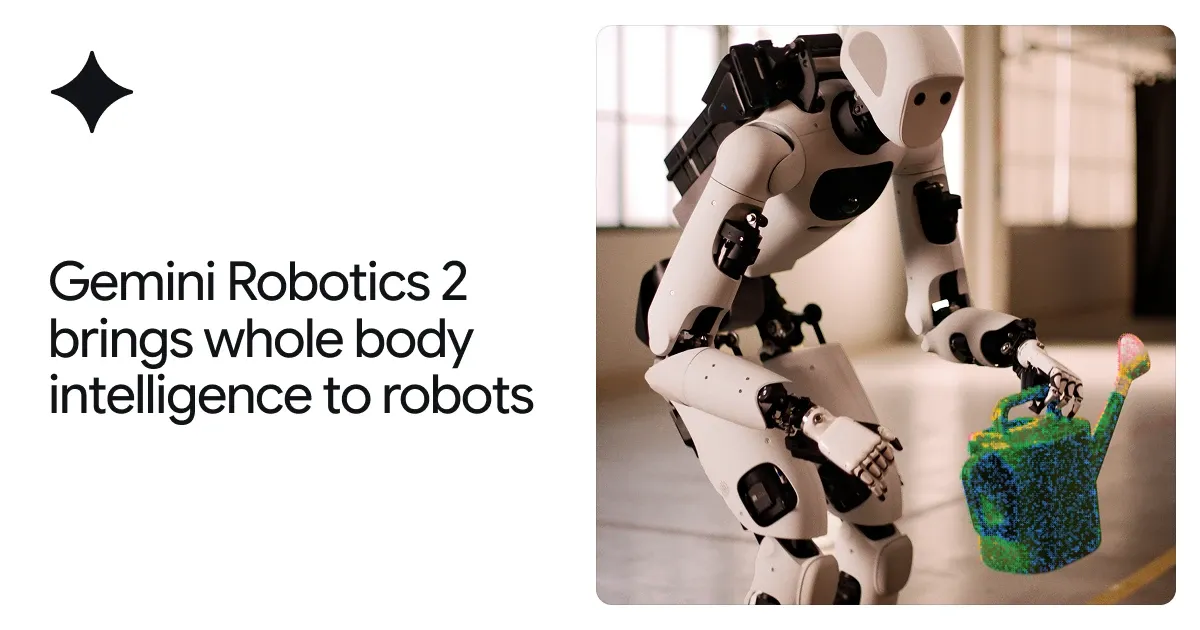
From feet to fingertips — we are teaching robots intelligent whole-body control, fine dexterity, and teamwork to complete a broad range of complex tasks.
Known for his clear and elegant writing style, Bertsekas shaped fields from control and optimization to large-scale computation and artificial intelligence.
We use cookies to run the site and, with your consent, for analytics and to show ads.
See our Cookie Policy.