Sep 2026· International Journal of Informatics and Communication Technology (IJ-ICT)· 0 citations· 26 references
TL;DR
An enhanced hybrid deep-learning method by combining graph neural networks (GNNs) and multi-layer perceptrons (MLPs) for effective strawberry disease detection in real environments of fields offers an accurate and explainable solution that has a computationally efficient commitment for real-time monitoring of disease in smart agriculture settings, particularly on low-cost hardware assets.
Abstract
Strawberries are severely affected by the main fungal diseases such as anthracnose fruit rot, grey mould, and powdery mildew, directly reducing commercial yield and post-harvest quality. In this paper, we propose an enhanced hybrid deep-learning method by combining graph neural networks (GNNs) and multi-layer perceptrons (MLPs) for effective strawberry disease detection in real environments of fields. This dataset contains images acquired from both public domain repositories as well as farm operational settings, encompassing three classes of diseases with varying lighting conditions, background noise, and occlusion. A structured pre-processing workflow comprising contrast enhancement, denoising, and synthetic hyperspectral simulation is used to enhance subtle lesion features and stabilize the subsequent feature extraction. The hybrid GNN–MLP framework possesses the merits of spatially local lesion topology and two-point contextual information, which can improve disease classification compared with common CNN-based structures. 5-fold cross-validation shows that the model holds 93.59% accuracy and a macro F1-score of 90.39%, showing good generalization even with heterogeneous input regimes. Transparent models use local interpretable model-agnostic explanations (LIME) and gradient-weighted class activation mapping (Grad-CAM) in combination, highlighting disease-relevant areas that give an interpretable rationale for each prediction. To conclude, the developed system offers an accurate and explainable solution that has a computationally efficient commitment for real-time monitoring of disease in smart agriculture settings, particularly on low-cost hardware assets.
Artificial intelligence has become an effective tool for improving agricultural productivity through automated crop disease diagnosis. Brinjal (eggplant) cultivation suffers substantial yield losses from diseases such as Shoot and Fruit Borer, Wet Rot, Fruit Cracking, and Phomopsis Blight, yet reliable field-based diagnostic systems remain limited. To address this challenge, we introduce \textit{BrinjalFruitX}, a real-world dataset comprising 1,823 annotated images collected under natural farming conditions in Bangladesh across four disease classes and one healthy class. We propose an interpretable hybrid feature-enhancement deep ensemble framework that integrates image preprocessing, transfer learning, traditional machine learning, class imbalance mitigation, and explainable artificial intelligence. Three preprocessing techniques, Gaussian, Laplacian, and Unsharp Masking, are systematically evaluated, while deep features extracted using pre-trained VGG and ResNet models are classified by Random Forest, K-Nearest Neighbors, and a classifier-level ensemble. The optimal Unsharp--ResNet--Random Forest configuration achieved 80.0\% accuracy with an F1-score of 87.0\%. ADASYN applied in the deep feature space improved minority-class sensitivity, while Grad-CAM and Grad-CAM++ enhanced model interpretability. The proposed framework provides an effective and transparent solution for practical field-level brinjal disease detection and precision agriculture.
Hasnur Jahan, Abu Kowshir Bitto, Susmoy Biswas et al.· EAI Endorsed Transactions on...· 0 citations
To correctly distinguish leaf diseases in eggplant (Solanum melongena), it is very important to improve agricultural production systems for precision. This paper presents a comparative analysis of five pre-trained convolutional neural network models, namely ResNet50, MobileNetV2, GoogLeNet, Xception, and VGG16, for multi-class classification of eggplant leaf diseases. In this work, a composite image dataset was developed by combining images from publicly available Kaggle , Mendeley repositories and local dataset (by collection from fields) to improve data diversity and generalization capability. A structurally optimized VGG16 model was developed to process 128 × 128 pixel images, which aimed to reduce computational complexity with preserved classification accuracy. Under the same training environment, the proposed modification achieved a classification accuracy of 96.5%. In addition to quantitative analysis, interpretability of the model was incorporated using Local Interpretable Model-agnostic Explanations (LIME) to generate localized feature attribution maps, thereby addressing the transparency problem associated with deep neural networks. The experimental results demonstrated that, although ResNet50 achieved the highest overall classification accuracy, the modified VGG16 architecture demonstrated a more balanced performance in terms of computational complexity, latency, and interpretability. Thus, the modified VGG16 is a reasonable candidate for use in real-time resource-constrained agricultural disease diagnostic system applications.
Honey Vachharajani, R. Gupta, Samir Patel· 2026 International Conferenc...· 0 citations
Background: The importance of early identification of tomato bacterial leaf spot (BLS) is essential to minimize the losses in yields and enhance the use of precision agriculture. Methods: The paper demonstrates a lightweight deep learning model, the Dual Multi-Layer Perceptron Feature Fusion Network (DMLPFFN) as a hyperspectral-based approach to the four tomato disease stages, which includes healthy, asymptomatic, early and late infection. The USDA hyperspectral data (168300 bands) has spectral heterogeneity which is solved by per-image Principal Component Analysis (PCA) to normalize the inputs into a single 128-dimensional space. Spectral-spatial patches of 9×9 are overlapping and normalized and then trained upon before training the model. The DMLPFFN combines the feature extraction process that consists of multi-scale dilated convolutions and global contextual modelling with lightweight element-wise fusion. Training strategies that are imbalance-aware are useful in increasing robustness. Result: The model had a weighted F1-score of 0.9718 and a validation accuracy of 98.22% and test accuracy of 97.18%. These findings can be defined as good generalization and lower computational complexity, which makes the framework applicable to real-time agricultural application.
Poonam Chaudhary, Sneha Kandacharam· Indian Journal of Agricultur...· 0 citations
Plant diseases are crucial for improving crop yield and ensuring sustainable agricultural practices, particularly for staple crops such as groundnut and paddy leaf. However, existing methods often suffer from limited feature discrimination, inadequate attention to disease-affected regions, and reduced performance under real-world conditions. To address these limitations, this research introduces a novel deep learning (DL)-based GOPI-NET framework for precise groundnut and paddy leaf disease classification. Initially, the input leaf images are enhanced using Bilateral Filtering (BF) and Contrast Limited Adaptive Histogram Equalization (CLAHE) to reduce noise and improve contrast. Subsequently, HSV color space segmentation is employed to precisely isolate disease-affected regions. The proposed Dual Attention Network (DuAtNet) integrates channel and spatial attention mechanisms within a ConvNeXt backbone to capture discriminative disease-specific features. An efficient Fuzzy Extreme Learning Machine (FELM) classifier is then utilized for final categorization into Healthy, Leaf Spot, Bacterial Wilt, and Leaf Blight classes. The effectiveness of the GOPI-NET is evaluated using precision, recall, specificity, accuracy, and F1-score. The experimental results demonstrate that GOPI-NET achieves an overall accuracy of 98.32%. The GOPI-NET improves classification accuracy by 1.29%, 1.40%, and 2.23% compared to GLDICCNN, DNN-CSA, and LeafNet respectively.
S. Sharmila, V. Jeyalakshmi· Scientific Reports· 0 citations
India is one of the biggest producers and exporters of mangoes in the world, yet its cultivation is persistently threatened diseases that reduce yield, fruit quality, and orchard longevity. Traditional disease diagnosis is based on agronomists' hand visual inspection, which is a laborious, subjective, and challenging technique to scale across vast plantations. This research provides a hybrid deep learning system that incorporates AlexNet and ResNet-50 for the automated classification of five commercially relevant mango leaf diseases: Bacterial Canker, Anthracnose, Powdery Mildew, Sooty Mould and Healthy foliage. Through a fused, jointly trained classification head, the suggested architecture combines the deep, residual feature hierarchies of ResNet-50 with the shallow, texture-sensitive representations learned by AlexNet, enabling the network to take advantage of complementary visual cues that neither backbone fully captures on its own. The hybrid model was implemented and trained using MATLAB. The trained model achieved a validation accuracy of 99.47%. Comparative analysis against standalone AlexNet, standalone ResNet-50, and other architectures reported in the recent mango plant-disease literature indicates that the hybrid fusion strategy offers a favourable balance of accuracy and convergence stability.
Ranu Solanki, D. Yadav· International Journal For Mu...· 0 citations
: Cotton is one of the most economically im-portant fiber crops worldwide, but its productivity is significantly affected by var-ious foliar diseases that reduce both yield and quality. Early and accurate detection of these diseases remains a major chal-lenge in traditional agriculture due to reli-ance on manual inspection, which is time-consuming and prone to human error. In this study, an intelligent deep learning framework is proposed for the automated prediction of diseases in cotton plants using leaf images. The framework leverages ad-vanced image processing techniques and Convolutional Neural Networks (CNNs), along with transfer learning models, to classify healthy and diseased leaves with high accuracy. The system incorporates image preprocessing, data augmentation, and feature extraction to enhance model performance and generalization. Experi-mental results demonstrate that the pro-posed approach achieves superior accura-cy, precision, and robustness compared to conventional methods. The developed mod-el has significant potential for real-time deployment in precision agriculture sys-tems, enabling farmers to take timely dis-ease management actions and improve crop productivity.
N. Jha, Vaishnav Badki, Tushar Sawarkar· Best Journal of Innovation i...· 0 citations
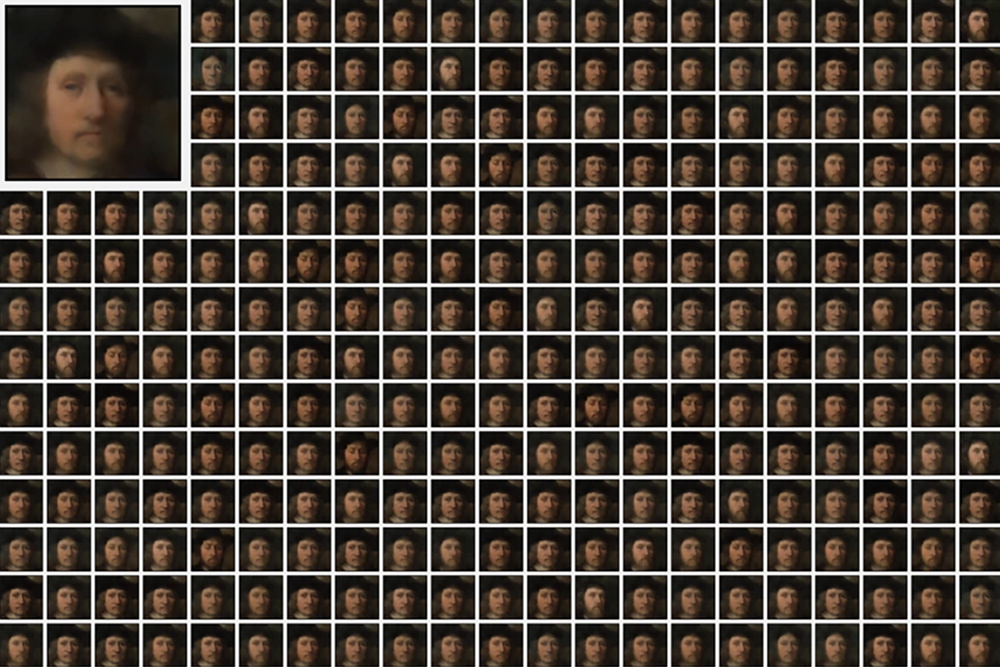
A new method for surgically removing training examples from a model reveals that as datasets grow, the link between what a model learns and what it produces dissolves.