Skip to content
#machine learning #computer vision Preprint Open access

Overconfidence and Calibration in Medical VQA: Empirical Findings and Hallucination-Aware Mitigation

Ji Young Byun Young-Jin Park Jean-Philippe Corbeil Asma Ben Abacha
Oct 2026
Machine Learning Computer Vision

Abstract

As vision-language models (VLMs) are increasingly deployed in clinical decision support, more than accuracy is required: knowing when to trust their predictions is equally critical. Yet, a comprehensive and systematic investigation into the overconfidence of these models remains notably scarce in the medical domain. We address this gap through a comprehensive empirical study of confidence calibration in VLMs, spanning three model families (Qwen3-VL, InternVL3, LLaVA-NeXT), three model scales (2B--38B), and multiple confidence estimation prompting strategies, across three medical visual question answering (VQA) benchmarks. Our study yields three key findings: First, overconfidence persists across model families and is not resolved by scaling or prompting, such as chain-of-thought and verbalized confidence variants. Second, simple post-hoc calibration approaches, such as Platt scaling, reduce calibration error and consistently outperform the prompt-based strategy. Third, due to their (strict) monotonicity, these post-hoc calibration methods are inherently limited in improving the discriminative quality of predictions, leaving AUROC at the same level. Motivated by these findings, we investigate hallucination-aware calibration (HAC), which incorporates vision-grounded hallucination detection signals as complementary inputs to refine confidence estimates. We find that leveraging these hallucination signals improves both calibration and AUROC, with the largest gains on open-ended questions. On closed-ended questions, format-specific signals such as the logit margin show more informative. Overall, our findings suggest post-hoc calibration as standard practice for medical VLM deployment over raw confidence estimates, and highlight the practical usefulness of hallucination signals to enable more reliable use of VLMs in medical VQA.

View source

Similar papers

#computer vision Review Sep 2017

Agile Software Development Methods: Review and Analysis

This publication proposes a definition and a classification of agile software development approaches and analyses ten software development methods that can be characterized as being "agile" against the defined criterion.

P. Abrahamsson, O. Salo, Jussi Ronkainen et al. · 727 citations · ⚡54
#computer vision Jun 2008

The impact of agile practices on communication in software development

The study shows that agile practices improve both informal and formal communication, but indicates that, in larger development situations involving multiple external stakeholders, a mismatch of adequate communication mechanisms can sometimes even hinder the communication.

M. Pikkarainen, Jukka Haikara, O. Salo et al. · 401 citations · ⚡48
#machine learning Review Open access Oct 2014

Software development in startup companies: A systematic mapping study

The results indicate that software engineering work practices are chosen opportunistically, adapted and configured to provide value under the constrains imposed by the startup context.

Nicolò Paternoster, Carmine Giardino, M. Unterkalmsteiner et al. · 394 citations · ⚡54

Diffusion models as plug-and-play priors

The possibility of inferring high-dimensional data inference in a model that consists of a prior and an auxiliary differentiable constraint given some additional information is considered, thereby allowing a range of potential applications in adapting models to new domains and tasks.

Alexandros Graikos, Esmeralda S. Whitammer, N. Jojic et al. · 316 citations · ⚡15

Trajectory Balance: Improved Credit Assignment in GFlowNets

It is proved that any global minimizer of the trajectory balance objective can define a policy that samples exactly from the target distribution, and empirically demonstrate the benefits of the trajectories balance objective for GFlowNet convergence, diversity of generated samples, and robustness to long action sequenc...

Esmeralda S. Whitammer, Moksh Jain, Emmanuel Bengio et al. · 302 citations · ⚡60

Related blog posts

Microsoft Research Blog Aug 11, 2026

Introducing CARE-X: Towards Clinically Useful Radiology VLMs with Auxiliary Supervision, Reward-Aligned Learning, and Tool-Augmented Measurement

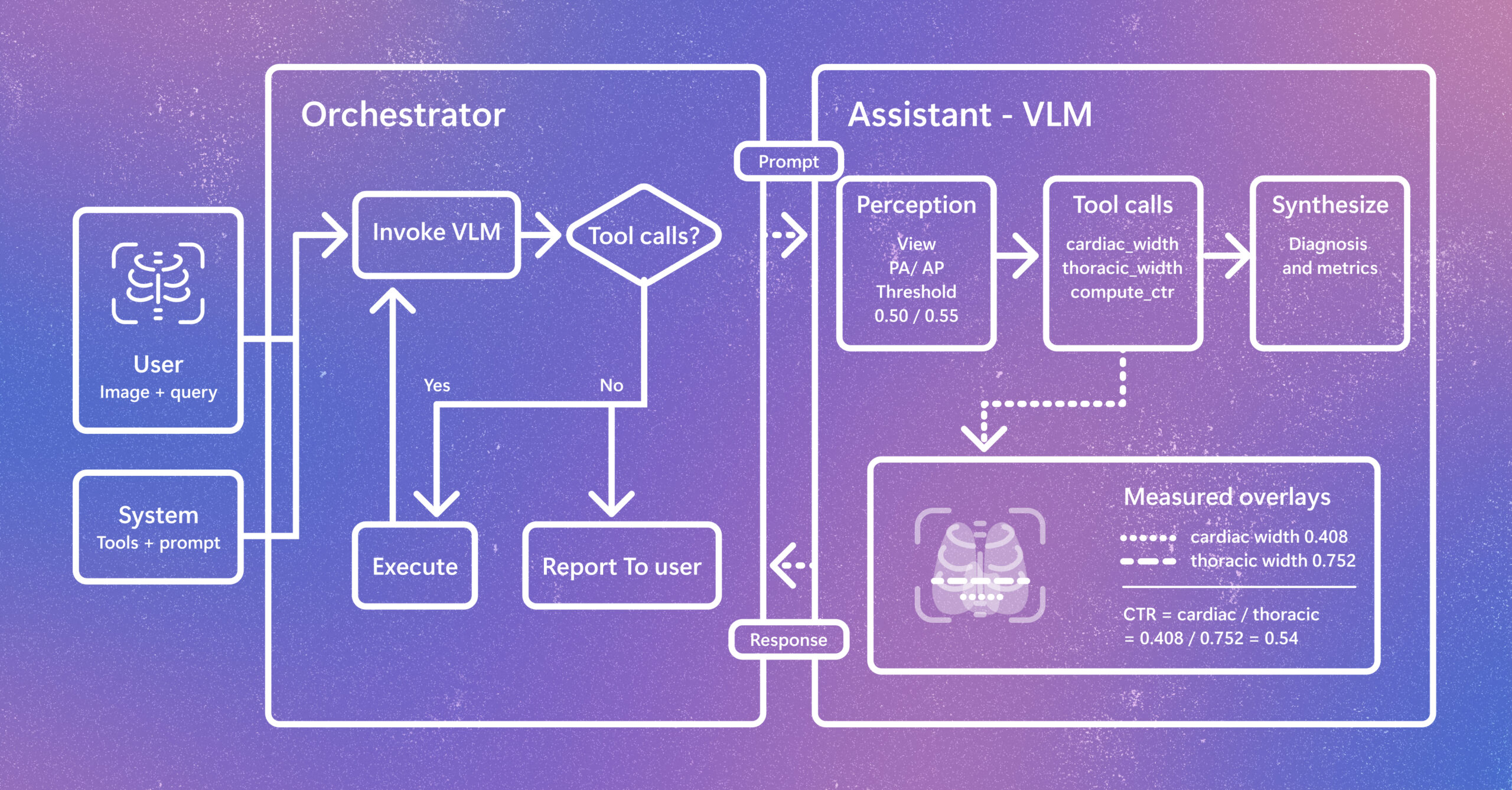
Radiology AI is evolving beyond report generation. CARE-X explores a unified approach that combines flexible reasoning, calibrated predictions, and measurement-based tools for chest X-ray interpretation. The post Introducing CARE-X: Towards Clinically Useful Radiology VLMs with Auxiliary Supervision, Reward-Aligned Learning, and Tool-Augmented Measurement appeared first on Microsoft Research.

MIT News · Artificial Intelligence Oct 7, 2026

Discovering the value of humanistic inquiry

Students in MIT’s Concourse program delve deeply into the human condition, debate challenging questions, and learn to develop judgment about issues that can’t be quantified.

We use cookies to run the site and, with your consent, for analytics and to show ads. See our Cookie Policy.
