Reliability-Aware Checkpoint Selection for Domain Generalization
Jinshi LiuJiahao LiPan LiuYanfeng LiRui QianZhao TongYue SunTao Tan
Oct 2026
Machine LearningComputer Vision
Abstract
Checkpoint selection in domain generalization often relies on source-validation accuracy, yet the selected checkpoint need not provide reliable probabilities on unseen target domains. Source-target distribution shifts can alter accuracy rankings, while accuracy alone does not measure predictive probability quality. We identify an empirical selection opportunity within fixed training trajectories: reselecting among checkpoints with near-optimal source accuracy can improve mean target probability quality with small observed changes in mean target accuracy. We study accuracy-constrained reliability selection (AC), which retains checkpoints within a tolerance of the best source-validation accuracy and ranks them by source reliability. Our reference rule aggregates within-set normalized negative log-likelihood (NLL) and class-wise calibration error (CwECE) using $D_\infty$. AC uses no target data and requires neither additional training nor weight averaging. We evaluate five domain generalization training algorithms on three benchmarks, using PACS to develop the objectives and a 0.5-percentage-point tolerance. In exploratory aggregation comparisons on 360 OfficeHome and TerraIncognita runs, the reference rule reduces mean target soft-bin squared-gap ECE and CwECE by 0.240% and 0.182%, respectively, and NLL by 0.030 relative to Source-Acc. Mean target accuracy changes by +0.213 percentage points. These results identify opportunities for reliability-aware reselection, while the additional benefit of joint over single-objective ranking remains unresolved.
This publication proposes a definition and a classification of agile software development approaches and analyses ten software development methods that can be characterized as being "agile" against the defined criterion.
P. Abrahamsson, O. Salo, Jussi Ronkainen et al.· arXiv.org· 727 citations· ⚡54
The study shows that agile practices improve both informal and formal communication, but indicates that, in larger development situations involving multiple external stakeholders, a mismatch of adequate communication mechanisms can sometimes even hinder the communication.
M. Pikkarainen, Jukka Haikara, O. Salo et al.· Empirical Software Engineeri...· 401 citations· ⚡48
The results indicate that software engineering work practices are chosen opportunistically, adapted and configured to provide value under the constrains imposed by the startup context.
Nicolò Paternoster, Carmine Giardino, M. Unterkalmsteiner et al.· Information and Software Tec...· 394 citations· ⚡54
The possibility of inferring high-dimensional data inference in a model that consists of a prior and an auxiliary differentiable constraint given some additional information is considered, thereby allowing a range of potential applications in adapting models to new domains and tasks.
Alexandros Graikos, Esmeralda S. Whitammer, N. Jojic et al.· Neural Information Processin...· 316 citations· ⚡15
It is proved that any global minimizer of the trajectory balance objective can define a policy that samples exactly from the target distribution, and empirically demonstrate the benefits of the trajectories balance objective for GFlowNet convergence, diversity of generated samples, and robustness to long action sequenc...
Esmeralda S. Whitammer, Moksh Jain, Emmanuel Bengio et al.· Neural Information Processin...· 302 citations· ⚡60
Exploring how generative AI could make machine vision more accessible to businesses. The post GenEye in a Box: Making Machine Vision Something You Can Just Ask For appeared first on GPT-Lab.
Microsoft Research Blog· microsoft.comAug 11, 2026
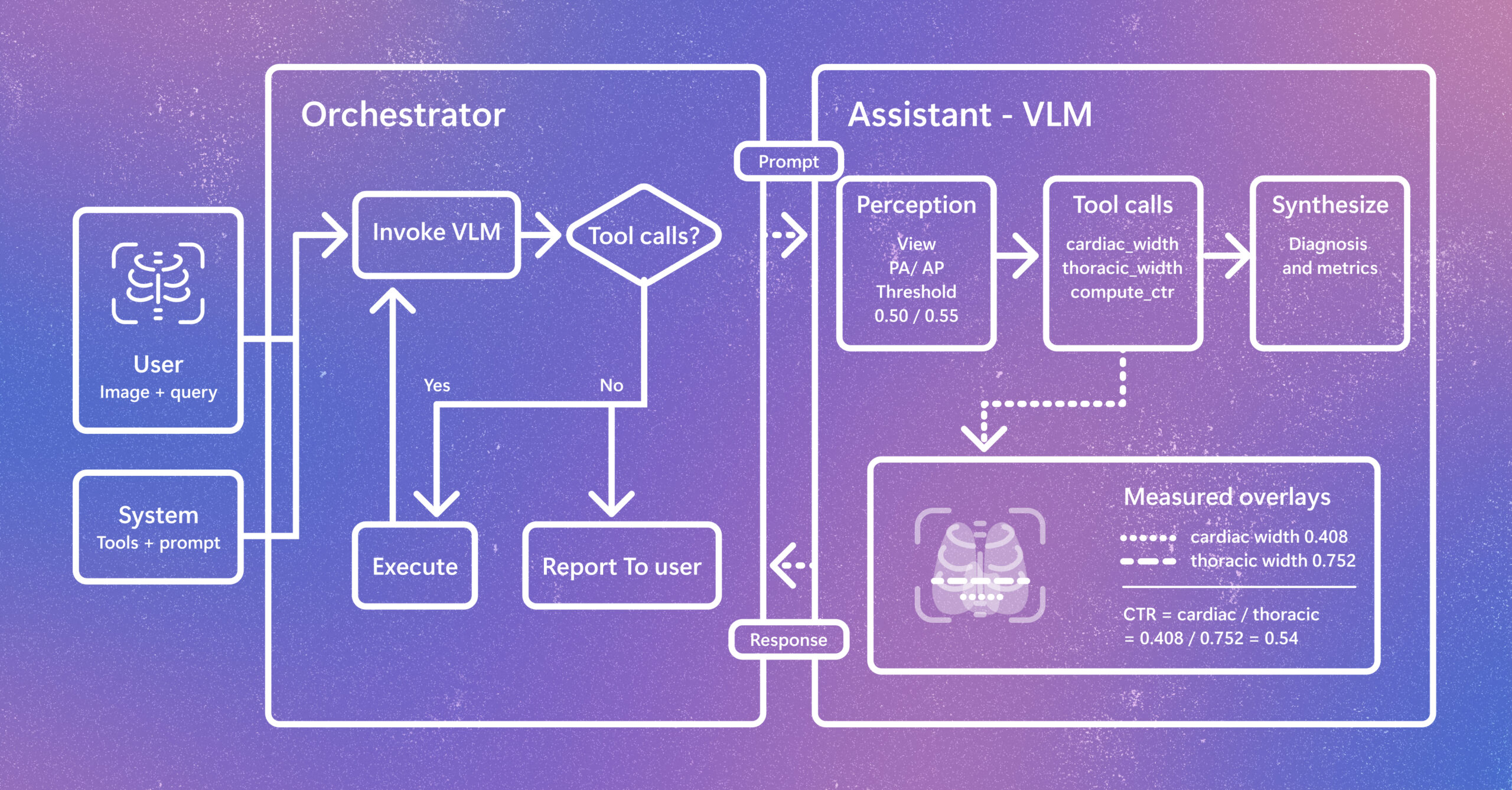
Radiology AI is evolving beyond report generation. CARE-X explores a unified approach that combines flexible reasoning, calibrated predictions, and measurement-based tools for chest X-ray interpretation. The post Introducing CARE-X: Towards Clinically Useful Radiology VLMs with Auxiliary Supervision, Reward-Aligned Learning, and Tool-Augmented Measurement appeared first on Microsoft Research.
Students in MIT’s Concourse program delve deeply into the human condition, debate challenging questions, and learn to develop judgment about issues that can’t be quantified.
We use cookies to run the site and, with your consent, for analytics and to show ads.
See our Cookie Policy.