Skip to content
#machine learning #computer vision Preprint Open access

TeD-Loc: Text Distillation for Weakly Supervised Object Localization

Shakeeb Murtaza Soufiane Belharbi Alexis Guichemerre Marco Pedersoli Eric Granger
Sep 2026
Machine Learning Computer Vision

Abstract

Weakly supervised object localization (WSOL) models can predict both the object class and the spatial regions corresponding to the object, without requiring explicit bounding-box annotations. Given their reliance on classification objectives, traditional WSOL methods, like class activation mapping, tend to focus on the most discriminative object regions, often missing the full spatial extent. Although vision-language models like CLIP encode rich semantic priors, their global text and class-token embeddings are not explicitly aligned with local patch embeddings, limiting patch-level localization. Recent methods such as GenPrompt address this limitation, but at the cost of increased complexity, as they rely on conditional denoising and elaborate prompt-learning strategies. In this paper, we propose Text Distillation for Localization (TeD-Loc), which distills knowledge from CLIP text embeddings to patch embeddings through contrastive alignment, thereby enabling patch-level foreground/background localization. A localization-guided classification module is also introduced, which uses localization scores to aggregate foreground patch embeddings for joint classification and localization within a single model. In addition, a QR-based orthogonalization of class text embeddings is applied before distillation to improve discrimination for semantically similar classes. Extensive experiments show that TeD-Loc improves Top-1 Loc by ~5% on CUB and ILSVRC, and PxAP by ~31% on histopathology benchmarks, while achieving more efficient inference than GenPrompt.

View source

Similar papers

#computer vision Review Sep 2017

Agile Software Development Methods: Review and Analysis

This publication proposes a definition and a classification of agile software development approaches and analyses ten software development methods that can be characterized as being "agile" against the defined criterion.

P. Abrahamsson, O. Salo, Jussi Ronkainen et al. · 727 citations · ⚡54
#computer vision Jun 2008

The impact of agile practices on communication in software development

The study shows that agile practices improve both informal and formal communication, but indicates that, in larger development situations involving multiple external stakeholders, a mismatch of adequate communication mechanisms can sometimes even hinder the communication.

M. Pikkarainen, Jukka Haikara, O. Salo et al. · 401 citations · ⚡48
#machine learning Review Open access Oct 2014

Software development in startup companies: A systematic mapping study

The results indicate that software engineering work practices are chosen opportunistically, adapted and configured to provide value under the constrains imposed by the startup context.

Nicolò Paternoster, Carmine Giardino, M. Unterkalmsteiner et al. · 394 citations · ⚡54

Diffusion models as plug-and-play priors

The possibility of inferring high-dimensional data inference in a model that consists of a prior and an auxiliary differentiable constraint given some additional information is considered, thereby allowing a range of potential applications in adapting models to new domains and tasks.

Alexandros Graikos, Esmeralda S. Whitammer, N. Jojic et al. · 316 citations · ⚡15

Trajectory Balance: Improved Credit Assignment in GFlowNets

It is proved that any global minimizer of the trajectory balance objective can define a policy that samples exactly from the target distribution, and empirically demonstrate the benefits of the trajectories balance objective for GFlowNet convergence, diversity of generated samples, and robustness to long action sequenc...

Esmeralda S. Whitammer, Moksh Jain, Emmanuel Bengio et al. · 302 citations · ⚡60

Related blog posts

Microsoft Research Blog Aug 11, 2026

Introducing CARE-X: Towards Clinically Useful Radiology VLMs with Auxiliary Supervision, Reward-Aligned Learning, and Tool-Augmented Measurement

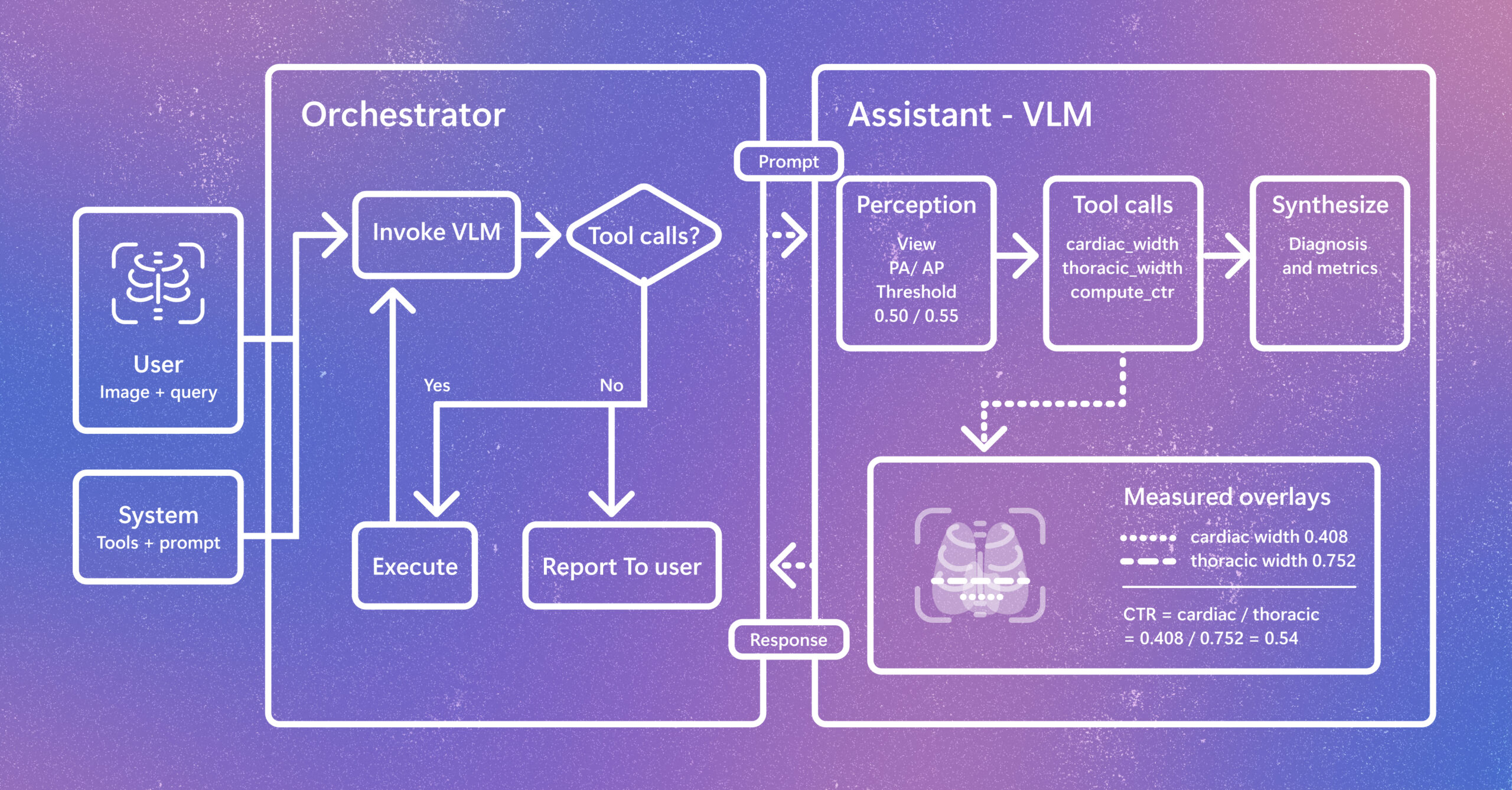
Radiology AI is evolving beyond report generation. CARE-X explores a unified approach that combines flexible reasoning, calibrated predictions, and measurement-based tools for chest X-ray interpretation. The post Introducing CARE-X: Towards Clinically Useful Radiology VLMs with Auxiliary Supervision, Reward-Aligned Learning, and Tool-Augmented Measurement appeared first on Microsoft Research.

MIT News · Artificial Intelligence Oct 7, 2026

Discovering the value of humanistic inquiry

Students in MIT’s Concourse program delve deeply into the human condition, debate challenging questions, and learn to develop judgment about issues that can’t be quantified.

We use cookies to run the site and, with your consent, for analytics and to show ads. See our Cookie Policy.
