The Camera Inside the Editor: Reading the Implicit Camera of Image Editors with Painted Calibration Patterns
Sebastian R\"uckerl
Sep 2026
Machine LearningComputer Vision
Abstract
Instruction-based image editors insert objects, restyle scenes and render new viewpoints, but it is unknown which camera they assume when they paint into a photograph. Asked to cover the floor with a checkerboard, an editor paints projective structure from which classical vanishing-point geometry reads pitch, roll, focal length, yaw and, on renders, the principal point, without any training. Unlike a calibrator such as GeoCalib, which estimates the camera of an image, this isolates the camera under which the editor paints. On 120 rendered cameras with exact ground truth, Qwen-Image-Edit-2511 paints tile edges that meet their vanishing points within 0.26 degrees, and its implicit camera matches the true one to 0.8 degrees in pitch and 6% in focal length, more accurately than GeoCalib except in roll. Asked to draw the horizon or mark a vanishing point instead, the editor fails, so this knowledge is revealed by painting and not by the explicit tasks we tried. The implicit camera has two priors: roll is pulled towards level (slope 0.71), and telephoto perspective towards a default of about 30 mm, which roughly matches the camera the models paint without any scene. For Qwen, the priors do not grow when blur removes four fifths of the line evidence. They are stronger on real photographs, and on NYUv2 a shorter wording of the task removes the difference for roll. On photographs from a 24--240 mm zoom lens the painted perspective grows with only 0.62 of the lens's slope, while GeoCalib and MoGe-2 saturate at about 52 and 42 mm. FLUX.1 Kontext and LongCat-Image-Edit are pulled much harder. Finally, from a level camera a camera-control LoRA executes pose commands at only 50--70% of their strength, and a board painted into its output agrees with the camera it produced.
This publication proposes a definition and a classification of agile software development approaches and analyses ten software development methods that can be characterized as being "agile" against the defined criterion.
P. Abrahamsson, O. Salo, Jussi Ronkainen et al.· arXiv.org· 727 citations· ⚡54
The study shows that agile practices improve both informal and formal communication, but indicates that, in larger development situations involving multiple external stakeholders, a mismatch of adequate communication mechanisms can sometimes even hinder the communication.
M. Pikkarainen, Jukka Haikara, O. Salo et al.· Empirical Software Engineeri...· 401 citations· ⚡48
The results indicate that software engineering work practices are chosen opportunistically, adapted and configured to provide value under the constrains imposed by the startup context.
Nicolò Paternoster, Carmine Giardino, M. Unterkalmsteiner et al.· Information and Software Tec...· 394 citations· ⚡54
The possibility of inferring high-dimensional data inference in a model that consists of a prior and an auxiliary differentiable constraint given some additional information is considered, thereby allowing a range of potential applications in adapting models to new domains and tasks.
Alexandros Graikos, Esmeralda S. Whitammer, N. Jojic et al.· Neural Information Processin...· 316 citations· ⚡15
It is proved that any global minimizer of the trajectory balance objective can define a policy that samples exactly from the target distribution, and empirically demonstrate the benefits of the trajectories balance objective for GFlowNet convergence, diversity of generated samples, and robustness to long action sequenc...
Esmeralda S. Whitammer, Moksh Jain, Emmanuel Bengio et al.· Neural Information Processin...· 302 citations· ⚡60
Exploring how generative AI could make machine vision more accessible to businesses. The post GenEye in a Box: Making Machine Vision Something You Can Just Ask For appeared first on GPT-Lab.
Microsoft Research Blog· microsoft.comAug 11, 2026
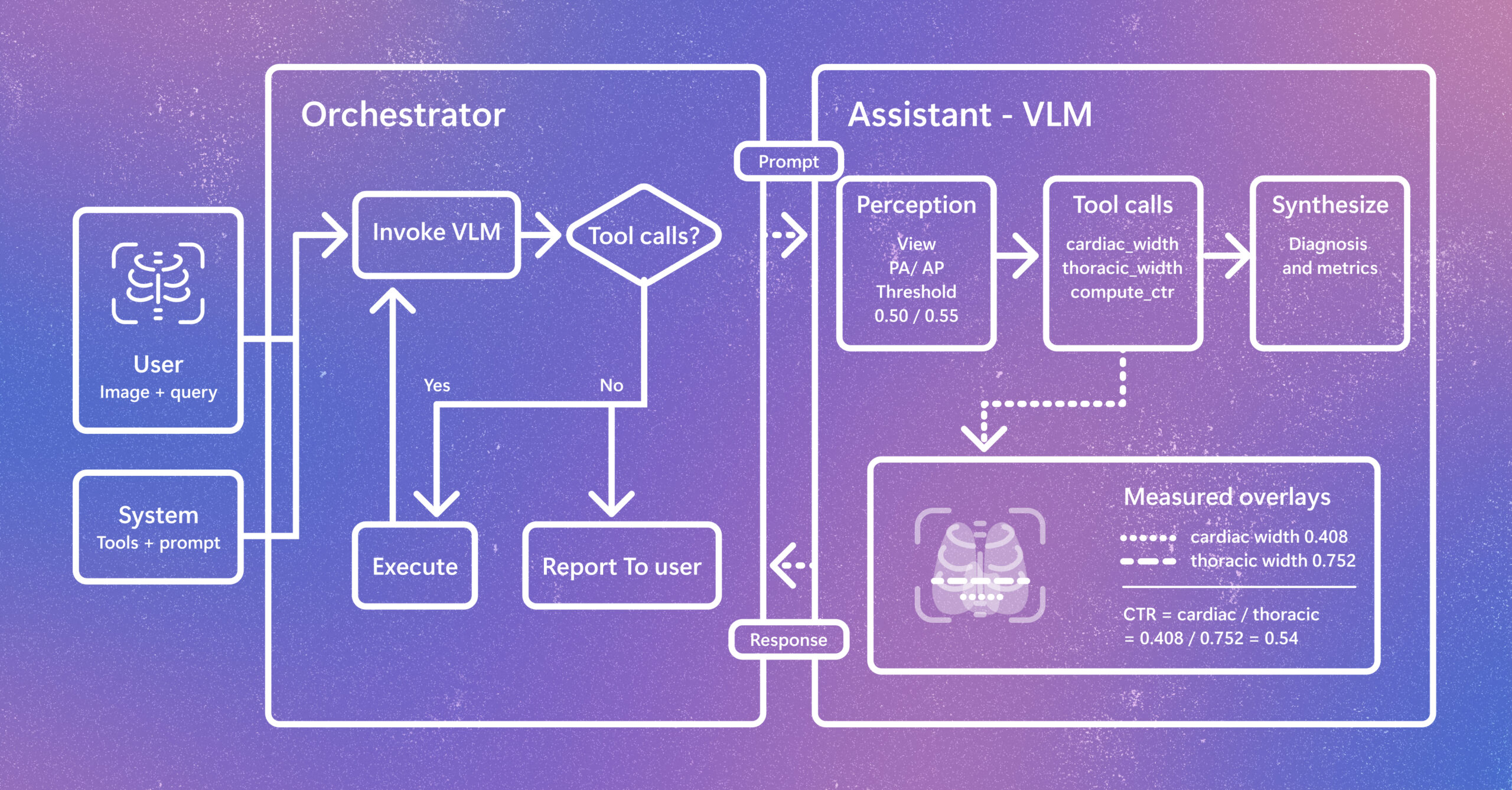
Radiology AI is evolving beyond report generation. CARE-X explores a unified approach that combines flexible reasoning, calibrated predictions, and measurement-based tools for chest X-ray interpretation. The post Introducing CARE-X: Towards Clinically Useful Radiology VLMs with Auxiliary Supervision, Reward-Aligned Learning, and Tool-Augmented Measurement appeared first on Microsoft Research.
Students in MIT’s Concourse program delve deeply into the human condition, debate challenging questions, and learn to develop judgment about issues that can’t be quantified.
We use cookies to run the site and, with your consent, for analytics and to show ads.
See our Cookie Policy.