Video Large Language Models (VideoLLMs) have achieved strong video understanding capabilities but incur substantial inference overhead due to the large number of visual tokens. Existing VideoLLM token compression methods largely rely on selection-independent scoring, overlooking cross-frame complementarity and consequently retaining redundant evidence across frames. Instead, we view video token selection as a progressive evidence accumulation process. It aims to retain visual evidence that is individually informative and collectively complementary under a limited token budget. Building on this insight, we introduce GleanVID, a training-free inference acceleration framework for VideoLLMs. Specifically, GleanVID first allocates the global token budget across frames according to temporal novelty and then selects tokens by jointly considering local representativeness and subspace complementarity, thereby preserving richer and less redundant visual evidence. Extensive experiments across diverse VideoLLMs and benchmarks demonstrate that GleanVID consistently achieves state-of-the-art performance. Notably, with only 25% of visual tokens, GleanVID preserves 98.6% of Qwen3-VL's original performance while reducing its prefill latency by 44.7%. On LLaVA-OV-7B, GleanVID at a 25% retention ratio even slightly surpasses the original model.

It is found that Llama 3 delivers comparable quality to leading language models such as GPT-4 on a plethora of tasks, and performs competitively with the state-of-the-art on image, video, and speech recognition tasks.
This paper investigates developing real-world perception for active agents, proposes Gibson Environment for this purpose, and showcases a set of perceptual tasks learned therein.
F. Xia, Amir Zamir, Zhi-Yang He et al.· 2018 IEEE/CVF Conference on...· 1,069 citations· ⚡112
This publication proposes a definition and a classification of agile software development approaches and analyses ten software development methods that can be characterized as being "agile" against the defined criterion.
P. Abrahamsson, O. Salo, Jussi Ronkainen et al.· arXiv.org· 727 citations· ⚡54
The study shows that agile practices improve both informal and formal communication, but indicates that, in larger development situations involving multiple external stakeholders, a mismatch of adequate communication mechanisms can sometimes even hinder the communication.
M. Pikkarainen, Jukka Haikara, O. Salo et al.· Empirical Software Engineeri...· 401 citations· ⚡48
The results indicate that software engineering work practices are chosen opportunistically, adapted and configured to provide value under the constrains imposed by the startup context.
Nicolò Paternoster, Carmine Giardino, M. Unterkalmsteiner et al.· Information and Software Tec...· 394 citations· ⚡54
Related blog posts
MIT News · Artificial Intelligence· news.mit.eduOct 28, 2026
Professor Paris Smaragdis develops computers with superhuman hearing for applications like speech recognition, music understanding, and environmental monitoring.
Exploring how generative AI could make machine vision more accessible to businesses. The post GenEye in a Box: Making Machine Vision Something You Can Just Ask For appeared first on GPT-Lab.
Microsoft Research Blog· microsoft.comAug 11, 2026
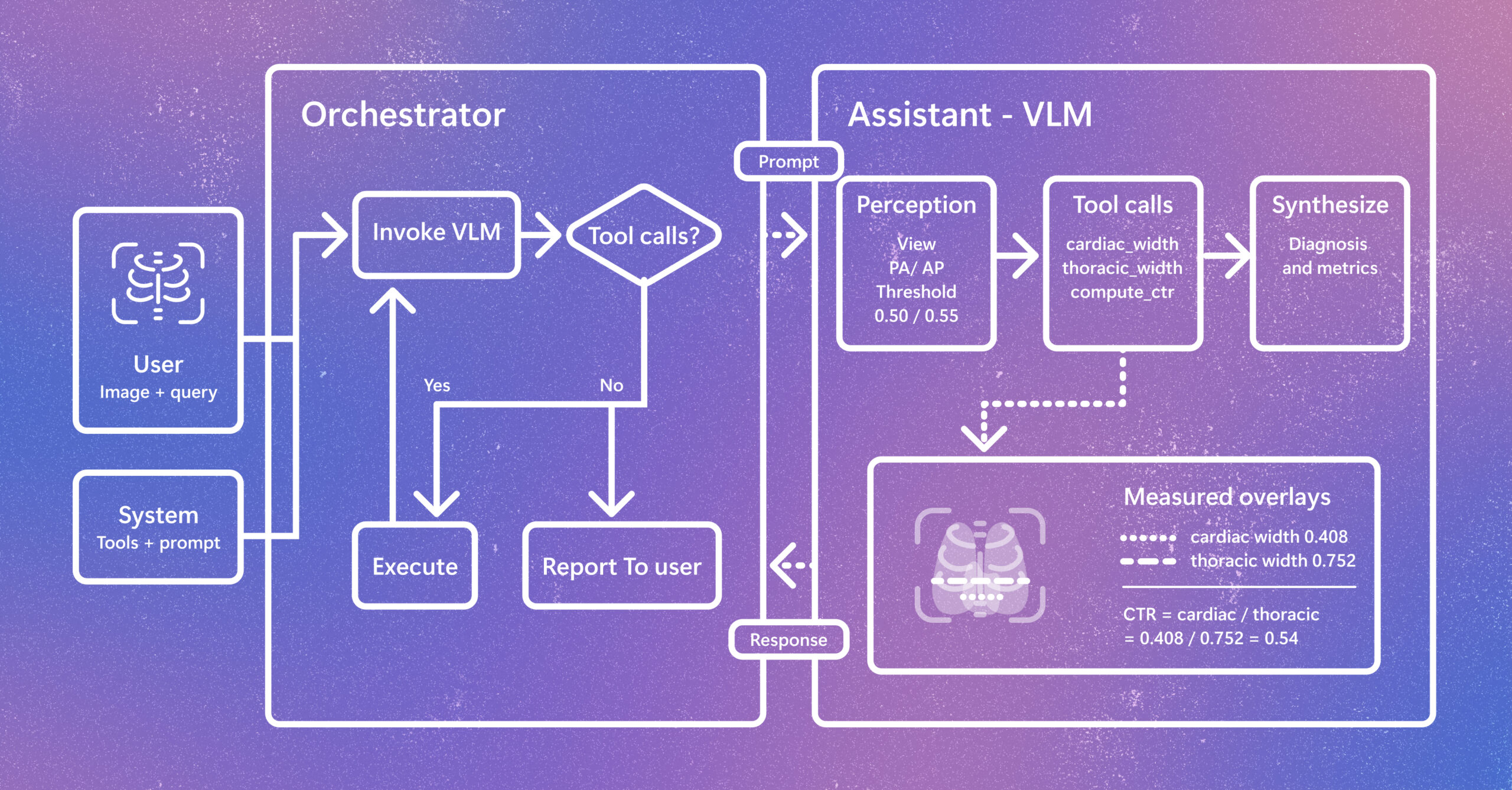
Radiology AI is evolving beyond report generation. CARE-X explores a unified approach that combines flexible reasoning, calibrated predictions, and measurement-based tools for chest X-ray interpretation. The post Introducing CARE-X: Towards Clinically Useful Radiology VLMs with Auxiliary Supervision, Reward-Aligned Learning, and Tool-Augmented Measurement appeared first on Microsoft Research.