Skip to content

The Decision Value of Perception Compute

Sep 2026 · 0 citations · 32 references
Computer Science

TL;DR

This work introduces DEEP (Decision Evaluation for Escalated Perception), a benchmark that scores pre-escalation allocators against this oracle under selection, latency and energy budgets, charging each allocator for its own computation.

Abstract

Adaptive perception spends extra computation on inputs where perception is expected to improve. When perception feeds a downstream decision system, a better perception output need not produce a better decision. We define the decision value of perception compute as the change in downstream loss from escalating an input from a cheap to an expensive perception mode. Because this value can be negative, the allocation of perception compute should be judged against a budget-constrained decision oracle, with uniform full-fidelity inference as a baseline rather than an upper bound. We introduce DEEP (Decision Evaluation for Escalated Perception), a benchmark that scores pre-escalation allocators against this oracle under selection, latency and energy budgets, charging each allocator for its own computation. With deployed monocular geometry on KITTI and nuScenes, we find that 34--54% of the escalations that change downstream loss make it worse; harmful escalations also occur for the published PDM-Closed planner, evaluated open-loop on nuPlan with real detector outcomes. On nuScenes, perception-level gain frequently disagrees in sign with decision value. This mismatch has practical consequences: choosing among fixed deployable signals by missed-object perception gain rather than by decision value reduces realized test decision gain by 7.4% of the all-cheap loss on average. Learned allocators recover part of the oracle's value by finding beneficial escalations but select nearly as much harm as random, and once their own computation is charged at a 20% latency budget, only the lightweight routers, at about 3.5\% of a full detector pass, still beat random.

View source

Similar papers

#computer vision Review Sep 2017

Agile Software Development Methods: Review and Analysis

This publication proposes a definition and a classification of agile software development approaches and analyses ten software development methods that can be characterized as being "agile" against the defined criterion.

P. Abrahamsson, O. Salo, Jussi Ronkainen et al. · 727 citations · ⚡54
#computer vision Jun 2008

The impact of agile practices on communication in software development

The study shows that agile practices improve both informal and formal communication, but indicates that, in larger development situations involving multiple external stakeholders, a mismatch of adequate communication mechanisms can sometimes even hinder the communication.

M. Pikkarainen, Jukka Haikara, O. Salo et al. · 401 citations · ⚡48
#machine learning Review Open access Oct 2014

Software development in startup companies: A systematic mapping study

The results indicate that software engineering work practices are chosen opportunistically, adapted and configured to provide value under the constrains imposed by the startup context.

Nicolò Paternoster, Carmine Giardino, M. Unterkalmsteiner et al. · 394 citations · ⚡54

Diffusion models as plug-and-play priors

The possibility of inferring high-dimensional data inference in a model that consists of a prior and an auxiliary differentiable constraint given some additional information is considered, thereby allowing a range of potential applications in adapting models to new domains and tasks.

Alexandros Graikos, Esmeralda S. Whitammer, N. Jojic et al. · 316 citations · ⚡15

Related blog posts

Microsoft Research Blog Aug 11, 2026

Introducing CARE-X: Towards Clinically Useful Radiology VLMs with Auxiliary Supervision, Reward-Aligned Learning, and Tool-Augmented Measurement

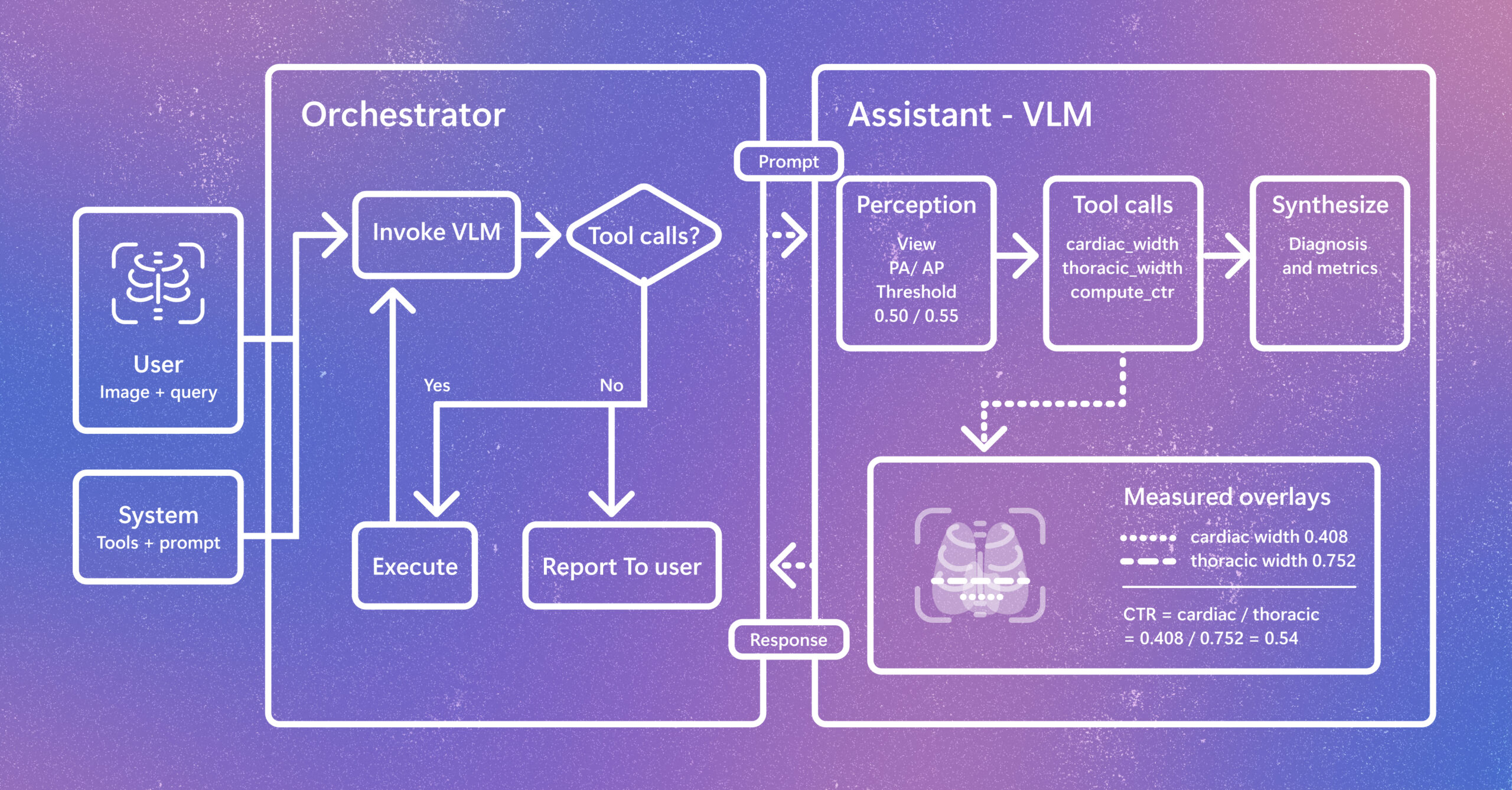
Radiology AI is evolving beyond report generation. CARE-X explores a unified approach that combines flexible reasoning, calibrated predictions, and measurement-based tools for chest X-ray interpretation. The post Introducing CARE-X: Towards Clinically Useful Radiology VLMs with Auxiliary Supervision, Reward-Aligned Learning, and Tool-Augmented Measurement appeared first on Microsoft Research.

MIT News · Artificial Intelligence Oct 7, 2026

Discovering the value of humanistic inquiry

Students in MIT’s Concourse program delve deeply into the human condition, debate challenging questions, and learn to develop judgment about issues that can’t be quantified.

We use cookies to run the site and, with your consent, for analytics and to show ads. See our Cookie Policy.
