Skip to content
#software testing Open access

184. Effect of a Pool of Essential Oils, Flavonoids and Tannins on Methane Emissions, Production Performances, Ruminal and Blood Parameters in Beef Cattle During Heat Stress Conditions.

Sep 2026 · Journal of Animal Science · 0 citations
Effects of Environmental Stressors on Livestock

Abstract

Reducing methane (CH4) emissions from cattle while improving production efficiency and resilience is essential for achieving sustainable farming. In this light, natural products have gained interest due to their broad-spectrum biological activity. This study evaluated the effects of a blend of essential oils, flavonoids and tannins (EOFT) on CH4 emissions, production performance, ruminal and metabolic parameters in fattening beef cattle, under heat stress conditions. Thirty bulls were blocked by weight and assigned to two groups (3 pens/group, 15 animals/group): Control (CON), basal diet plus placebo (wheat bran; 0.33 g/100 kg live weight), and Treatment (EOFT), basal diet plus the EOFT blend (Anavrin; 0.33 g/100 kg live weight). The trial consisted of 42-days covariate period followed by a 168-day experimental one, from April to early November. Growth and feed intake were evaluated throughout the covariate (d-42 to d0) and the experimental period (d0 to d168). CH4 emissions were measured using a GreenFeed (C-Lock Inc.) unit, applying a rotational approach with weekly pen and group rotation. Blood samples were collected at the beginning (d0), mid-summer (d1) and end (d2) to evaluate metabolic, hepatic and oxidative status. Environmental parameters were continuously monitored and the Temperature Humidity Index (THI) was calculated. At slaughter, carcass weights and ruminal fluid samples were collected for volatile fatty acid (VFA) analysis. Statistical analyses were performed using SAS software, applying specific models for each parameter. The weights at start of the covariate period and at the start of the treatment administration were similar, as were the final and carcass weights (Table 1). Conversely, EOFT showed a significantly higher average daily gain (ADG) (1.267 vs 1.195 kg/head/d) (P < 0.05) (Table 1). The overall dry matter intake (DMI) was similar (Table 1) but it was significantly higher in the EOFT group during summer weeks when THI frequently exceeded 72, indicating heat stress (Figure 1). CH4 production (174.87 vs 195.79 g/day), yield (17.07 vs 19.95 g/kg DMI) and intensity (135.85 vs 160.93 g/kg ADG) were significantly lower in EOFT animals during the experimental period (P < 0.05), while no differences were recorded during the covariate (Table 2). EOFT animals showed improved hepatic and oxidative status during heat stress (d1) and considering the entire fattening period (d2), with lower aspartate aminotransferase and creatine kinase levels and better oxidative status (P < 0.05) (Table 3). Ruminal fermentation was enhanced in EOFT animals, with higher total VFA concentrations (93.87 vs 82.41 mM), including acetate (63.07 vs 55.04 mM) and propionate (19.43 vs 16.41 mM) (P < 0.05). Supplementation with the tested blend of essential oils, flavonoids and tannins reduced CH4 emissions while improving performance and physiological resilience in fattening cattle, indicating improved ruminal efficiency and contributing to more sustainable beef production from environmental, economic and welfare perspectives. For image description, please refer to the figure legend and surrounding text. For image description, please refer to the figure legend and surrounding text. For image description, please refer to the figure legend and surrounding text.

Read PDF

Similar papers

#computer vision Review Sep 2017

Agile Software Development Methods: Review and Analysis

This publication proposes a definition and a classification of agile software development approaches and analyses ten software development methods that can be characterized as being "agile" against the defined criterion.

P. Abrahamsson, O. Salo, Jussi Ronkainen et al. · 727 citations · ⚡54
#computer vision Jun 2008

The impact of agile practices on communication in software development

The study shows that agile practices improve both informal and formal communication, but indicates that, in larger development situations involving multiple external stakeholders, a mismatch of adequate communication mechanisms can sometimes even hinder the communication.

M. Pikkarainen, Jukka Haikara, O. Salo et al. · 401 citations · ⚡48
#machine learning Review Open access Oct 2014

Software development in startup companies: A systematic mapping study

The results indicate that software engineering work practices are chosen opportunistically, adapted and configured to provide value under the constrains imposed by the startup context.

Nicolò Paternoster, Carmine Giardino, M. Unterkalmsteiner et al. · 394 citations · ⚡54
#computer vision Review Mar 2008

Agile methods in European embedded software development organisations: a survey on the actual use and usefulness of Extreme Programming and Scrum

The results show that the embedded industry has been able to apply agile methods in its development processes and that the appreciation of the agile methods and their individual practices appears to increase once adopted and applied in practice.

O. Salo, P. Abrahamsson · 238 citations · ⚡9
#computer vision Open access Jul 2017

What happens when software developers are (un)happy

Consequences of happiness and unhappiness that are beneficial and detrimental for developers' mental well-being, the software development process, and the produced artifacts are found.

D. Graziotin, Fabian Fagerholm, Xiaofeng Wang et al. · 236 citations · ⚡13
#computer vision Open access Oct 2004

Mobile-D: an agile approach for mobile application development

The Mobile-D approach is briefly outlined here and the experiences gained from four case studies are discussed, which helped develop an agile development approach for mobile application development.

P. Abrahamsson, Antti Hanhineva, H. Hulkko et al. · 225 citations · ⚡18

Related blog posts

MIT News · Artificial Intelligence Oct 2, 2026

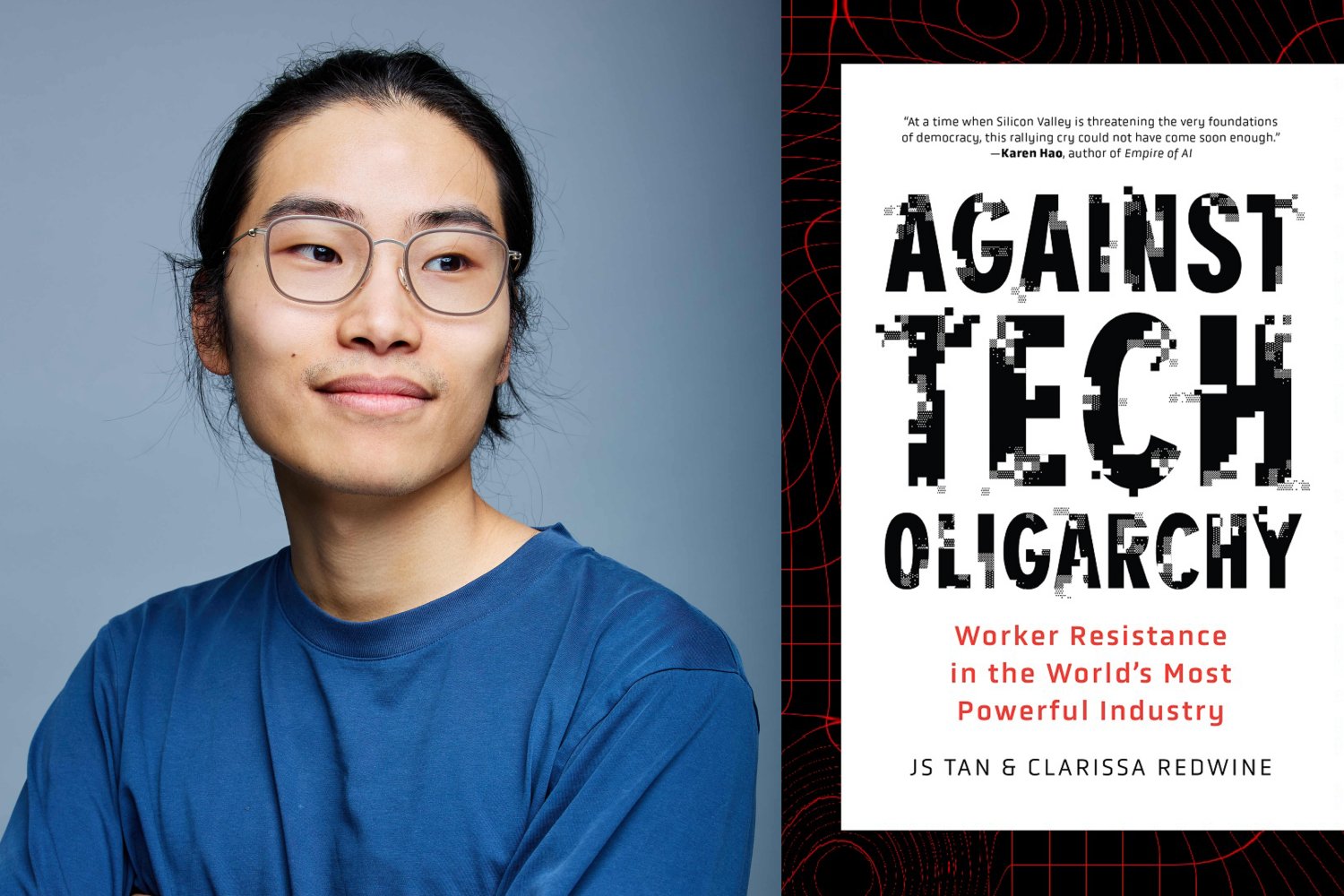
Documenting the tech worker movement

Writing as a participant and researcher, PhD student JS Tan SM ’22 has co-authored a new book about the rise of tech worker protests and the employer backlash that followed.

GPT-Lab Sep 23, 2026

Requirements Don’t Live in Isolation: What We’re Exploring with Req-Space

Requirements in large systems rarely exist in isolation. Their meaning depends on the wider project context - other requirements, policies, decisions, tests, and implementation details. That becomes especially important when AI is used for review, because spotting a possible conflict or gap is only the beginning. ReqSpace explores how AI, visualisation, and connected project context can help reviewers understand those findings, trace the relationships behind them, and focus on the questions that…

GPT-Lab Sep 17, 2026

Beyond Prompt Engineering: The Role of Tacit Knowledge in Software Engineering

AI is making software generation faster, but speed does not remove the need for expertise. As more work is delegated to AI, tacit knowledge may become one of the most important human advantages in software engineering. The post Beyond Prompt Engineering: The Role of Tacit Knowledge in Software Engineering appeared first on GPT-Lab.

We use cookies to run the site and, with your consent, for analytics and to show ads. See our Cookie Policy.