Skip to content

AI For Sustainable Development Opportunities & Innovation

Sep 2026 · Zenodo (CERN European Organization for Nuclear Research)

Abstract

Abstract Artificial Intelligence is increasingly being explored as a tool for accelerating progress toward sustainable development. AI can analyse large datasets, identify patterns, forecast events, optimise systems and support decision-making across agriculture, energy, water, healthcare, education, cities, industry and environmental management. Recent research shows that AI-for-SDG research is expanding rapidly, while also revealing gaps in social inclusion, governance and assessment of AI’s own environmental footprint. This project examines the major opportunities for AI-enabled sustainable development, including smart agriculture, renewable-energy optimisation, climate and disaster forecasting, intelligent waste management, sustainable cities, healthcare and education. It also discusses innovation pathways such as machine learning, computer vision, remote sensing, generative AI, digital twins and edge AI. The study emphasises that technological capability alone is insufficient: responsible AI requires reliable data, transparency, privacy, human oversight, equitable access, energy-efficient computing and lifecycle environmental assessment.
View source

Similar papers

#computer vision Review Sep 2017

Agile Software Development Methods: Review and Analysis

This publication proposes a definition and a classification of agile software development approaches and analyses ten software development methods that can be characterized as being "agile" against the defined criterion.

P. Abrahamsson, O. Salo, Jussi Ronkainen et al. · 727 citations · ⚡54
#computer vision Jun 2008

The impact of agile practices on communication in software development

The study shows that agile practices improve both informal and formal communication, but indicates that, in larger development situations involving multiple external stakeholders, a mismatch of adequate communication mechanisms can sometimes even hinder the communication.

M. Pikkarainen, Jukka Haikara, O. Salo et al. · 401 citations · ⚡48
#machine learning Review Open access Oct 2014

Software development in startup companies: A systematic mapping study

The results indicate that software engineering work practices are chosen opportunistically, adapted and configured to provide value under the constrains imposed by the startup context.

Nicolò Paternoster, Carmine Giardino, M. Unterkalmsteiner et al. · 394 citations · ⚡54

Related blog posts

Microsoft Research Blog Oct 6, 2026

What AI gets wrong and what failure teaches us

Jennifer Neville did not want to go into computer science—but that’s exactly where she landed. Neville discusses the starts and stops that led to her professional sweet spot and her work identifying “surprising failures” making it hard for AI to handle complexity.  The post What AI gets wrong and what failure teaches us appeared first on Microsoft Research.

Microsoft Research Blog Sep 29, 2026

Introducing Quine: An AI research system designed for the complexity of biology

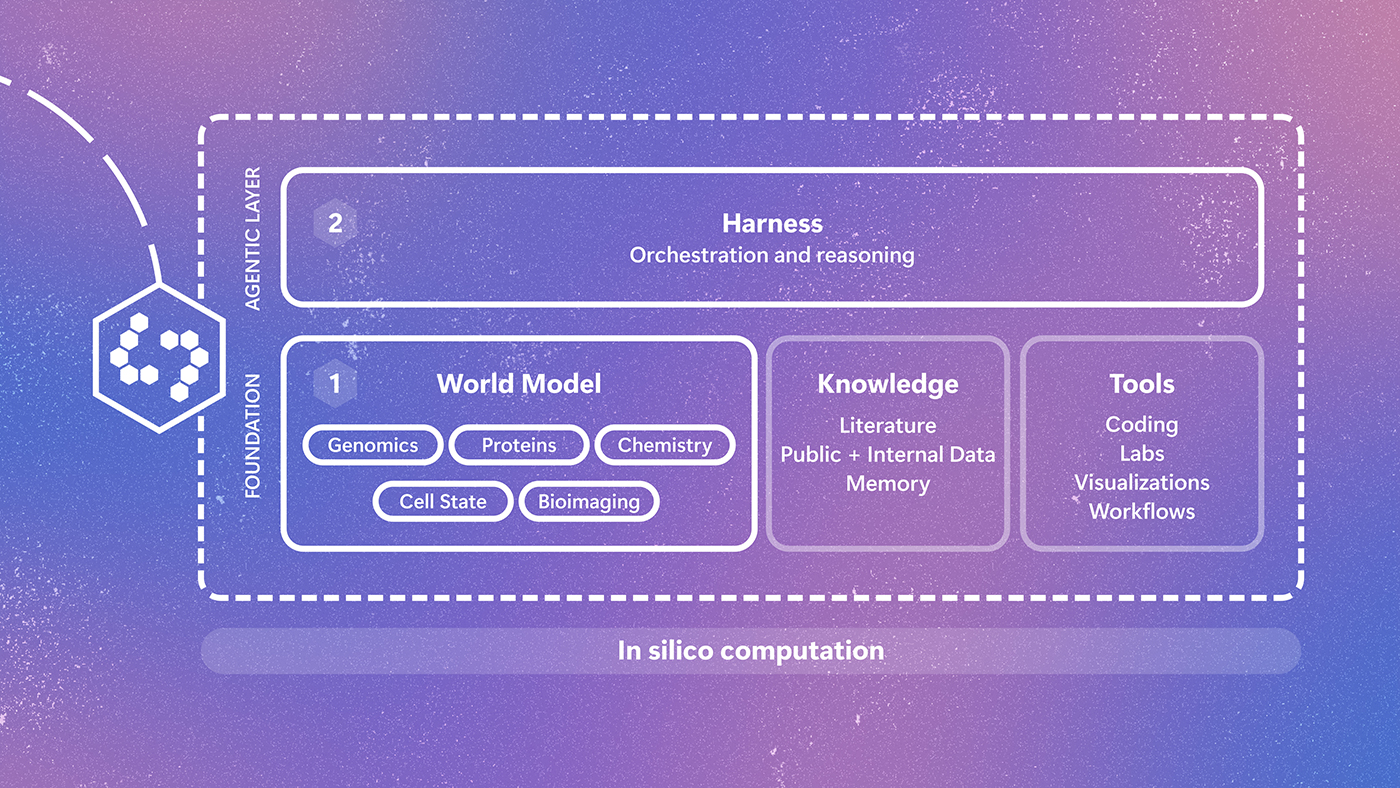
Biology doesn't operate in silos, and neither should the AI representation of it. Quine is an early-stage research effort to create a multimodal world model of biology. By connecting insights across biological scales and modalities, Quine helps scientists computationally search a space far larger than intuition allows and prioritize hypotheses before they reach the lab. Experimental results provide important feedback, helping researchers sharpen future research directions. The post Introducing Q…

We use cookies to run the site and, with your consent, for analytics and to show ads. See our Cookie Policy.