Skip to content
#generative ai #software testing Dataset Open access

D2A-HWY-60: A Reproducible Benchmark for Uncertainty-Aware Design-to-As-Built Verification in Highway Construction

Sep 2026 · Zenodo (CERN European Organization for Nuclear Research)

Abstract

D2A-HWY-60 is a reproducibility package and controlled benchmark for uncertainty-aware design-to-as-built verification in highway construction. It accompanies the manuscript “An Uncertainty-Aware Digital-Twin Framework for Automated Design-to-As-Built Verification in Highway Construction.” The benchmark contains 60 research-constructed highway scenarios spanning horizontal alignment, vertical profile/elevation, lane and shoulder width, cross-slope/superelevation, surface deviation, and compound nonconformities. The package includes machine-readable LandXML design corridors, structured synthetic as-built evidence, encoded QA/QC rule profiles, deterministic verification outputs, specification-sensitivity results, and station-addressable evidence packets. The experimental archive contains 300 information-ablation evaluations and 1,080 controlled scenario-condition runs generated from 60 base scenarios across six information-quality conditions and three replicates. These experiments provide internal computational verification and stress testing of the proposed framework; they are not field validation and should not be interpreted as observations from 1,080 independent highway projects. The repository includes the Python implementation, reproducible software-environment information, numerical verification scripts, experimental results, figures, metadata, licenses, checksums, and archived outputs from a frozen Grok 4.6 experiment comprising 60 ungrounded and 60 evidence-grounded completions. The deposited code loads and re-scores the archived LLM outputs; it does not regenerate hosted-model responses or query Grok. D2A-HWY-60 supports reproducible investigation of highway design-to-as-built correspondence, machine-readable construction acceptance rules, deterministic QA/QC decision support, PASS/NONCONFORMING/REVIEW REQUIRED decision logic, uncertainty-aware human review, evidence-grounded generative-AI reporting, and verified-as-built digital-twin information states. Numerical authority remains with the deterministic verification engine; the archived language-model experiment evaluates evidence-grounded reporting rather than autonomous construction acceptance. The benchmark uses research-constructed corridor models and synthetic as-built information. It does not contain live DOT project files, proprietary agency design files, field-survey measurements, or field-validation data. The primary S1 rule profile is based on publicly available UK Specification for Highway Works Series 700 provisions, while S2 provides specification-sensitivity testing using TxDOT Item 340 and documented research operationalisations. Gold labels are constructed using the S1 rule envelope; consequently, performance against those labels primarily evaluates implementation fidelity rather than independent field predictive validity. Researchers may reuse or extend the benchmark to evaluate alternative construction-tolerance profiles, geometric verification algorithms, information-quality and uncertainty policies, QA/QC decision architectures, or language models. The package is intended to support reproducibility and subsequent external validation using independently collected field data. Data license: CC BY 4.0.

View source

Similar papers

#computer vision Review Sep 2017

Agile Software Development Methods: Review and Analysis

This publication proposes a definition and a classification of agile software development approaches and analyses ten software development methods that can be characterized as being "agile" against the defined criterion.

P. Abrahamsson, O. Salo, Jussi Ronkainen et al. · 727 citations · ⚡54
#computer vision Jun 2008

The impact of agile practices on communication in software development

The study shows that agile practices improve both informal and formal communication, but indicates that, in larger development situations involving multiple external stakeholders, a mismatch of adequate communication mechanisms can sometimes even hinder the communication.

M. Pikkarainen, Jukka Haikara, O. Salo et al. · 401 citations · ⚡48
#machine learning Review Open access Oct 2014

Software development in startup companies: A systematic mapping study

The results indicate that software engineering work practices are chosen opportunistically, adapted and configured to provide value under the constrains imposed by the startup context.

Nicolò Paternoster, Carmine Giardino, M. Unterkalmsteiner et al. · 394 citations · ⚡54
#computer vision Review Mar 2008

Agile methods in European embedded software development organisations: a survey on the actual use and usefulness of Extreme Programming and Scrum

The results show that the embedded industry has been able to apply agile methods in its development processes and that the appreciation of the agile methods and their individual practices appears to increase once adopted and applied in practice.

O. Salo, P. Abrahamsson · 238 citations · ⚡9
#computer vision Open access Jul 2017

What happens when software developers are (un)happy

Consequences of happiness and unhappiness that are beneficial and detrimental for developers' mental well-being, the software development process, and the produced artifacts are found.

D. Graziotin, Fabian Fagerholm, Xiaofeng Wang et al. · 236 citations · ⚡13
#computer vision Open access Oct 2004

Mobile-D: an agile approach for mobile application development

The Mobile-D approach is briefly outlined here and the experiences gained from four case studies are discussed, which helped develop an agile development approach for mobile application development.

P. Abrahamsson, Antti Hanhineva, H. Hulkko et al. · 225 citations · ⚡18

Related blog posts

GPT-Lab Sep 23, 2026

Requirements Don’t Live in Isolation: What We’re Exploring with Req-Space

Requirements in large systems rarely exist in isolation. Their meaning depends on the wider project context - other requirements, policies, decisions, tests, and implementation details. That becomes especially important when AI is used for review, because spotting a possible conflict or gap is only the beginning. ReqSpace explores how AI, visualisation, and connected project context can help reviewers understand those findings, trace the relationships behind them, and focus on the questions that…

GPT-Lab Sep 17, 2026

Beyond Prompt Engineering: The Role of Tacit Knowledge in Software Engineering

AI is making software generation faster, but speed does not remove the need for expertise. As more work is delegated to AI, tacit knowledge may become one of the most important human advantages in software engineering. The post Beyond Prompt Engineering: The Role of Tacit Knowledge in Software Engineering appeared first on GPT-Lab.

Microsoft Research Blog Aug 12, 2026

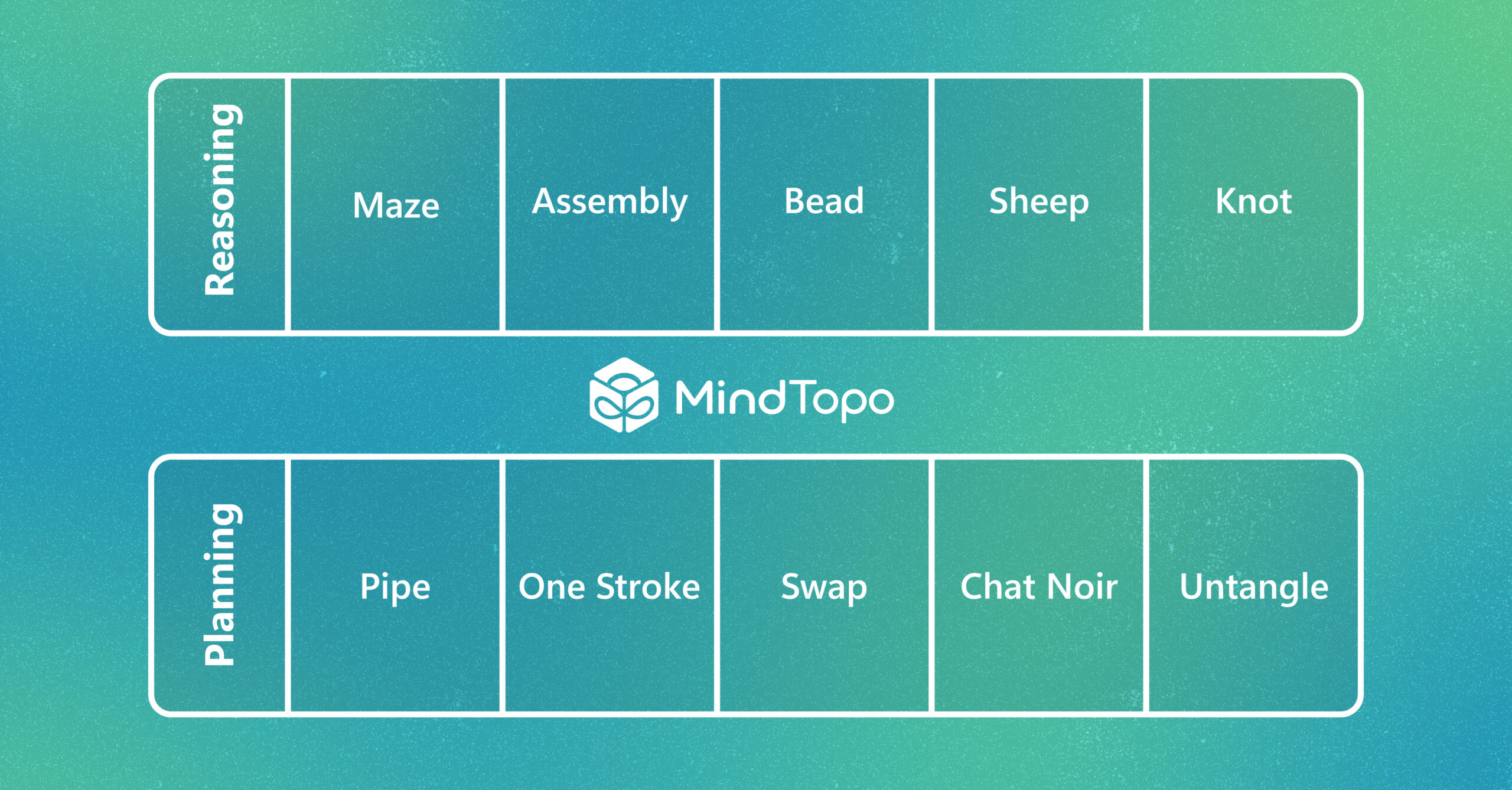
MindTopo reveals VLMs’ spatial reasoning abilities

A path, a fence, a knot. MindTopo sets a new benchmark for testing how AI understands topological relationships and highlights new opportunities to strengthen spatial reasoning and planning. The post MindTopo reveals VLMs’ spatial reasoning abilities appeared first on Microsoft Research.

We use cookies to run the site and, with your consent, for analytics and to show ads. See our Cookie Policy.