Skip to content
#edge computing Review Open access

Teaching Machines to See: A Narrative Review of Computer Vision from Roberts's Blocks to Convolutional Depth and Detection

Aug 2026 · Zenodo (CERN European Organization for Nuclear Research)

Abstract

Computer vision---making machines interpret images---traveled from blocks-world edge finders to deep convolutional networks matching human benchmarks, and its history is AI's most complete case of representation learning's triumph. This article presents a narrative review of the field's canonical line: Roberts's 1963 machine perception of solids, Marr's 1982 computational vision, Viola and Jones's 2001 face detection, Lowe's 2004 SIFT features, Dalal and Triggs's 2005 HOG descriptors, Felzenszwalb and colleagues' 2010 deformable part models, Szeliski's 2010 synthesis, Girshick's 2015 Fast R-CNN, Long, Shelhamer, and Darrell's 2015 fully convolutional nets, Simonyan and Zisserman's 2015 VGG, He and colleagues' 2016 ResNet, and Redmon and colleagues' 2016 YOLO. The synthesis is organized around three themes: representation, in which hand-engineered features gave way to learned hierarchies; architecture, in which convolution, regions, and residual depth solved recognition's geometry; and tasks, in which classification widened into detection, segmentation, and real-time video. It is concluded that vision's deep learning settlement reorganized the field around data and compute---and that its open problems, robustness and embodiment, define the current frontier.

View source

Similar papers

#computer vision Review Sep 2017

Agile Software Development Methods: Review and Analysis

This publication proposes a definition and a classification of agile software development approaches and analyses ten software development methods that can be characterized as being "agile" against the defined criterion.

P. Abrahamsson, O. Salo, Jussi Ronkainen et al. · 727 citations · ⚡54
#computer vision Jun 2008

The impact of agile practices on communication in software development

The study shows that agile practices improve both informal and formal communication, but indicates that, in larger development situations involving multiple external stakeholders, a mismatch of adequate communication mechanisms can sometimes even hinder the communication.

M. Pikkarainen, Jukka Haikara, O. Salo et al. · 401 citations · ⚡48
#machine learning Review Open access Oct 2014

Software development in startup companies: A systematic mapping study

The results indicate that software engineering work practices are chosen opportunistically, adapted and configured to provide value under the constrains imposed by the startup context.

Nicolò Paternoster, Carmine Giardino, M. Unterkalmsteiner et al. · 394 citations · ⚡54

Related blog posts

GPT-Lab Sep 17, 2026

Beyond Prompt Engineering: The Role of Tacit Knowledge in Software Engineering

AI is making software generation faster, but speed does not remove the need for expertise. As more work is delegated to AI, tacit knowledge may become one of the most important human advantages in software engineering. The post Beyond Prompt Engineering: The Role of Tacit Knowledge in Software Engineering appeared first on GPT-Lab.

Microsoft Research Blog Aug 31, 2026

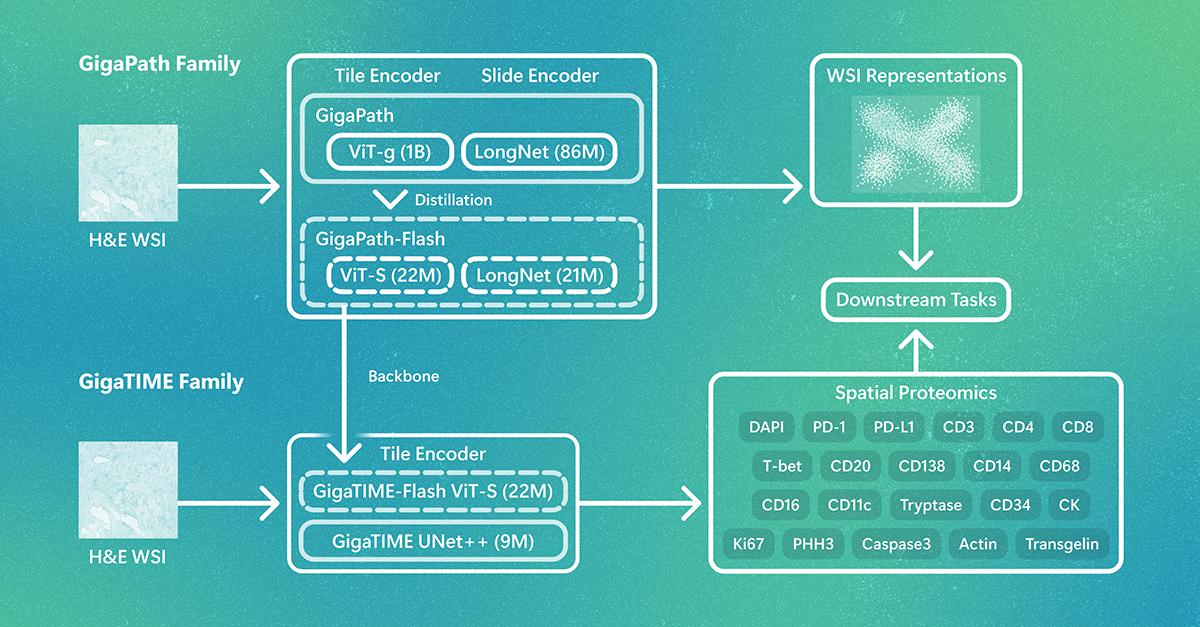
GigaPath-Flash and GigaTIME-Flash: Toward population-scale discovery with efficient pathology foundation models

What if pathology foundation models could do more with less? GigaPath-Flash and GigaTIME-Flash cut computational demands while maintaining strong performance, opening the door to larger studies and broader exploration. The post GigaPath-Flash and GigaTIME-Flash: Toward population-scale discovery with efficient pathology foundation models appeared first on Microsoft Research.

We use cookies to run the site and, with your consent, for analytics and to show ads. See our Cookie Policy.