Aug 2026· Zenodo (CERN European Organization for Nuclear Research)
Abstract
This technical data package establishes the engineering blueprints, economic integration thesis, and provisional utility patent specifications for the Lawrence Aero Brick Solid-State Transformer (LAB-SST). The LAB-SST is a zero-silicon, plasma-state power transformation architecture that replaces physical Silicon Carbide (SiC) semiconductor lattices and copper electromagnetic windings with a dynamically generated atmospheric Universal Dielectric Barrier Discharge (U-DBD) plasma gateway. By driving a non-linear Townsend avalanche at an electric field threshold of E ≥ 56 kV/mm, the system acts as an asymmetric electrical valve, rectifying alternating current (AC) grid power directly into ±400V or 800V High-Voltage Direct Current (HVDC) for hyperscale computing and AI infrastructure. To eliminate the severe thermal degradation and parasitic cooling loads associated with multi-megawatt solid-state switching, the LAB-SST utilizes Electrohydrodynamic (EHD) momentum transfer to generate a solid-state convective vacuum (Δm = 0). System stability is maintained by Phase-Shifted Agentic Swarm (PSAS) logic running on edge NPU hardware, which truncates pulse widths (< 10 ns) whenever space-charge growth approaches Meek's criterion (α·d ≥ 14) to prevent thermal arc transitions. Economic Integration: Across a 100 MW hyperscale deployment, the LAB-SST obsoletes a USD 22,000,000 SiC SST installation with a USD 10,000,000 plasma-state alternative, while eliminating 10 MW in parasitic cooling load to retain USD 8,760,000 in annual cooling OpEx. This repository includes the complete USD 67,500 Bill of Materials (BOM) required for TRL-4 benchtop prototype validation. Note: Accompanying system schematics are conceptual AI-assisted architectural renderings; refer to the technical specifications and patent claims for precise operational mathematics and material parameters.
This publication proposes a definition and a classification of agile software development approaches and analyses ten software development methods that can be characterized as being "agile" against the defined criterion.
P. Abrahamsson, O. Salo, Jussi Ronkainen et al.· arXiv.org· 727 citations· ⚡54
The study shows that agile practices improve both informal and formal communication, but indicates that, in larger development situations involving multiple external stakeholders, a mismatch of adequate communication mechanisms can sometimes even hinder the communication.
M. Pikkarainen, Jukka Haikara, O. Salo et al.· Empirical Software Engineeri...· 401 citations· ⚡48
The results indicate that software engineering work practices are chosen opportunistically, adapted and configured to provide value under the constrains imposed by the startup context.
Nicolò Paternoster, Carmine Giardino, M. Unterkalmsteiner et al.· Information and Software Tec...· 394 citations· ⚡54
The perception of the impact of agile methods is predominantly positive, and several challenge areas were discovered, but based on this study, agile methods are here to stay.
M. Laanti, O. Salo, P. Abrahamsson· Information and Software Tec...· 260 citations· ⚡20
AI is making software generation faster, but speed does not remove the need for expertise. As more work is delegated to AI, tacit knowledge may become one of the most important human advantages in software engineering. The post Beyond Prompt Engineering: The Role of Tacit Knowledge in Software Engineering appeared first on GPT-Lab.
MIT News · Artificial Intelligence· news.mit.eduSep 9, 2026
A weeklong summer workshop brought higher education faculty to campus to explore how AI and machine learning materials can be adapted for their classrooms.
MIT News · Artificial Intelligence· news.mit.eduSep 2, 2026
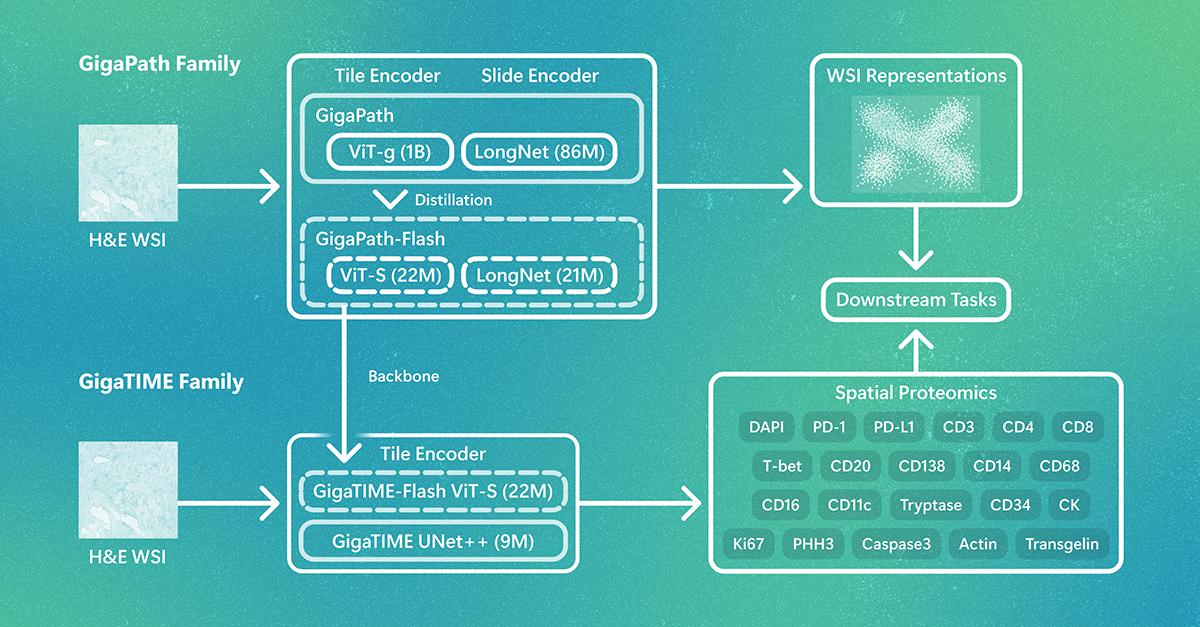
What if pathology foundation models could do more with less? GigaPath-Flash and GigaTIME-Flash cut computational demands while maintaining strong performance, opening the door to larger studies and broader exploration. The post GigaPath-Flash and GigaTIME-Flash: Toward population-scale discovery with efficient pathology foundation models appeared first on Microsoft Research.
We use cookies to run the site and, with your consent, for analytics and to show ads.
See our Cookie Policy.