Skip to content
#edge computing Open access

Privacy-Preserving Closed-Loop Edge AI for Continuous Behavioral Biomarker Extraction and Psychiatric Diagnostic Inference

Aug 2026 · Zenodo (CERN European Organization for Nuclear Research)
Digital Mental Health Interventions

Abstract

Artificial intelligence (AI), digital phenotyping, passive sensing, and edge computing are increasingly being explored to extend psychiatric assessment beyond intermittent clinical encounters. This review evaluates the evidence relevant to a privacy-preserving, closed-loop architecture in which environmental and wearable signals are processed locally, converted into abstract behavioral biomarkers, and used to support longitudinal diagnostic reasoning. The literature indicates that digital phenotyping can capture clinically relevant changes in sleep, activity, mobility, communication, speech, and social behavior, with the most consistent evidence observed for bipolar disorder and depressive symptoms. However, external validation is uncommon, study samples are often small, missingness is frequently ignored, labels are temporally misaligned with sensor streams, and reported discrimination can therefore overestimate real-world performance. Edge AI offers lower latency, reduced network exposure, and bandwidth savings, but it introduces device constraints and does not by itself guarantee privacy. Privacy-preserving strategies should therefore combine data minimization, local feature extraction, strict retention limits, cryptographic separation of identity, access control, and auditable governance. Recent work on evidence conflict further shows that diagnostic AI may be sensitive to the order and presence of contradictory information, supporting the need for explicit contradiction detection, uncertainty calibration, abstention, and clinician escalation rather than probability accumulation alone. The central translational finding is that the components of the proposed Psychiatric Diagnostic Assistant Device (PDAD) are individually supported by adjacent evidence, but the specific combination of continuous behavioral biomarker extraction, privacy-preserving edge processing, contradiction-aware inference, and information-gain-driven adaptive sensor control has not yet been clinically validated as an integrated psychiatric diagnostic system. The most defensible next step is a staged prospective programme using independent reference standards, external validation, safety monitoring, privacy verification, and a clinical utility design aligned with current AI reporting and evaluation guidance.

View source

Similar papers

#computer vision Review Sep 2017

Agile Software Development Methods: Review and Analysis

This publication proposes a definition and a classification of agile software development approaches and analyses ten software development methods that can be characterized as being "agile" against the defined criterion.

P. Abrahamsson, O. Salo, Jussi Ronkainen et al. · 727 citations · ⚡54
#computer vision Jun 2008

The impact of agile practices on communication in software development

The study shows that agile practices improve both informal and formal communication, but indicates that, in larger development situations involving multiple external stakeholders, a mismatch of adequate communication mechanisms can sometimes even hinder the communication.

M. Pikkarainen, Jukka Haikara, O. Salo et al. · 401 citations · ⚡48
#machine learning Review Open access Oct 2014

Software development in startup companies: A systematic mapping study

The results indicate that software engineering work practices are chosen opportunistically, adapted and configured to provide value under the constrains imposed by the startup context.

Nicolò Paternoster, Carmine Giardino, M. Unterkalmsteiner et al. · 394 citations · ⚡54

Related blog posts

GPT-Lab Sep 17, 2026

Beyond Prompt Engineering: The Role of Tacit Knowledge in Software Engineering

AI is making software generation faster, but speed does not remove the need for expertise. As more work is delegated to AI, tacit knowledge may become one of the most important human advantages in software engineering. The post Beyond Prompt Engineering: The Role of Tacit Knowledge in Software Engineering appeared first on GPT-Lab.

Microsoft Research Blog Aug 31, 2026

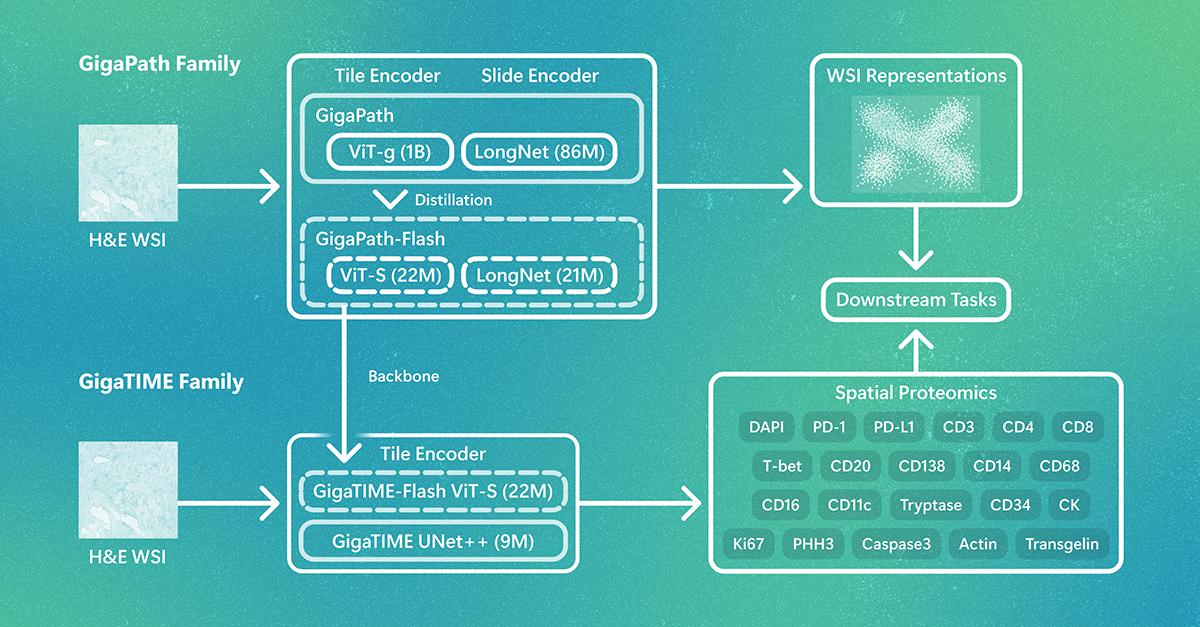
GigaPath-Flash and GigaTIME-Flash: Toward population-scale discovery with efficient pathology foundation models

What if pathology foundation models could do more with less? GigaPath-Flash and GigaTIME-Flash cut computational demands while maintaining strong performance, opening the door to larger studies and broader exploration. The post GigaPath-Flash and GigaTIME-Flash: Toward population-scale discovery with efficient pathology foundation models appeared first on Microsoft Research.

We use cookies to run the site and, with your consent, for analytics and to show ads. See our Cookie Policy.