Skip to content
#edge computing Open access

The Integer Charge Unit from Spectral Flow: Anomaly Inflow, the Witten Effect, and the Photon Grid of the Vacuum Code

Aug 2026 · Zenodo (CERN European Organization for Nuclear Research)
Quantum Chromodynamics and Particle Interactions

Abstract

The Selection-Stitch Model derives quark charges in thirds from the geometry of a trapped lattice defect. The integer unit that lifts -1/3 to the up-type +2/3 has resisted every mechanism tried: it is not a Cartan charge of the vacuum-matter algebra under the lattice's geometric C and P, and a circuit-ordering geometric phase was excluded by computation. This paper derives the unit from the one place those exclusions left open: the topology of the gauge sector. The framework's electromagnetic channels live on the <100> square faces; the lattice nodes and octahedral voids together form a simple cubic grid, and a compact U(1) on that grid carries monopole defects as a matter of compactness. The chiral defect worldline of the companion paper - directed hopping with point-gap winding W = +1, derived from the verification front - couples to this gauge field, and the pre-registered calculation is a spectral flow: thread one flux quantum through the worldline and count the charge pumped. The answer, computed as a determinant winding and therefore an integer identically, is exactly W: +1 in the physical configuration, 0 in a static crystal, -1 with the frontier inverted, robust across system sizes and every reference inside the point gap. By anomaly matching this boundary flow is the edge of a bulk theta = 2*pi*W, and by the Witten effect flux-bound matter shifts its electric charge by e*theta/2pi = e*W: the charge ladder is q = -1/3 + W, and the up-type +2/3 is derived. Because a determinant winding cannot be fractional, the mechanism cannot touch the thirds: the geometric and topological charges live in different places and add. Two further results follow. The companion matter paper's empirical restriction of the winding to w >= 0 is now derived - negative winding requires an inverted frontier, which the physical configuration forbids - matching the non-observation of charge -4/3; and the framework now requires monopole-type defects of the photon grid, a falsifier-shaped commitment whose microscopic construction is stated as open. Every claim carries a status tag, and the pre-registration rides in the verification archive.

View source

Similar papers

#computer vision Review Sep 2017

Agile Software Development Methods: Review and Analysis

This publication proposes a definition and a classification of agile software development approaches and analyses ten software development methods that can be characterized as being "agile" against the defined criterion.

P. Abrahamsson, O. Salo, Jussi Ronkainen et al. · 727 citations · ⚡54
#computer vision Jun 2008

The impact of agile practices on communication in software development

The study shows that agile practices improve both informal and formal communication, but indicates that, in larger development situations involving multiple external stakeholders, a mismatch of adequate communication mechanisms can sometimes even hinder the communication.

M. Pikkarainen, Jukka Haikara, O. Salo et al. · 401 citations · ⚡48
#machine learning Review Open access Oct 2014

Software development in startup companies: A systematic mapping study

The results indicate that software engineering work practices are chosen opportunistically, adapted and configured to provide value under the constrains imposed by the startup context.

Nicolò Paternoster, Carmine Giardino, M. Unterkalmsteiner et al. · 394 citations · ⚡54

Related blog posts

GPT-Lab Sep 17, 2026

Beyond Prompt Engineering: The Role of Tacit Knowledge in Software Engineering

AI is making software generation faster, but speed does not remove the need for expertise. As more work is delegated to AI, tacit knowledge may become one of the most important human advantages in software engineering. The post Beyond Prompt Engineering: The Role of Tacit Knowledge in Software Engineering appeared first on GPT-Lab.

Microsoft Research Blog Aug 31, 2026

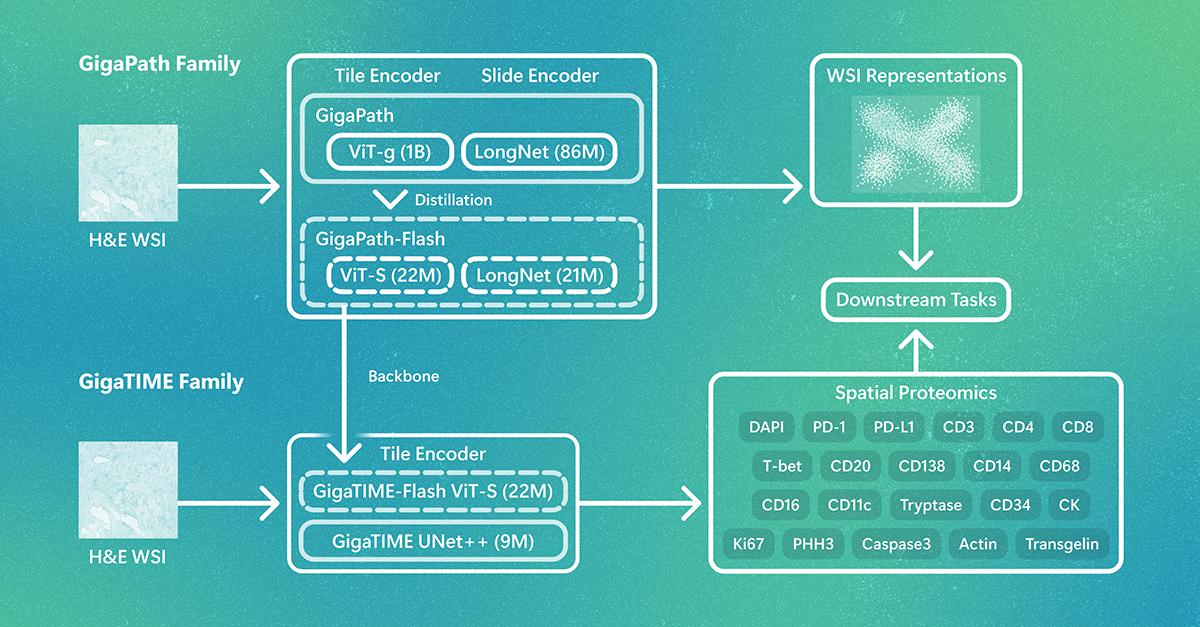
GigaPath-Flash and GigaTIME-Flash: Toward population-scale discovery with efficient pathology foundation models

What if pathology foundation models could do more with less? GigaPath-Flash and GigaTIME-Flash cut computational demands while maintaining strong performance, opening the door to larger studies and broader exploration. The post GigaPath-Flash and GigaTIME-Flash: Toward population-scale discovery with efficient pathology foundation models appeared first on Microsoft Research.

We use cookies to run the site and, with your consent, for analytics and to show ads. See our Cookie Policy.